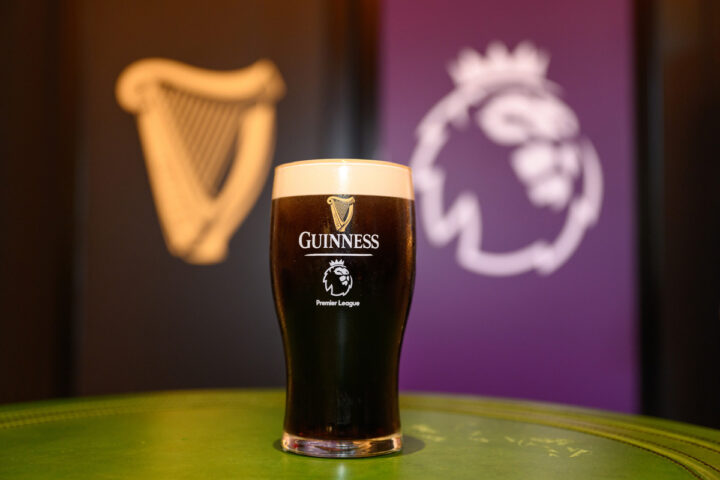
The BeerMongers, a bar and bottleshop in Portland, Oregon, is known for its well curated list of craft beers on tap. But last year the 15-year-old venue added a fast-growing imported brew to its menu. “We were getting demand for Guinness,” says owner Sean Campbell, “so we rotated it in.” The addition of the Irish stout has been a big success as customers seek out the brew ($8 a 16-ounce pour) year-round. “We sold 30 pints of Guinness on a Saturday night in August,” he says. “That’s a lot for any beer, let alone a stout in the summertime.”
Bar operators and beer retailers are reporting a heightened interest in Guinness and even some other stouts at a time when the overall beer category works to stem volume declines. According to Matt Gacioch, staff economist at the Brewers Association, off-premise sales of stouts are outperforming the overall market. For the 12 months through mid-July, the stout segment dropped just 0.5%, a much-improved performance from the 12% decline the style experienced in 2022.
Diageo’s Guinness is certainly driving consumers’ rediscovery of stouts. The brand increased a healthy 5% last year to 12.4 million (2.25-gallon) cases, according to Impact Databank, while non-alcoholic Guinness 0 jumped 51% to 700,000 cases, earning Impact Hot Brand status. According to Diageo, in the second half of the company’s most recent fiscal year, ended June 30, Guinness was the fastest growing major beer brand in the U.S. on-premise and the No. 1 draft beer in markets including Boston and New York. “We’ve been really intentional about making Guinness relevant year-round, not just around St. Patrick’s Day,” says Karissa Downer, Guinness brand director at Diageo Beer Co. USA.
The Irish stout is also experiencing strong trends off-premise. “Guinness has always been known as a pub beer, but we’re seeing just as much momentum off-premise,” Downer says. A limited-time-only can, featuring the brand’s toucan icon, was released this summer, and according to Downer, it helped drive “consumer excitement about the brand in the off-premise.”
The growing popularity of Guinness may be positively impacting other stouts. Response to Samuel Smith Organic Chocolate stout, imported from the UK by Merchant du Vin, has been so strong since its introduction in the U.S. eight years ago that it now outsells the original Sam Smith Oatmeal stout, Jhon Gilroy, western regional manager at the importer, says. The chocolate stout is “selling well, even in the summertime, along with the more traditional periods, such as the holidays and Valentine’s Day,” he notes. Indeed, a draft variant of the brew was released nationally last year, and according to Gilroy, “it’s received a fantastic reception.”
Craft brewers are also responding to renewed interest in stouts, with Lawson’s Finest Liquids and Saint Arnold Brewing among those to recently launch entries. While Goose Island Beer Co.’s Bourbon County Brand Original stout has been produced for more than 30 years, the beer continues to evolve. This month, Goose Island, a subsidiary of Anheuser-Busch, is releasing Bourbon County in 4-packs of 10-ounce bottles ($27). Todd Ahsmann, Goose Island president, says the 10-ounce bottle is “a great way to entice sampling” both on- and off-premise.
Guinness and craft stouts perform well at Wyatt’s Wet Goods liquor store in Longmont, Colorado. Kyler Mackel, beer manager, says sales of the Irish stout have been increasing year over year and Guinness 0 is doing particularly well. “This year, sales of Guinness have remained consistent after St. Patrick’s Day,” the retailer says, and the brew, priced at $10 a 4-pack of 16-ounce cans, even continues to sell in 100-degree weather. While Barcade, a chain of nine arcade bars, only pours craft brews, Paul Kermizian, co-founder, concedes that calls for Guinness have been ramping up. When that happens, servers recommend guests try a craft stout. “They almost always like the offering,” says Kermizian. Stouts at Barcade are priced $8-$9 a 16-ounce pour.
Beer marketers encourage retailers to leverage the trend toward stouts by stocking a variety of products. “Take advantage of the rising interest in stouts by showcasing how diverse the category really is,” Ahsmann says. “Offer enough selection,” agrees Gilroy. “Stouts aren’t just a one-trick pony.”