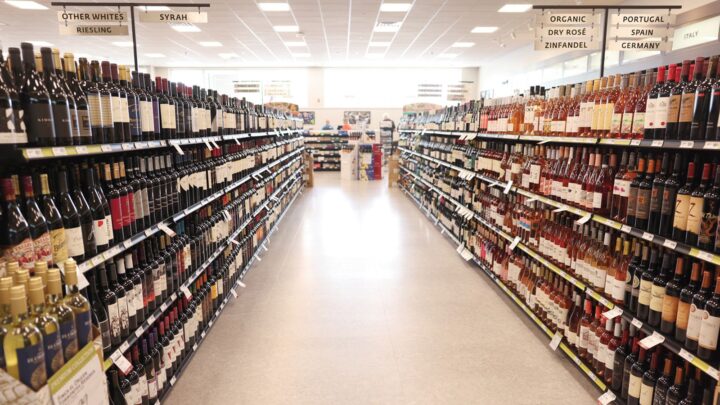
The Pennsylvania Liquor Control Board (PLCB) is taking customer service to a new level. From providing easier, more intuitive shopping trips supported by enhanced visual merchandising to communicating across social media platforms, the PLCB is taking action to drive greater retail foot traffic, increase sales, and grow basket sizes. “We’re embracing a consumer-first mindset and focusing on the occasions and moments that matter most, from everyday gatherings to major seasonal holidays and cultural events,” says PLCB Chairman Darrell Clarke.
The PLCB operates 562 Fine Wine & Good Spirits (FWGS) retail stores, making it the largest spirits and wine retailer nationwide. “Heading into summer, we’re launching a new brand campaign designed to keep FWGS top-of-mind during a busy and celebratory season,” Clarke says. “The campaign will spotlight the breadth of our assortment while emphasizing value and savings.”
The strategic use of social media is key to this campaign. “Fine Wine & Good Spirits aims to connect with customers at every stage of their journey across six social media platforms—Facebook, Instagram, YouTube, Pinterest, Threads, and X—allowing us to meet audiences where they are most active,” Clarke says. “Our content is thoughtfully tailored to each channel, featuring product inspiration, cocktail recipes, and educational resources designed to inform and engage. We also maintain an active presence on Threads and X to connect with audiences who prefer those platforms, aligning our approach with individual channel best practices to drive meaningful engagement.”
The largest FWGS, in Philadelphia, is nearly 22,000 square feet and carries about 3,800 products. The smallest FWGS, east of Pittsburgh in Avonmore, Pennsylvania is 750 square feet, and carries about 300 products. “Our goal is to be the destination consumers choose by offering the products they want, delivering inspiration, and creating a seamless shopping experience,” Clarke says.
Double-Digit Growth
Spirits volume was up 1.3% in Pennsylvania last year to 9.63 million 9-liter cases, making it the largest control state by spirits volume. Double-digit growth from spirits based RTDs drove the volume gain, but it was not enough to offset losses in other categories. Overall spirits sales in Pennsylvania decreased 1.3% to $1.85 billion.
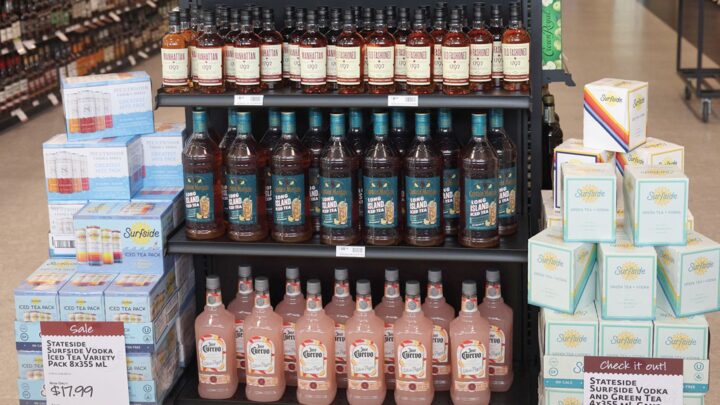
Led by the locally made Surfside brand ($18-$20 an 8-pack of 355-ml. cans), spirits-based RTDs grew 20.5% in sales and 20.4% in volume in Pennsylvania last year. Philadelphia-based Stateside Brands, originally a micro-distillery, first produced its namesake vodka and then launched Surfside—a line of 4.5% abv vodka-based iced teas and lemonades—in 2022.
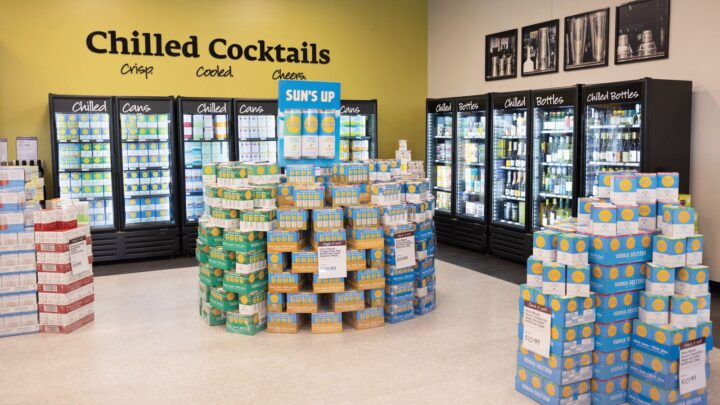
Other popular spirits based RTD products in Pennsylvania include the High Noon Vodka Hard Seltzer variety pack ($20-$22 an 8-pack of 12-ounce cans) and Cutwater Lime Tequila Margarita ($10 a 4-pack of 355-ml. cans). Pennsylvania lawmakers also expanded the sales of spirits based RTDs in September 2024 to private-sector retailers including grocery and convenience stores. “The pre-mixed spirits-based cocktail segment continues to show strength,” Clarke says.
While RTDs are driving spirits volume and sales in Pennsylvania, its impact on the price mix of the spirits category is an interesting anomaly. The 9-liter case of Stateside’s Surfside Vodka Iced Tea variety pack, for example, retails at $58.72, according to PLCB data. In comparison, a 9-liter case of Tito’s vodka ($22 a 750-ml.) retails for $218.71 in Pennsylvania. The comparison, however, is abstract because one 12-ounce serving of the premixed cocktail ($2.25-$2.50) cost more than twice as much as a 1.5-ounce serving of the full-strength (40% abv) vodka ($1.08).
Meanwhile, the top-selling spirits brands by dollar sales in Pennsylvania in 2025 were Tito’s, Hennessy Cognac VS ($40 a 750-ml.), Jack Daniel’s ($26), and Captain Morgan ($17). “We carry more than 800 spirits brands and about 2,900 SKUs, an increase compared to several years ago,” Clarke says. “Strong consumer interest in high-demand categories such as Bourbon, Tequila, and RTDs are driving growth. By flexing our assortment across categories, we’re able to meet evolving preferences while maintaining a balanced, compelling portfolio.”
Among the hundreds of spirits brands available throughout Pennsylvania at the FWGS stores, the average price per 750-ml. is around $15. Prices range from $6 a 750-ml. of Nikolai vodka 100 Proof ($6) to $5,300 for a 700-ml. of Louis XIII Cognac. “Our assortment spans a wide range of price points, ensuring accessibility for every customer while also offering exceptional luxury selections,” Clarke says.
Wine Varietal Growth
Pennsylvania is the No. 1 control state by wine sales. Wine sales in Pennsylvania were down 6.5% in volume to 8.2 million cases and decreased 4.9% in value in 2025 to $951.1 million. There was, however, eye-catching triple- and double-digit growth among certain varietals. Wines made with Italian varietals Vermentino or Aglianico each tripled in both volume and dollar sales. South African Pinotage, Italian Cortese, and Portuguese Madieira wines were all up by double-digits in both volume and dollar sales. “Even in an environment of declining wine sales overall, some of the less-common varietals on our shelves have seen significant sales increases,” Clarke says.
Wine sales at FWGS stores continue showing a consumer preference shift toward premiumization. Wine sales in terms of dollars per liter were up 1.7% in 2025 over 2024. The PLCB offers more than 2,200 wine brands and approximately 5,500 SKUs. “This reflects a thoughtful reduction from prior years as we recalibrated the assortment to align with changing wine consumption behaviors and to ensure a more focused, productive selection,” Clarke says.
Top selling wine brands by dollar sales were LaMarca Prosecco ($20 a 750-ml.), Cavit Pinot Grigio ($10), and Taylor Port ($9). While the average price paid for a 750-ml. of wine at FWGS was $9.65, up 1.7% from $9.49 in 2024. Last year, prices ranged from $5 for a 750-ml of Carlo Rossi Sangria to $2,200 for a 750-ml. of the 2022 Domaine de la Romanée-Conti Grands Échezeaux Grand Cru. “This breadth reflects our commitment to serving both everyday occasions and milestone celebrations with equal care,” Clarke says.
Spirit Of ’26
The PLCB is also looking to generate business around major events this year. Following the NFL draft, which took place in April in Pittsburgh, six FIFA World Cup matches will take place in June and July in Philadelphia, and the nation’s 250th birthday will feature events across the Keystone State, especially in Philadelphia, which is considered America’s birthplace because the Declaration of Independence and U.S. Constitution were both signed at the city’s Independence Hall. “We anticipate there may be bills to extend certain licensees’ operating hours in conjunction with this summer’s America 250 and World Cup soccer activities,” Clarke says.
In the spirit of freedom, Pennsylvania has created an atmosphere encouraging entrepreneurship. Small distilleries selling less than 10,000 9-liter cases last year increased dollar (up 3.9%) and volume (up 13.0%) sales in 2025. The top three small Pennsylvania distilleries by sales in FWGS stores last year were Philadelphia Distilleries, 3 Sisters Rum Inc., and Horse Hollow Distillery. Philadelphia Distilleries produces several brands, including The Bay Seasoned vodka ($20 a 750-ml.) and Bluecoat American Dry gin ($30). From small bases, 3 Sisters rum ($23-$40 a 750-ml.) and Horse Hollow Distillery’s Jimmy Juice cocktails ($30 an 8-pack of 355-ml. cans) posted high growth rates.
Pennsylvania has experienced a big increase in licensed distilleries from 70 on June 30, 2017 to 258 by June 30, 2025. Over that same period, the number of licensed breweries in Pennsylvania more than doubled, from 329 in June 2017 to 660 in June 2025. Licensed wineries expanded from 317 in June 2017 to 494 in June 2025. “Pennsylvania consumers have more choices than ever when it comes to product selection, whether its spirits, malted and brewed beverages, or wines,” Clarke says.
When it comes to Pennsylvania’s larger distillers, Sweet Grace Distilling Co., the producers of Stateside brands, led both in dollar sales at $38.9 million and in volume at 621,000 cases. Charles Jacquin et Cie Inc. (Jacquin’s Brands) was second, with $22.4 million in sales and 200,000 cases sold.
Among other strategies to attract consumer attention, the PLCB recently reintroduced flash sales featuring a curated selection of seasonal products, offering savings for a limited time. “These time-bound promotions help create urgency and give customers a compelling reason to visit and explore,” Clarke says. “We consistently spotlight new arrivals, exclusive offerings, and premium products customers seek, creating a sense of excitement and urgency around what’s new and noteworthy in our stores and online at FWGS.com.”
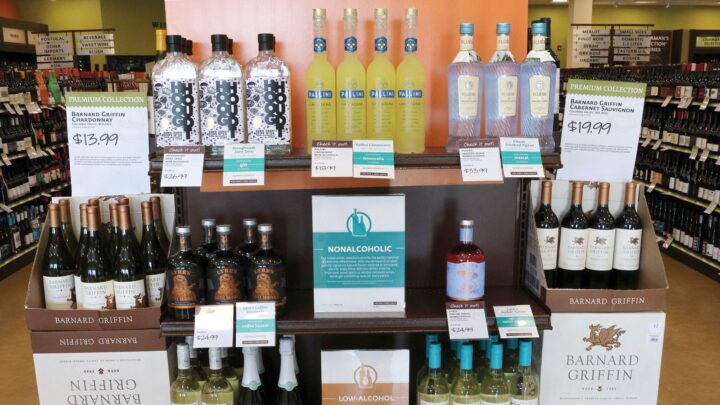
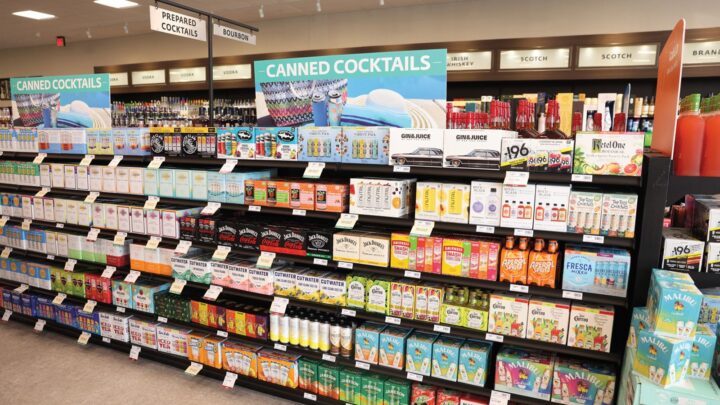
Vendor-funded digital coupons—primarily distributed through email—have proven effective for the PLCB in delivering savings while motivating customers to try something new. “By combining strategic promotions, strong visual merchandising, and targeted digital outreach, we’re able to spark interest, drive trial, and keep customers coming back,” Clarke says. “We use clear, eye-catching signage and position featured items in high-traffic, prominent locations to ensure customers can easily spot new releases and exceptional values. This merchandising approach encourages impulse discovery and increases awareness of featured products.”
Staying Agile
Clarke is confident about the long-term future of spirits and wine sales in Pennsylvania. “We’re optimistic category declines will begin leveling out and through thoughtful and strategic business decisions, we can adapt to shifts in consumer behavior,” he says. “As consumption patterns evolve, our perspective must evolve alongside them, ensuring we consistently deliver the right assortment, an elevated shopping experience, and compelling value. Staying agile and forward-looking is critical. We’re closely monitoring emerging categories, new market trends, and continued shifts in customer preferences so we can anticipate what’s next rather than simply react to it.”
Clarke notes that younger generations, in particular, are seeking more curated retail environments and gravitating toward high-quality products. “In response, we’re tracking where consumers are trading up, especially within premium and super-premium segments such as Tequila, Bourbon, and single malts, while ensuring we have the depth and storytelling to support those purchases,” he says.
A strong focus remains on spirits based RTDs. “We’re seeing growing interest in higher-end canned cocktails, multi-serve formats, seasonal and limited-time releases, and innovative and alternative packaging,” Clarke says. “By staying aligned with these trends and continuously refining our assortment strategy, we’re positioning ourselves to meet changing expectations and capture new growth opportunities.”