Spirits-based RTDs continue to thrive in the U.S., with the category jumping by more than 10 million cases last year to reach nearly 80 million cases in total, according to Impact Databank. Growth is widespread throughout the category, with leading brands and newcomers continuing to tap into consumer demand for convenient and individually-packaged spirits-based options. The success stories constitute a diverse group, ranging from simple spirit-and-seltzer and spirit-and-tea options to canned or bottled takes on classic cocktails. The 32 leading spirits-based RTDs account for 74 million cases—or 93% of the category. There are now 11 brands above 1 million cases, combining for more than 64 million cases or approximately 80% of the total market.
“Spirits-based RTDs were up 27% in sales in our stores in 2025 versus 2024,” says Ian Aker, owner of Summerland Wine & Spirits in Summerland Key, Florida. His family also owns the Florida Cork and Bottle store in Indian Harbour Beach. “In the first quarter of 2026, they were up 31% versus 2025, so the momentum continues.”
Spirits-based RTDs are also seeing robust growth at the two Kreston Wine & Spirits stores in Wilmington and Middletown, Delaware. “RTDs have performed well and continue growing,” says co-owner Jeff Kreston. “We’ve always had a large selection of RTDs but have seen more customers realize what they are. Some brands like Cutwater ($13 a 6-pack of 12-ounce cans) that were allocated and hard to keep in stock last year have started catching up, so we haven’t seen panic buying as much, but continual purchasing habits.”
The outlook at the distributor tier is equally positive. “While the early hyper-growth phase has passed, we continue to see meaningful runway for spirits-based RTDs, increasingly driven by higher purchase frequency, consumer loyalty, and occasion-based usage rather than incremental penetration alone,” says Zach Poelma, senior vice president of commercial intelligence at Southern Glazer’s Wine & Spirits. “Internal shopper analysis shows that while household penetration has begun to level off after years of significant growth, spend per trip and purchase frequency continue to rise, signaling that RTDs are becoming embedded in regular drinking routines rather than fading as a trend.”
At The Top
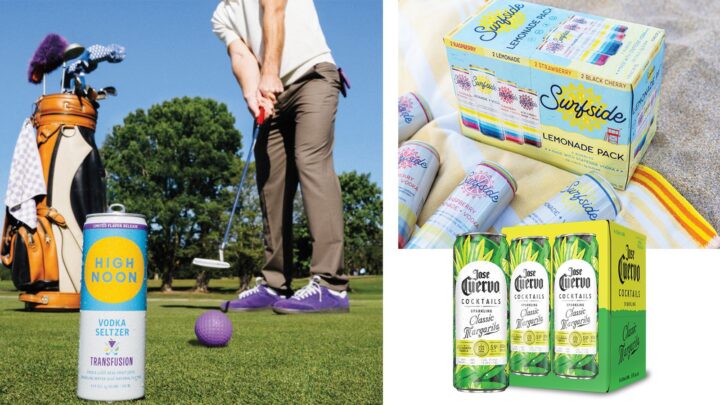
The five leading spirits-based RTDs total just under 50 million cases, with the single largest brand, Gallo’s High Noon, at 24.1 million cases. The category’s five leading labels—High Noon, Stateside Brands’ Surfside, Anheuser-Busch’s Cutwater, SNFood & Beverage’s Carbliss, and Molson Coors’ Monaco—offer a good representation of what’s succeeding in the category, with straightforward spirits-and-mixer brands growing alongside classic and proprietary cocktail brands, often offering higher-abv drinks.
“The RTD category has been the fastest-growing segment in alcohol, as consumers have increased their preference for the convenience of drinks on-the-go,” says Clement Pappas, co-founder and CEO of Stateside Brands, which owns Surfside RTDs. “With that in mind, we believe there are plenty of opportunities for RTDs to continue to thrive over traditional spirits.”
High Noon, the largest spirits brand in the U.S., declined by 3% in 2025, marking its first drop since its launch in 2019. “High Noon is focused on disciplined growth as the category matures,” says Britt West, chief commercial officer at Gallo. “Consistently communicating our real spirits, real juice, no added sugar message, while staying culturally relevant, remains our biggest opportunity to bring new consumers into the brand, and keep existing consumers engaged.”
West adds that High Noon is focused on increasing outreach to legal-drinking-age Gen Z consumers through social media and influencer content, as well as college sports partnerships. High Noon just released Transfusion ($16 a 6-pack of 355-ml. cans), its first standalone limited release, backed by the “It’s Fusion Time” campaign, which kicked off in May. The campaign is a collaboration between the brand and Good Good Golf. “Our first limited flavor drop was released in finite allocations by market, bringing the scarcity-driven release popularized by fashion and streetwear into the RTD category. This model allows us to drive urgency at retail and win in high-affinity occasions like golf,” says West.
West also sees potential for High Noon’s Tequila-based seltzers, with the company refocusing its attention on 25Tequila this year. He adds that there will be a new variety 12-pack for High Noon’s Tequila seltzers this year.
Beyond High Noon, Gallo has found considerable success with other spirits-based RTD brands like VMC and Lucky One, with each targeting different consumer segments. The larger brand, VMC, was up 97% in 2025 to 1.37 million cases. “VMC continues to gain momentum in the U.S. in 2026, remaining the No.-1 RTD brand in Hispanic grocery chains. The brand has effectively helped build the RTD category within Hispanic chains, recruiting Mexican import beer consumers into RTDs and driving trade-up into VMC,” says West. Looking ahead, Gallo plans to capitalize on VMC’s velocity with two new flavors, new multi-can packages—including a 3-pack of the brand’s Paloma in 700-ml. cans and a variety 12-pack—plus a packaging refresh that will roll out across the brand through the rest of the year.
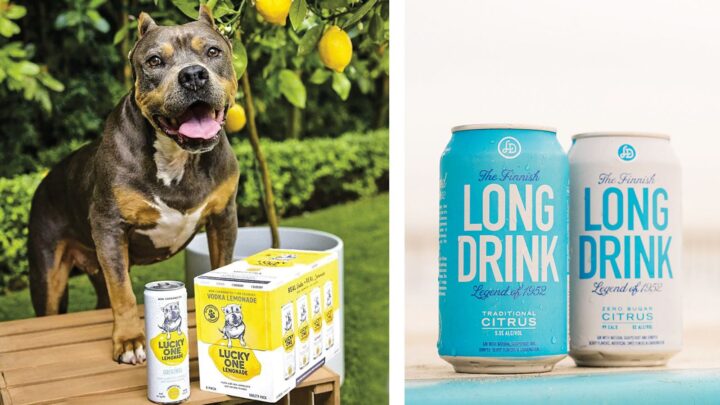
While Gallo’s leading RTD offerings are focused on carbonated drinks, the company is pushing into non-carbonated options as well with Lucky One Lemonade and Tea. Last year, in its first year on the market, Lucky One surpassed 1 million cases. The brand, created in collaboration with Barstool Sports founder Dave Portnoy, donates a portion of sales to helping rescue dogs find homes. “The brand reached 1 million cases in just seven months—faster than High Noon did in its first year, and we’re seeing strong volume, not just trial,” says West.
West notes that Lucky One taps into a particularly emotionally resonant vein for consumers. Its mascot—Portnoy’s rescue dog Miss Peaches—“gives the brand an emotional connection with consumers that’s hard to manufacture,” says West.
Behind High Noon is Stateside Brands’ Surfside RTDs at 10.5 million cases, up 124% in 2025. The non-carbonated vodka-and-iced tea brand has shown some of the strongest growth in all of the spirits industry in recent years, growing from less than 1,000 cases in 2021 to an industry leader in just four years. “We grew the brand by 6.2 million cases,” says Pappas. “From the data we have reviewed, Surfside was the top volume growth brand within the industry in 2025.”
This year, the company plans to increase its push behind Surfside in the on-premise, with golf courses as a particular area of focus, according to Pappas. Additionally, the brand will build on its partnerships with professional and college sports teams and increase its marketing toward Hispanic communities across the U.S. “We had a strong distribution push into national accounts, and the hard work and great partnerships have paid off with strong growth performance,” says Pappas.
Beyond Surfside, the company recently launched Super Lyte, another non-carbonated vodka-based RTD. The new release is at 4.5% abv and debuted in four sports drink-inspired flavors: Fruit Punch, Orange, Lemon Lime, and Blue Chill. “The launch of Super Lyte will be an important step for us as we build on the trust and success we have achieved with Surfside across our partners, retailers, bars, restaurants, and fan base,” says Pappas. In addition to Surfside and the new Super Lyte, Stateside Brands continues see growth for its namesake vodka sodas. Last year, the brand was up 2.1% to 614,000 cases in the U.S.
Innovation Moves
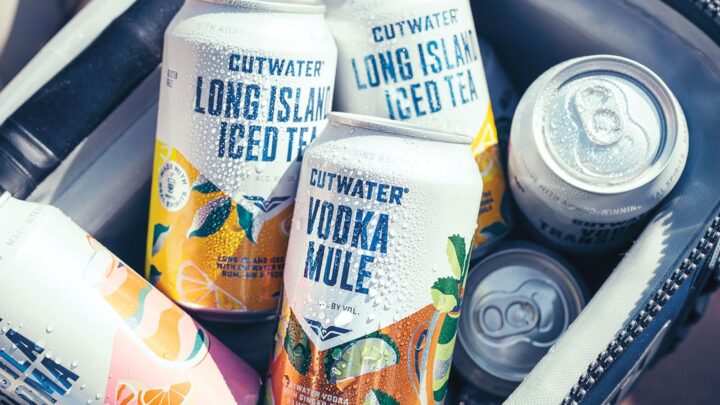
Anheuser-Busch’s Cutwater, the third-largest spirits-based RTD brand, soared in 2025, growing 61% to 6.5 million cases. “We’re excited about the year ahead and plan to continue building on our momentum,” says Jake Kirsch, president of the beyond beer unit at Anheuser-Busch. “Cutwater is already off to a hot start, and you can expect the brand to continue innovating and exploring new flavor profiles.”
Boosted by frequent social media mentions, Cutwater last year was “not only the No.-1 growing brand family in spirits, but also the No.-1 standalone growth family within any of the three major beverage alcohol categories—beer, spirits, and wine,” says Kirsch, citing Circana data. “In short, it was a breakout year for this brand, and we raised the bar with a series of exciting new innovations.”
Additionally, Anheuser-Busch owns Nütrl, one of the leading vodka soda brands on the market. Nütrl, the seventh-largest spirits-based RTD, is on a consistent upward trend, growing 17.5% to 3.2 million cases last year. To promote the brand, Anheuser-Busch has partnered with the 2026 FIFA World Cup to become the Official Hard Seltzer sponsor of the tournament. Beyond its high-flying duo, Anheuser-Busch also owns Devils Backbone, which was down 9.5% to 430,000 cases.
Behind Cutwater is SNFood & Beverage’s Carbliss, one of the few independent brands to lead the spirits-based RTD category. The brand, which offers a variety of vodka- and Tequila-based seltzers in fruit flavors, grew 50% last year to 4.2 million cases. As recently as 2021, Carbliss was below 10,000 cases. “What brings people in is simple—we made a product that actually delivers,” says co-founder Adam Kroener. “Same quality, same experience, every time. People try a lot of RTDs once. They only stick with the ones that deliver every time.”
The brand has recently expanded into the Arizona, New York, and Georgia markets, continuing its steady expansion. Carbliss is now in 22 states. “On the product side, there will be innovation, but again, it’s strategic,” Kroener says.” We’re not putting things out just to fill space. It has to make sense for the brand and for the consumer.”
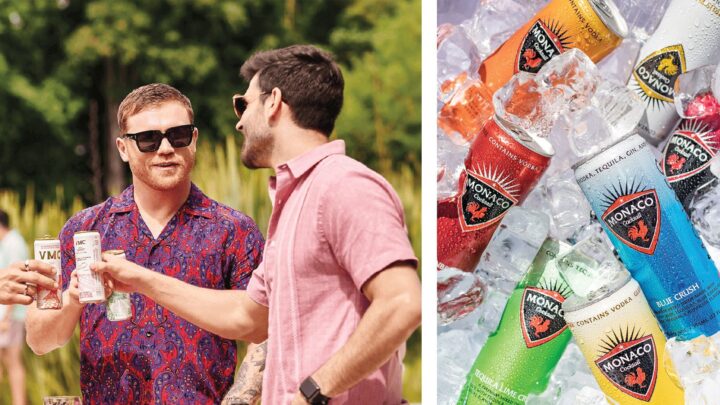
Rounding out the top five brands is Molson Coors’ Monaco, part of the recently acquired Atomic Brands. Monaco is known for its strong presence in the convenience store channel, and especially its single-can sales, of which Molson Coors says it holds a 5% market share nationally. Last year, the brand was up 6.5% to 3.3 million cases.
“It’s a top-five RTD cocktail brand in the U.S., and before the acquisition it was the top-selling, independently owned RTD singles cocktail brand in the U.S. across all tracked retail channels, in more than 70,000 retail locations,” says Brian Feiro, president of U.S. sales for Molson Coors Beverage Co. “We’ve been open about the need to show up strong in the RTD space. Monaco checked a lot of boxes, and we’re thrilled to have the brand in the Molson Coors family.”
Feiro says the next steps are building off of what Atomic Brands and the Monaco team was already doing well. “As part of the sale, we brought over more than 80 salespeople,” he says. “They’ve had a lot of success, especially in convenience stores; that’s something we want to continue fueling, as it’s also an opportunity for other brands in our portfolio.”
One-Million-Plus
While the five largest brands make up a substantial portion of the overall spirits-based RTD market, the seven other labels over 1 million cases remain strong sources of growth. At sixth is The Finnish Long Drink, now owned by Mark Anthony brands. The citrus-and-gin RTD grew nearly 20% to 3.23 million cases in 2025, with Mark Anthony acquiring the brand in April 2026. “The Finnish Long Drink is a distinctive, premium brand with an outstanding growth opportunity in the U.S.,” says David Barnett, U.S. president of Mark Anthony Brands. “Leveraging Mark Anthony’s scale, executional strength, and deep experience building category-defining brands, we see the opportunity to elevate Long Drink’s presence and influence within the spirits RTD category.”
Other million-case RTD brands include Boston Beverage Co.’s Sun Cruiser, a vodka-and-iced-tea cocktail. Last year, the brand surged, growing 320% to just under 3.1 million cases. Boston Beer also produces Dogfish Head’s RTDs, which were down 17.5% to 260,000 cases in 2025.
Above 2 million cases, Sun Cruiser is joined by Proximo’s Jose Cuervo Margaritas, down 9.5% to 2.1 million cases, and Good Boy vodka’s namesake RTD, which grew 270% to 925,000 cases. Beyond Proximo’s Cuervo RTD offering, the company also produces 1800 Ultimate Margaritas, which were down 8% to 795,000 cases.
Rounding out the category’s million-case players is Sazerac’s Buzzballz. The brand’s spirits-based offerings were up nearly 50% in 2025 to 2.6 million cases. “BuzzBallz are delicious, convenient, affordable, and continue to bring new flavors for fans to discover,” says Jess Scheerhorn, the brand’s president. “We pay close attention to which flavors our community is loving and which ones they are asking for next”
Scheerhorn adds that the company is working on another large-format option for Buzzballz, planning to build on the success of its Biggies (1.75-liter) and create new shareable formats for the brand. Besides Buzzballz, Sazerac’s Fresca Mixed is among the leading spirits-based RTDs in the U.S. at 426,000 cases for 2025, down 18%.
Still Rising
Just below 1 million cases is Suntory Global Spirits’ On the Rocks brand of bottled cocktails. Last year, On the Rocks was up 21.5% to 963,000 cases, with growth supported by a series of new releases from Suntory. Recently, the brand added two new cocktails: the limited-time offering Passion Fruit Margarita and the permanent canned addition Sparkling Watermelon Margarita.
“We launched a canned portfolio last year. So we have the bottled cocktails, but have also complemented that with individual cans and four-pack cans as well,” says Greg Hughes CEO at Suntory Global Spirits. “You’ll see us expand bottles, but even more aggressively expand on the canned format this year as that’s a strong growth driver in the category.”
The company also produces the globally leading -196 brand. While new to the U.S., -196 is the global volume leader for spirits at more than 30 million cases. In America, the brand was up 218% last year to more than 500,000 cases. “We’ve got a huge innovation pipeline coming this year,” says Hughes. “We’re seeing strong traction on the brand and the growth rates are triple digits, but off of a very small base.”
Also chasing the million-case mark is independent brand Mom Water. The non-carbonated “spirit water” brand has steadily grown on its path from 38,000 cases in 2021 to nearly 900,000 in 2025. “Folks have done seltzers and all these other things, but nobody had really done an alcoholic water,” says Bryce Morrison, co-founder of the brand alongside his wife Jill. “It was easy to position in the marketplace.”
Mom Water is aiming at consumers looking for lower sugar and less sweet options compared to many of the RTDs on the market. “A lot of the trends out there are starting to say: I want something more sessionable. I want something a little cleaner, and that’s where we lie,” he says.
Morrison points to the brand’s unsweetened vodka teas as a point of differentiation for Mom Water. “Everyone was doing teas and lemonades, but we looked at the tea market specifically and, nationally, if you go outside the alcohol world, there are more unsweet tea drinkers in the U.S. than there are sweet tea drinkers,” he says.
Continued Support
Many of the spirits-based RTDs below 1 million cases are offshoots of leading spirits brands, like those from Pernod Ricard’s Absolut and Jameson, among various releases from marketers like Diageo. These offerings are often simple cocktails designed to showcase the name-brand spirit. “Spirit + soda formats are likely to continue to grow, supported by simplicity, repeatability, and strong everyday occasion fit,” says Southern Glazer’s Poelma. “Long-term winners will balance familiarity with disciplined innovation.”
The largest of these offshoot brands are Diageo’s Crown Royal’s RTDs and Brown-Forman’s Jack Daniel’s line. Crown Royal was down 10.5% to 850,000 cases. Excluding other Jack Daniel’s RTDs, Jack & Coke increased 6/7% to 739,000 cases last year.. Pernod’s Absolut RTDs fell 21.7% to 623,000 cases, with Jameson’s RTDs decreasing 22.4% to 110,000 cases. Other leading Diageo RTDs are from Ketel One and Smirnoff Smash, up 6% to 430,000 cases and 37.5% to 150,000 cases, respectively. In the ready-to-serve category, Diageo makes Bulleit’s cocktails, which were up 11.5% to 145,000 cases. Brown-Forman also has another growing label with New Mix, which reached 125,000 cases in its first year in the United States.