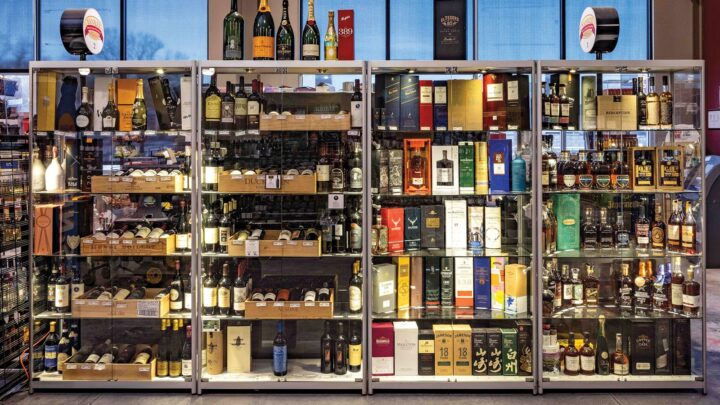
Despite flagging sales of spirits, wine, and beer of late, the Yankee Spirits package store chain remains committed to building product knowledge and enjoyment among its vast Massachusetts customer base, just as it has for nearly four decades of family ownership. Whether it’s frequent in-store tastings or customer appreciation events, the four-unit chain based in Sturbridge, Massachusetts is widely recognized for its employees’ expertise and for overdelivering on customer service. Those attributes stand out in a market that has become increasingly crowded with beverage alcohol retailers. “Education differentiates us from our competitors,” says majority owner Meghan Cimini-Jones.
Indeed, Yankee Spirits’ long focus on customer education has served it well. With four locations in mostly southern Massachusetts—Sturbridge, Attleboro, Norwood, and Swansea—the company’s annual sales revenue is now in excess of $60 million. Spirits have emerged as the top category at Yankee, accounting for 42% of sales, followed by wine at 36%, and beer at 22%. Its well-proportioned stores range in size from 20,000 square feet (Norwood) to 28,000 square feet (Swansea), all serviced by a staff of some 200 employees.
Cimini-Jones is the daughter of 1996 Market Watch Leader Don Cimini, who acquired the then two-unit Yankee Spirits, along with partner Mike Muratore, in 1988. Her brother Michael, a 2009 Market Watch Leader,bought out Muratore’s share in 2002, though an ownership dispute between father and son ultimately led to the younger Cimini relinquishing his interest in 2010. Don Cimini passed
away in 2013. Four years later, the Swansea store—originally opened in 2007—received a major expansion and the fourth
location in Norwood was added.
“This is the only job I’ve ever had and hopefully the only one I will have,” says Cimini-Jones, who began working at the family business as a teenager and joined full time in 2009. “Whether working with my brother or my dad, I’ve always been here.” Among the numerous positions she’s held during her tenure at the company are beer buyer, bookkeeper, and store manager.
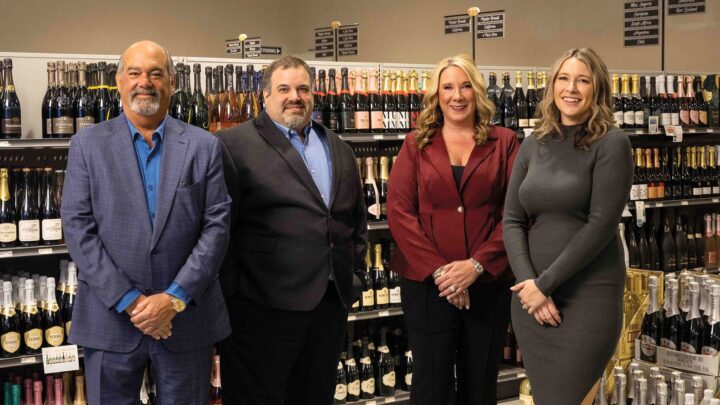
Today, Cimini-Jones oversees Yankee Spirits’ online sales and delivery operations. As majority owner, she relies on the input and involvement of a core leadership team comprised of president and corporate spirits director Jim Juliano, director and corporate wine buyer Liz Higgins, and district manager and corporate beer buyer Joe Santos. “Together, we have over 100 years of experience in the retail beverage industry,” Cimini-Jones says of the leadership team. The foursome believes in a hands-on approach to running the business. “We’re very visible in the stores, which is important to the employees and customers,” notes Higgins, who joined the company in 2010.
Destination Stores
The management team’s approach to business is particularly relevant today as beverage alcohol sales struggle to find growth and as the Massachusetts retail industry is more competitive than ever. Like many beverage alcohol retailers around the country, through November 2025, sales at Yankee Spirits were trending down, according to Juliano, who also joined the chain in 2010 after numerous years on the supply side of the business. “The industry is going through a tough time right now,” he says. “The younger generation is drawn to cannabis; people are more health-conscious and are drinking less. We continue to get bombarded.” Moreover, with the Bay State now allowing up to nine liquor licenses to any one company, independent retailers like Yankee are increasingly competing with major chains, be it Total Wine & More or the Stop & Shop grocery chain. “Thanks to our size, prices, and selection, our stores are destination stores,” Juliano explains. “But for some customers today, it’s more convenient to grab a bottle of wine while at the grocery store.”
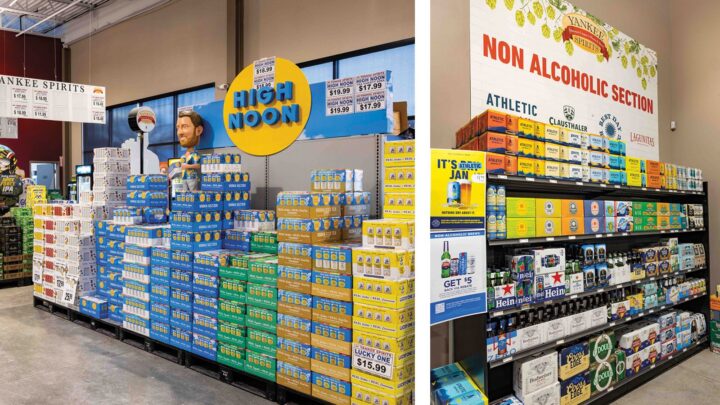
The chain offers about 5,500 spirits SKUs, priced from $1 a 50-ml. bottle up to $5,000 for a 750-ml. of Macallan 30-year-old Double Cask. Tito’s vodka ($20 a 750-ml.) is the top-selling spirits brand at the chain. Juliano says that the stores’ strongest performing categories are Bourbon, Tequila, and ready-to-drink cocktails. “Bourbon is still very hot and in high demand,” the retailer notes, pointing to store barrel picks from the likes of W.L. Weller, Eagle Rare, and Knob Creek that remain popular with customers. When it comes to Tequila, “we have as many SKUs as we do Scotch,” he says, with brands like Don Julio Añejo ($55), Tequila Ocho Reposado ($55), and Lunazul Añejo ($24) performing best But RTDs are where the store is really seeing growth, “and that’s a good thing thanks to their margins,” Juliano notes. With the explosion in brands and expressions, Yankee has been making room for the products. He points to the shift at one of the stores from two aisles dedicated to vodka to now one aisle of vodka and one aisle featuring only RTDs. Thanks to the growth of the segment, led by brands like High Noon ($20 an 8-pack of 12-ounce cans) and Sun Cruiser ($18), “I’m bullish with where spirits are,” the retailer says.
More than 7,000 wine SKUs are offered at Yankee Spirits, generally priced from $3 to nearly $1,000 a 750-ml. for the 2013 Lucien Le Moine Montrachet. According to Higgins, the stores’ sweet spot is $12-$25 a 750 ml., with California Cabernet Sauvignons running $35-$60. Top selling wine labels at the chain include Kendall-Jackson Vintners Reserve Chardonnay ($12) and Josh Cellars Cabernet Sauvignon ($14). While other retailers have moved away from futures programs in recent years, the Massachusetts chain remains committed to sourcing the pre-release products. “We’re fortunate because we have a wholesale license and we’re able to do it,” Higgins says. “While it’s a niche, a lot of customers are attracted to the ability to get something that others can’t.”
Yankee stocks about 3,000 beer SKUs, with prices ranging from $6 a 6-pack of 12-ounce cans to $279 for a 750-ml. of Samuel Adams Utopias. Top-selling brands include mainstream labels like Michelob Ultra, Bud Light, and Heineken, Santos says, but crafts command about 40% of category sales at the chain. “We work with a lot of local breweries,” he notes. “They’re always coming out with new products and because our stores are destination stores, we work hard to have them in stock.” Still, the proliferation of “brewpubs on every corner” has slowed sales at retail, says Santos, as those venues often sell beer to-go.
E-commerce, meanwhile, accounts for as much as 7% of total sales, Cimini-Jones says, with all orders delivered in state by Yankee Spirits. With an e-commerce platform already established before the Covid-19 pandemic, sales exploded in 2020 through 2022. “Our online store became our fifth store,” the retailer says.
In-Store Consultants
Among the features found in Yankee Spirits stores are beer caves, “Fine & Rare” wine and spirits rooms, and seminar and education rooms for staff and customer tastings. “Thanks to our relationships with our distributors, they will come in and educate our wine, beer, and spirits staffs,” says Higgins, who notes that team members are also encouraged to visit breweries, wineries, and distilleries. Long known for having wine consultants at each store, the chain now boasts beer and spirits consultants too. “Having 81that expertise for our customer base is a really important thing for us,” adds Juliano.
Yankee’s enthusiasm for educating its customers is also seen in its deep calendar of in-store tastings and other events. “There’s no one in Massachusetts who does events, such as tastings and seminars, better than we do,” says Higgins, noting that the chain employs its own events coordinator. “We have something going on every week of the year at all four stores.” In addition to in-store samplings, large-scale store anniversary and customer appreciation celebrations are also popular with the chain’s customers. According to Cimini-Jones, with the stepped-up competition Yankee Spirits faces these days, “we really like to show our customers that we value how they have stuck with us.”
Beyond events, the New England retailer utilizes a range of marketing strategies to connect with its customers and attract new ones. As with other retailers, digital support—including social platforms like Facebook, Instagram, and X, as well as email blasts—comprises much of Yankee Spirits’ marketing budget. But the chain hasn’t walked away from more traditional tactics. Billboard, print, and radio ads are also in the mix. “We need to be all things to all people,” explains Cimini-Jones of the diversified approach. “We need to capture any generation that we can.”
That spirit of innovation is necessary in a business faced with challenges and rising competition. While there are no plans to add stores, Yankee Spirits is considering tweaks to its business. Expansion into “alcohol-adjacent products” such as glassware, for example, is being considered, Cimini-Jones reveals, while a loyalty program is expected to launch this year. The retailer believes that the industry’s slumping sales are part of a cyclical trend and that sales will bounce back. In the meantime, she harkens back to her father’s sage advice. “My dad used to say, ‘if we don’t keep changing, we’ll be like the dinosaurs and become extinct,’” she says. “We don’t just sit back and rest on our laurels. We’re constantly changing how we go to market.