While it’s better known as an accompaniment to sushi, wasabi is finding its way onto cocktail menus in Japanese restaurants across the United States, and bartenders are praising the ingredient’s powerful flavor and texture attributes. Wasabi is a Japanese variety of horseradish, and with food it’s used as a condiment to enhance taste. For mixologists at Japanese bars, using wasabi in cocktails adds authenticity and mouthfeel that’s hard to replicate with other ingredients. Some bartenders are using wasabi as a wash for spirits, while others are mixing it directly into cocktails or dusting garnishes with wasabi powder.
Shinji’s bar in New York City has offered its signature Handroll cocktail for two years, and beverage director Jonathan Adler says guests love the drink, which is designed to evoke sushi. The Handroll ($27) is made with Empirical Soka that’s washed sous vide with wasabi peels and cocoa butter and Ketel One vodka that’s washed sous vide with dried ginger and then steeped with bonito flakes. Those ingredients are mixed with SG Kome shochu, seaweed-infused water, and Mirin rice wine, and the drink is force carbonated then topped with a spray of soy and vinegar before serving. “The wasabi adds a sharp and specific vegetal note,” Adler explains. “People love it and comment all the time that the drink tastes like sushi. Wasabi works with all types of drinks, but especially well with clear liquors.”
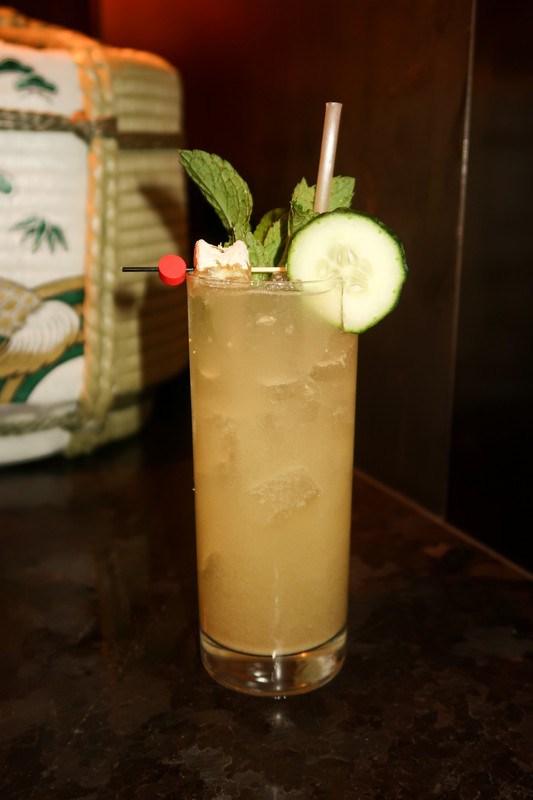
In New Orleans, Asian restaurant Tsunami mixes wasabi into its Bloody Mary ($14) and also uses wasabi salt as a garnish on two other drinks. And in Boston, global cocktail bar The Wig Shop infuses wasabi and apple into soju and mixes it with Laird’s Applejack brandy, St. George Spiced Pear liqueur, toasted rice syrup, and soursop for the Suplex City cocktail ($18). Meanwhile in Las Vegas, sushi bar and speakeasy Nomikai features the Daniel Was The Villian ($20), blending wasabi with Akashi Japanese whisky, Domaine de Canton ginger liqueur, simple syrup, lemon juice, white pepper, and muddled Japanese cucumber, topped with Hoplark The Citra Bomb sparkling hop tea. Nomikai also uses wasabi dust to powder coat ginger cubes for garnishes on other cocktails.
“Our guests perceive wasabi as an exotic ingredient,” says Nomikai master mixologist James Manos. “Adding wasabi to cocktails creates intrigue. We pique guests’ interest, which is what we always try to do with signature cocktails, and then we explain in concise, relevant ways how the drink is executed and presented. We place great emphasis on educating and training our staff to be able to relay to guests what to expect from this cocktail.”
Manos says that for a venue like Nomikai, using wasabi in cocktails adds authenticity and helps connect the culture of the bar with the drinks menu, and in turn with guests. But beyond that, it also offers a great flavor profile. “Wasabi provides a savory element that’s beyond just heat from the spice,” Manos says. “Wasabi is nuanced, deep, layered, and complex. When used in the right ratios, wasabi also provides aromatic brightness that’s not found in other spicy additions.”
Even a small amount of wasabi goes a long way in cocktail making, and Manos says he personally enjoys it paired with mild and easy-drinking whiskies, especially Japanese labels. “Most of our guests have never had a drink with wasabi as an ingredient,” Manos says. “I love that, and as a drink creator it offers a unique opportunity. After tasting our drink, their response is generally surprise, as they’re shocked by how balanced it is and how the wasabi doesn’t overpower the other elements. They’re also sometimes surprised that the drink isn’t green. I think wasabi will always remain a niche ingredient in cocktails, and I’m okay with that. Some things are best when not overexposed to maintain their exotic appeal.”