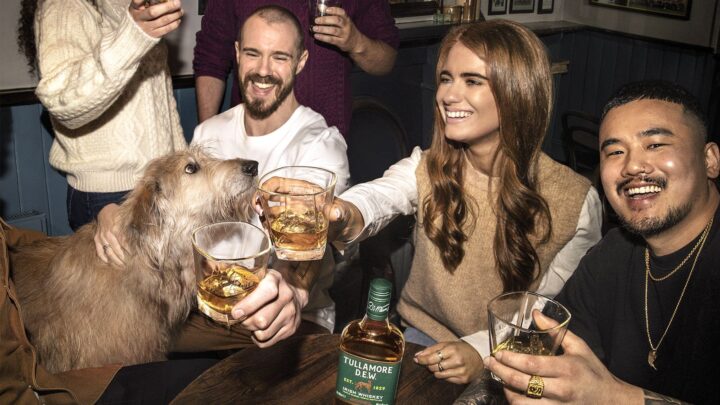
Irish whiskey is a smaller player within the broader whisk(e)y category, but its fortunes often ebb and flow in roughly the same cadence. And with overall whisky consumption on the decline, Irish whiskey is feeling the squeeze as well. Undeterred, Irish whiskey producers tout the general health of the sector and say there is still significant opportunity in the category.
“I think what we’re seeing is more a normalization after an extraordinary growth cycle,” says Jack Teeling, founder and managing director of Teeling Whiskey Co. “There was a period where the category expanded very quickly, and it was inevitable that things would level out as consumer habits shifted globally. Consumers are not necessarily drinking less, but they are drinking more intentionally and paying closer attention to what is in their glass.”
Jason Daniel, CMO for Foley Family Wines & Spirits, which owns the Two Stacks and Killowen brands, says Irish whiskey needs to focus on creating its own unique identity within the overall whisk(e)y category. “There is always an appetite for chasing the next bright thing in the wine and spirits industry,” he says. “Whiskey hasn’t lost its place at the table; it just needs to be clearly differentiated and create strong bonds, which is what the craft producers are doing.”
Consumption of Irish whiskey in the U.S. peaked in 2022 at 5.57 million cases, according to Impact Databank. It was the culmination of a vibrant decade for the category—in 2014volume stood at less than half that amount. The sector has registered declines in the years following 2022, most recently posting a depletions drop of 5% to 4.64 million cases in 2025.
More than four-fifths of the total Irish whiskey volume consumed in the U.S. in 2025 was from Jameson Irish whiskey, according to Impact Databank. The brand, at 3.67 million cases, outperformed the field despite a 3.1% drop. Other leading brands struggled a bit more. Tullamore D.E.W., at No. 2, fell 9.5% to 295,000 cases while Proper No. Twelve suffered a 22% decline to 210,000 cases. Bushmills fell 13% to 148,000 cases and Redbreast, at No. 5, slipped 6.7% to 52,000 cases.

Upscale Moves
The overall consumption challenges may be daunting, but Irish whiskey marketers say they’re honing their product mix and engaging with new consumers to set the stage for a return to growth. “Irish whiskey has tremendous runway for growth and will continue to be an important part of the beverage alcohol landscape and repertoire,” says Kristen Colonna, vice president of marketing at Pernod Ricard USA, which has Jameson, Redbreast, and other Irish whiskey brands in its portfolio.
“Consumers aren’t necessarily moving away from whisk(e)y; what’s changing is the how, where, and when they’re engaging with it,” agrees Conor Neville, marketing director for Incubation Brands at William Grant & Sons, which owns Tullamore D.E.W. “Our focus remains on recruitment into the brand, investing behind awareness, trial, and advocacy. And because Irish whiskey remains underdeveloped across many U.S. states, we see meaningful opportunity not only to bring new drinkers into the category, but to steal share as the broader segment continues to mature.”
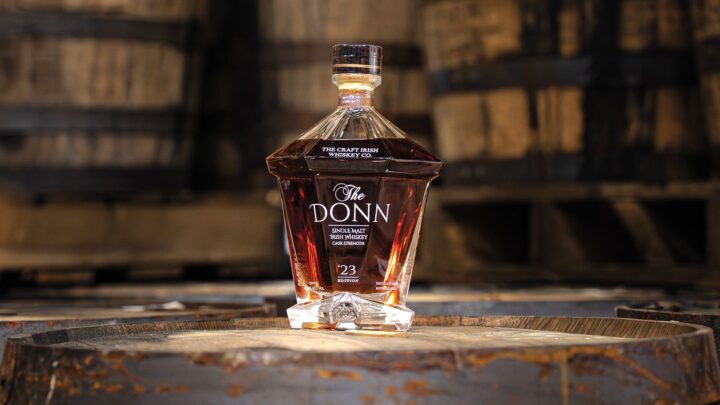
Jay Bradley, founder and master blender for Craft Irish Whiskey, which owns The Donn Irish whiskey brand, says growth is achievable as consumers realize the depth of offer TKings coming out of Ireland. Until recently, with the vast majority of Irish whiskey produced by a single company, “many consumers came to view Irish whiskey as light, approachable, and easy-drinking, but they weren’t exposed to the incredible diversity the category is capable of producing,” he says. “That’s changed dramatically over the last decade. In 2013, Ireland had just five operating whiskey distilleries. Today, there are more than 50. We now have entrepreneurs, distillers, and whiskey makers across the country experimenting with different grains, cask types, fermentation methods, maturation techniques, and flavor philosophies.”
In fact, many marketers say there is still significant vibrancy in more upscale or unique Irish whiskey offerings. “We know consumers are drinking less but better, and this positions our premium range across Jameson Black Barrel and Redbreast favorably,” says Colonna.
Irish whiskey “is entering a more premium phase, with clear headroom to capture value in higher price tiers,” William Grant’s Neville says, noting that the super-premium Irish whiskey segment has “remained notably resilient” with double-digit growth in 2025.
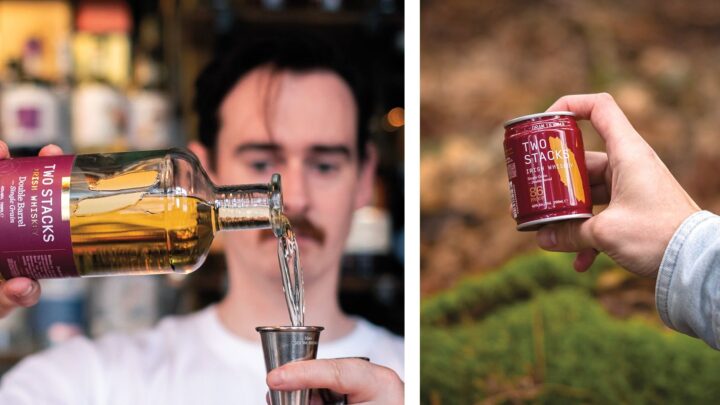
Foley Family’s Daniel also sees the opportunity. “The $25-$50 and $50-$100 price segments in Irish whiskey are growing so there are some bright spots, of which our Two Stacks is one of them,” Daniel says. He notes that Two Stacks grew at triple-digit rates in 2025, bucking the category trend.
Tweaking The Offer
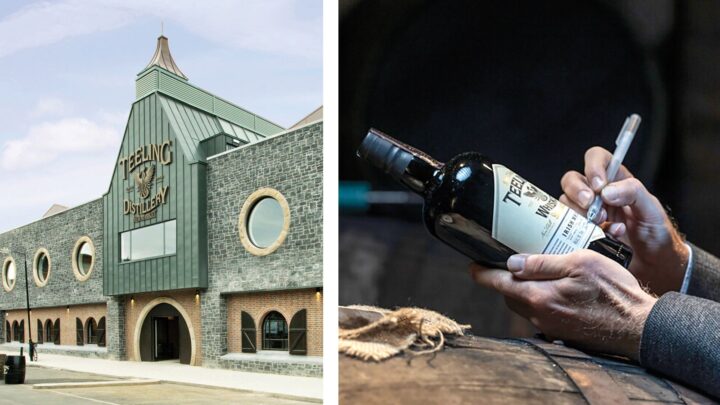
Innovation within the category is also driving some consumer enthusiasm. “At Teeling, we’re focused on continuing education around our core range and innovating in ways Irish whiskey hasn’t done before,” says Teeling. “Our Small Batch remains a key entry point, especially if people are trying it in a cocktail for the first time. From there, we see a mix of both craft whisk(e)y enthusiasts and new whisk(e)y drinkers explore our portfolio,” he says. He also notes demand remains strong for demand for Teeling’s Single Grain, Single Malt, and Single Pot Still expressions.
Teeling recently launched a distillery exclusive RTD called the Teeling Phoenix Twist, which features the company’s signature Small Batch whiskey as well as ginger, lime, and yuzu, and plans further “exciting and personalized experiences where people can engage with everything the brand has to offer,” Teeling says.
Pernod Ricard has also been innovating within the category. “We’re seeing our distillers explore finishes and maturation,” Colonna says. Jameson Triple Triple, for example, undergoes a triple distillation and triple-cask maturation process. “While Jameson Original is aged in ex-Bourbon and Sherry barrels, Jameson Triple Triple is also aged in a third barrel—chestnut—making it an elevated treat,” she says.
Pernod Ricard USA “will continue to innovate on our Reserve Series—Jameson’s premium tier of Irish whiskeys highlighting special cask finishes, aging techniques and distinct flavor profiles—with a new expression arriving this fall,” Colonna adds.
For Redbreast, the company recently launched Redbreast Moscatel Wine Cask Limited Edition, the fifth iteration in the Redbreast Iberian Series, as well as 18-year-old, which uses cream Sherry casks in its aging process.
Innovation is underway at Foley Family Wines & Spirits as well, with Two Stacks tapping the RTD sector with the release of a 4-year-old Double Barrel Single Grain whiskey in both a 700-ml. and a 100-ml. “Dram in a Can” option. For sister brand Killowen, the company recently launched Rum & Raisin Single Malt.
Daniel also notes that craft brands are resonating. “Consumers are getting a fresh perspective on what Irish whiskey can be beyond mainstream brands,” he contends. “Emerging craft Irish whiskey is faring even better than other segments of whisk(e)y, with a host of brands bringing innovation and craft credentials to the category—including Two Stacks. Whiskey hasn’t lost its place at the table; it just needs to be clearly differentiated and create strong bonds, which is what the craft producers are doing.
Another craft brand entering the fray is Four Walls Irish American whiskey, a blend of Irish and American whiskeys founded by Rob Mac, Charlie Day, and Glenn Howerton. The three actors play bartenders on television’s “It’s Always Sunny in Philadelphia.” Four Walls has partnered with Lily Pond Group (LPG), a beverage alcohol incubator founded by Jesse Bongiovi and “dedicated to building the next generation of lifestyle-focused brands that connect with today’s culture-driven consumers.”
Courting New Consumers
Marketers also say that capturing the attention of younger consumers or those new to whisk(e)y is crucial for a return to growth. “Consumer behavior and the media landscape continue to evolve, but ultimately recruitment still depends on making the liquid feel relevant, approachable, and easy to understand for the next generation of whisk(e)y drinkers,” says Neville of William Grant. “Irish whiskey has historically played an important role as a more accessible entry point into the broader category given its naturally lighter, smoother, and sweeter flavor profile.
“That advantage makes the on-premise especially important,” he continues. “For many younger consumers, bars and restaurants are where whisk(e)y discovery happens, and bartenders play a critical role in shaping that experience.”
Teeling says that Irish whiskey “remains incredibly approachable for today’s consumers.” He says Irish whiskey’s attributes of simple ingredients, clear production methods, and consistency resonate. In addition, “Irish whiskey has a naturally approachable flavor profile compared to many other whisk(e)y categories, making it an easy entry point for newer drinkers,” he says. “Combined with the innovation we’re seeing across the category, from cask experimentation to new expressions of single pot still, I think Irish whiskey is well positioned to continue attracting a new generation of consumers.”
At the same time, producers are cognizant that younger consumers are looking for options, for not only diversified offers in the bottle, but also different packaging and sizes to broaden usage occasions. Several Irish whiskey brands, including Jameson, Teeling and Two Stacks, have RTD offerings. Two Stacks products “lean into” the diverse consumption occasions favored by today’s younger LDA consumer, Daniel says, noting that products like Dram in a Can that resonates with their lifestyle.
Some brands, like Jameson, are also changing up bottle sizes. “We also have innovation in small size formats in the pipeline, which is meant to recruit younger drinkers into the Jameson brand family,” the Pernod Ricard spokesperson says. “Health and moderation trends open up format and pack size white space for the brand, which will help us grow in daytime occasions, and we have exciting news on that front to come this fall.”
And, of course, sponsorships are a key vehicle for connecting with this target audience. Jameson, for example, taps into soccer fans through its role as the official whiskey of Major League Soccer. Jameson’s sports platform, “It’s What You Bring,” launched recently in advance of the FIFA World Cup. The multi-faceted marketing effort “put Jameson at the heart of culture and conversation” and involved partnering with cultural icon J Balvin, launching limited-edition soccer bottles and hosting watch parties and in-market activations.
Teeling takes an ultra-targeted approach. The brand is entering its fourth year as the official Irish whiskey partner of Notre Dame University athletics. “Although it’s a niche group of consumers we’re reaching, we’ve seen incredible feedback from whiskey collectors who are experiencing Teeling in an entirely new way,” Teeling says. The Notre Dame-specific offerings include limited-edition products and exclusive apparel.
Looking Ahead
Even in an environment of slowing demand, Irish whiskey marketers say they’re optimistic that the category—and their individual brands—will thrive in the future. “I think the category is moving through a correction phase after a period of monumental growth and demand for Irish whiskey worldwide, and the fundamentals remain strong globally,” says Teeling.
Hearkening to the emergence of craft brands, including the widely touted The Donn brand, Craft Irish Whiskey’s Bradley contends category evolution is underway, not only in the U.S. but on a global scale. “What excites me most is that we’re only beginning to see the results of that creativity reach global consumers,” Bradley says. “What we’re witnessing now is a renaissance of innovation and diversity that is transforming how the world sees the category.”