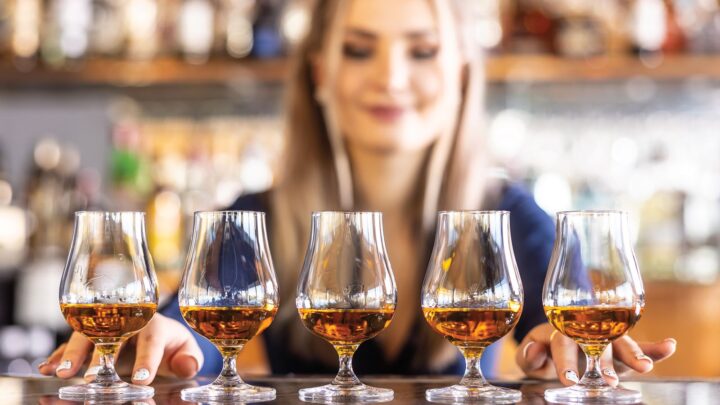
At his four bars in New York City, Jason Hedges has seen a marked shift in the way consumers approach Bourbon these days. “Demand is steady, but the way guests arrive at Bourbon has changed,” he says. Hedges, the director of beverage for LT Hospitality at the Eventi Kimpton Hotel in New York, oversees the beverage program for the hotel’s properties: L’Amico, Back Bar, Skirt Steak, and Second. He says he isn’t concerned about the decline in demand the category has experienced over the past several months. It’s not about demand, he adds. Instead, it’s about the quality and the stories from individual brands.
“They still want Bourbon, but they more often choose it through a story you can taste: A cocktail with shape, aroma pour,” Hedges says. “When the menu makes the outcome feel predictable, citrus bright, spice with lift, or something quietly dessert-adjacent, guests relax and order with confidence.”
In other words, brands that deliver on taste, quality and messaging—without the hype—still resonate with consumers. Bourbon marketers say they’re seeing the shift as well.
Matt Blevins, CMO for Heaven Hill Brands, says there is “tremendous vitality” across the category. “We see the consumer prioritizing authentic brand and product stories, being increasingly open to trying new products, perhaps outside of their normal brands, and looking to be educated on what is real in the category,” he says.
Differentiation in offerings is driving interest from today’s consumers, says Clinton Dugan, co-founder and master blender at Shortbarrel Bourbon. “The days of every Bourbon release selling out instantly are behind us, but consumer interest remains strong,” he says. “Consumers are becoming more educated and more selective. They’re looking beyond age statements and allocated bottles and paying attention to mash bills, finishing techniques, barrel selection, warehouse environments, and transparency around production. Brands that can tell a compelling story and deliver a unique drinking experience continue to find success.”
And Gigi DaDan, vice president and general manager for Bacardi’s Angel’s Envy Bourbon, puts it succinctly. “Brands must be better because [consumers] expect better,” she says. Amidst the evolution of consumers’ approach to Bourbon, a challenge has emerged. The category that nearly doubled in size over two decades is faltering a bit in terms of volume. Growth in the 2010s was extraordinary, and the pandemic and post-pandemic years only bolstered demand further. But after peaking in 2022 at 28.3 million 9-liter cases, demand for Bourbon began to slide. Last year, depletions fell 2.5% to 26.93 million cases, according to Impact Databank.
In fact, the top five brands in the U.S., which account for about 56% of total Bourbon consumption, all lost volume in 2025. At No. 1, Jack Daniel’s continued to lead the Bourbon category but registered an 8.6% decline to 4.53 million cases, according to Impact Databank. Jack Daniel’s has lost nearly 900,000 cases since 2019. Second-ranked Jim Beam declined by 2.2% to 3.95 million cases, while Evan Williams fell 3.5% to 2.66 million cases, Maker’s Mark slipped 1% to 2.25 million cases, and Bulleit slumped 4.5% to 1.58 million cases.
There were some bright spots in the category, however. Select brands from Sazerac Co. performed extraordinarily 25well, with two brands among the top 25 showing double-digit growth. Buffalo Trance grew 15.5% to 930,000 cases and appears on track to become a million-case brand. Sazerac’s Eagle Rare also turned in a double-digit increase. And as a group, super-premium brands fared well, outperforming the Bourbon category overall with a 0.5% decline to 10.9 million cases.
The Spending Equation
The relative health of super-premium brands begs the question of how consumers are spending on Bourbon given the challenging macroeconomic environment, and how the long-standing premiumization trend fits in today’s consumption landscape.
“Consumers are definitely becoming more deliberate with their purchases,” says Shortbarrel’s Dugan. “During the height of the Bourbon boom, people often bought bottles simply because they were available. Today, they’re asking whether a bottle is worth the price. That doesn’t mean premiumization is over. Consumers are still willing to spend for quality and authenticity, but they expect value in return. The middle tier of the market is becoming increasingly important. Instead of purchasing multiple bottles per month, many consumers are choosing one bottle they feel confident about. We’re also seeing enthusiasts become more adventurous, seeking unique flavor profiles rather than simply chasing the highest age statement or most allocated release.”
DaDan says that consumers are simply more discerning, in part due to economic factors. “While it’s true that premiumization has slowed down as consumers are more intentional with their dollars, the fact remains that they are still spending,” she says. “Perhaps their budgets are tighter, or their bar carts are fuller, but we see the same enthusiasm as before for our award-winning whiskeys.”
“Economic uncertainty has had an impact, particularly at the margins,” agrees Blevins. “Consumers are being more intentional with discretionary spending, and that can affect both the number of occasions and the level of spend. That said, I do not believe premiumization is over. The bar is higher. Consumers want to feel confident that a premium product is worth it. Brands have to earn trust through quality, authenticity, and a strong value proposition. We still see premiumization happening, especially where products offer craftsmanship, rarity, heritage, or a distinctive story.”
In the on-premise, those stories are crucial, says Aviram Turgeman, beverage director of Chef Driven Hospitality, which owns Bar Bas in New York City. “I find that the good old classics are still the most popular, but we are seeing a growing appetite for education and storytelling,” he says. “Our guests like to understand where something comes from, how it’s made, and what makes it interesting. This opens the door for us to introduce smaller producers or unexpected styles.” Turgeman adds that premiumization is “definitely still prevalent. Despite a draw to familiar brands, high-end products are not suffering,” he says.
Yet how that premiumization manifests is a crucial differentiation. There must be a reason for the super-premium price tag. Anuj Mittal, COO at the 38-store Texas retail chain Zipps Liquor Stores, says Bourbon brands were flying off the shelves until recently. He says some producers were a bit too aggressive on pricing—riding the Bourbon wave without having the quality to command higher price points—and now are feeling the impact of those decisions. “We’re seeing a big, big drop-off in the Bourbon craze,” Mittal says. “I think it’s a product of pricing. A lot of Bourbons were priced very high—the average bottle of Bourbon was no cheaper than $60-$70, and that really hurt, especially for mid-tier brands.”
Innovation and Evolution
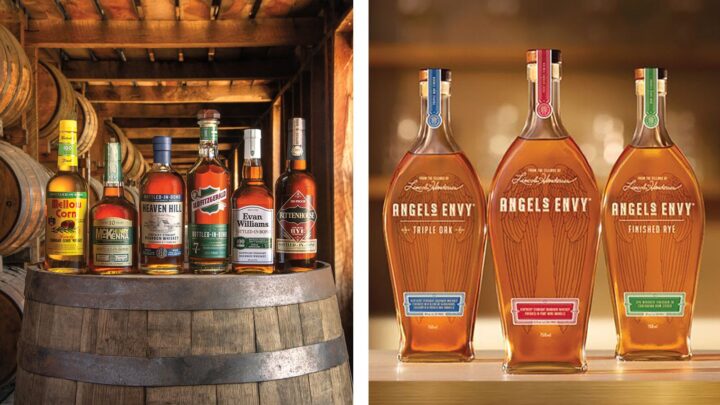
To pave the way for future growth, producers are innovating and evolving their brand offerings to meet the demands of consumers. “While we are facing a changed consumer environment with many factors impacting consumer demand, some of these changes are cyclical and there is still runway for growth in Bourbon,” says Regan Clarke, vice president American whiskey at Suntory Global Spirits. “Bourbon will continue to resonate with consumers around the world because of the heritage, craftsmanship, and stories behind iconic brands like ours.”
Clarke says today’s consumers are interested in craftsmanship and “are increasingly seeking high-quality spirits that offer unique flavor profiles and authenticity. This has led to a surge in craft distilleries and small-batch productions, allowing brands to innovate and cater to discerning tastes. There is also evolution in the experiences that consumers are seeking. We’ve always believed in the power of bringing people together, and in recent years have seen a move towards more casual and spontaneous consumption occasions.” She points to Jim Beam’s “block parties” through their partnership with the U.S. Soccer Federation, and Maker’s Mark arena experiences for women’s basketball league Unrivaled. Knob Creek also leaned into sports through a partnership with former NFL quarterback Eli Manning for the 2025-2026 NFL season.
At Brown-Forman Beverages Worldwide, the company is leaning into heritage and the iconic stature of the Jack Daniel’s brand. “Appetite for authentic American spirits 27hasn’t gone anywhere and in these challenging market conditions, drinkers naturally return to the reliable names they know and respect,” says Mark Bacon, senior vice president and global managing director for Jack Daniel’s.
Bacon says the company can honor that heritage with new offerings within the brand platform, citing the recent introductions of Jack Daniel’s Tennessee Blackberry and Jack Daniel’s Heritage Barrel. On the latter, he says “this expression is all about honoring the barrel, using a unique high toast, low char method, and a lower entry proof. The result is this deeply complex, rich whiskey that our friends have completely fallen in love with.”
Bacon’s colleague Mia Simpson Culp, who is vice president and global managing director for Woodford Reserve and Old Forester Bourbons, also cites innovation as a key driver. “Innovation is always a focus for us, and one of our most exciting new product launches in Bourbons this past year was the introduction of King of Kentucky Small Batch,” she says. “First created in 1881, Brown-Forman has owned King of Kentucky since 1936 and revived it in 2018. Today, it’s become one of the most sought-after bottles in whiskey, and this newest release was no exception.”
At Heaven Hill, the company is responding to consumer curiosity with its own innovation, most notably with the revival of Elijah Craig 18-year-old Single Barrel and introduction of new 15-year-old and 21-year-old single barrel Bourbons. “Those launches reflect where consumer curiosity is today,” Blevins says. “Enthusiasts are looking for unique, highly differentiated expressions that showcase the nuances of Bourbon, and Heaven Hill is uniquely positioned to meet that demand through the depth and diversity of our aging inventory. These releases demonstrate the flexibility of our barrel stocks and our ability to offer consumers distinct single barrel experiences that highlight the craftsmanship behind American whiskey.
“Ultimately, consumers may be making fewer trade-up decisions than they were a few years ago, but when they do choose to spend, they are seeking products that offer a meaningful experience and a compelling reason to believe,” Blevins adds.
For Angel’s Envy, potential growth opportunity lies in further shifting how Bourbon is consumed. “We think there’s an opportunity to broaden the category by creating more approachable moments through lighter cocktails, food pairings, and social experiences,” says DaDan. Noting a shift of newer drinkers toward imbibing during daytime hours as opposed to late nights, the brand launched its Daycap at the Distillery series this summer. The series includes local food vendors and DJ acts and highlights the brand’s signature cocktail serve, the Angel’s Envy Peach Smash, made with Angel’s Envy Port-Finished Bourbon, peach syrup, lemon juice, and sparkling lemonade.
Cocktail Culture
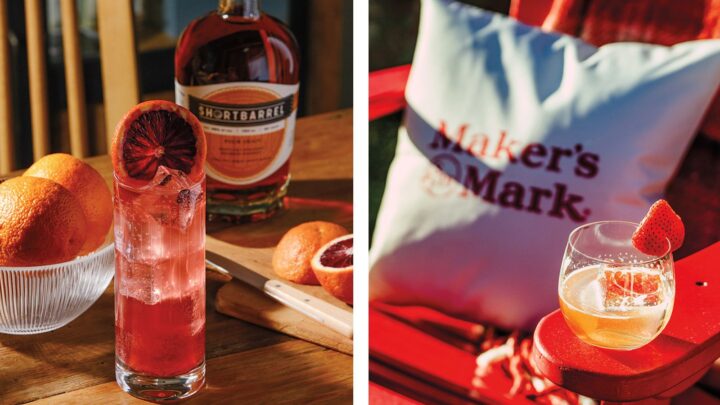
In fact, executives say cocktails are one area where Bourbon shines. Turgeman of Bar Bas says that’s where he sees vitality these days. “We have seen a slight decline in Bourbon sales since the pandemic, but only when consumed on its own,” he notes. “Our Bourbon-based cocktails across our various restaurants are usually always top sellers.” The restaurant’s Old Fashioned Provençal ($22) involves infusing 1972 Small Batch Bourbon with black mission figs, sweetening it with a touch of local thyme-infused honey, and adding dashes of Angostura Aromatic and lavender bitters.” To add to the Provençal experience, we serve it over a rosé ice ball that’s made with Provence rosé and Peychaud’s bitters,” he says. “As it melts, the drink becomes more complex.” The drink is finished with orange oil and served with an orange twist.”
Hedges of LT Hospitality says cocktails serve as a “discovery engine for Bourbon, noting his establishments’ focus on “crafted mixed drinks, stirred, shaken, washed, and finished with purpose.” Among the organization’s Bourbon cocktail standouts are the Sour Attitude ($19), made with brown butter-washed Old Forester Bourbon, cinnamon, vanilla bean, lemon juice, maple syrup, and egg white; and the Angel’s Seduction ($22), comprised of toasted sesame oil-washed Angel’s Envy Bourbon, Roots Rakomelo liqueur, Carpano Antica Formula Vermouth, and Angostura bitters.
Producers also see the opportunity. “Bourbon has more room to grow in cocktails, approachable serves, and experiences that make the category feel more accessible,” says Blevins, who notes that Heaven Hill launched a “clean cocktails” program for Elijah Craig involving providing consumers ers with “lighter, more contemporary cocktail recipes that align with growing interest in moderation, flavor exploration, and versatility. Programs like this help showcase Bourbon in new ways and demonstrate that it can fit a wide range of occasions and consumer preferences,” he says.
Shortbarrel’s Dugan agrees, noting that newer consumers in particular “tend to be more open-minded about flavor,” he says. “Many newer consumers enter the category through finished whiskeys, cocktails, or unique maturation projects. Equally important, younger consumers want experiences. Successful brands will be the ones that create the most meaningful and culturally relevant experiences, bringing together innovation, education, and hospitality.”