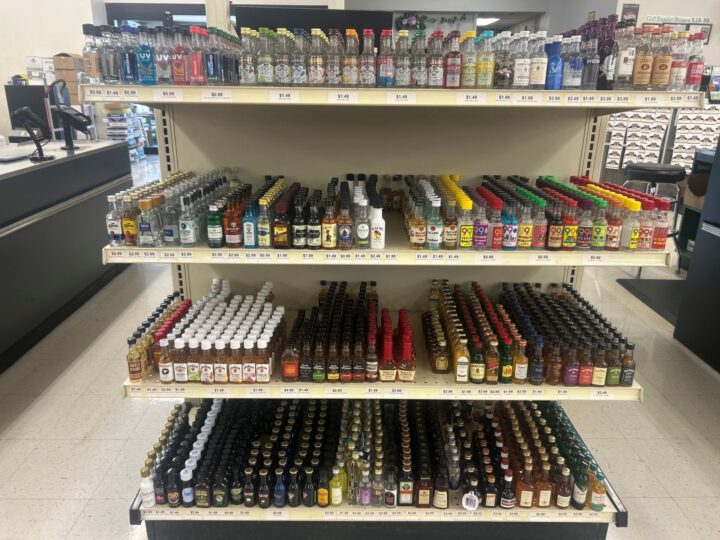
Variety is a key to sales when it comes to beverage alcohol retail spirits packaging. Bottles smaller than the traditional 750-ml. are helping drive sales. “Without a doubt it’s a mixture of convenience and price,” says Mat Dinsmore, owner of Wilbur’s Total Beverage in Fort Collins and Wyatt’s Wet Goods in Longmont, Colorado. “It’s actually very profitable for the retailer because we have higher margins on smaller sizes.”
Dinsmore is experiencing growth in smaller size spirits packages in both of his stores. “There are more products available in smaller sizes. Suppliers are looking for points of distribution,” he says. “Sazerac has led the way with sizes, whether it’s 100-ml. or 200-ml. Without a doubt, for our stores I see the most movement in brands like Fireball ($5 a 200-ml.) and BuzzBallz ($4 a 200-ml.). We are watching a lot of folks buying smaller sizes. I can’t tell if it’s frequency of drinking or if it’s just consumers out of money.”
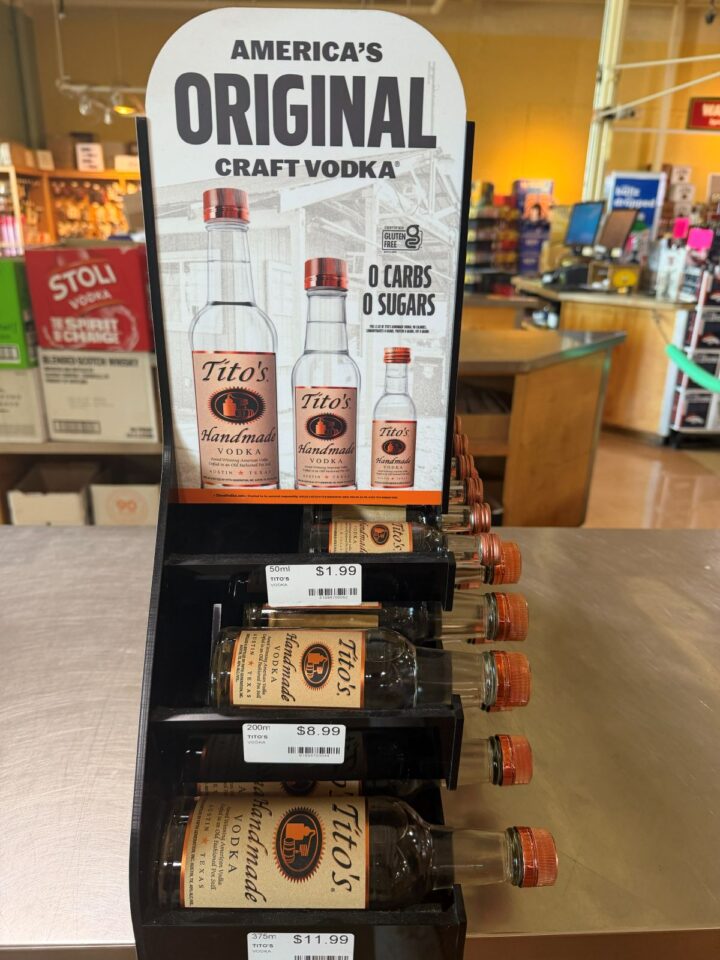
Top-selling spirits brands in smaller size (less than 750-ml.) packaging at Wilbur’s and Wyatt’s are Fireball, Tito’s ($9 a 200-ml.) and Jameson ($12 a 200-ml.). “We have a Tito’s rack at our register that has 50-ml. ($2), 200-ml. and 375-ml. ($12) all in the same rack at point of purchase,” Dismore says.
At Viscount Wines & Liquor in Wappingers Falls, New York, the only increase in sales of spirits in packages smaller than a 750-ml. are in the 50-ml. size. “We do sell many 50-ml. bottles, mostly in a handful of brands,” says store manager Matthew Landolt. “In fact, we have been discontinuing this size in many brands.”
Bestsellers in 50-ml. bottles at Viscount include Fireball ($1), 99 ($1), and Smirnoff flavors ($1). The 50-ml. spirits bottles are displayed on an end cap in front of one Viscount register and there are several individual retail displays in front of store, Landolt notes. The 375-ml. and 200-ml. bottles are on the front wall of store behind the registers.
In North Carolina, consumers are trading down to smaller size spirits bottles with cases of 375-ml. packages up 17.2% last year, according to the North Carolina Alcoholic Beverage Commission (NABC). “We are also seeing ABC boards decrease overall selections in their stores and increase shelf space for proven, top brands,” says Hank Bauer, chairman, NABC. “It is encouraging to see North Carolina continue to perform ahead of many national trends, and for local ABC Boards to continue innovating and making changes in their stores that will benefit both ABC Boards and their customers.”
Dinsmore notes he listened to a Diageo North America presentation about 10 years ago discussing the possibility of smaller size spirits packaging taking over in the future. “This would be driven by smaller apartments, millennials, trial sizes, and less cabinet space, so they couldn’t pantry load,” he says. “Here we are 10 years later. It’s not overtaking handles by any means, but you have seen that smaller size category grow. Some people will come in buy a case of 100-ml. bottles.”
Dinsmore says [50-ml.] shooters have always been available, but more upscale producers are coming out with 100-ml., 200-ml. and 375-ml. packaging. “It has been here forever, but normally it’s been for sub-premium spirits, not upscale products,” he explains. “William Grant is a perfect example. You always had Balvenie 12-Year-Old in a 750-ml ($100). Then they came out with a 200-ml. Balvenie 14 Years Caribbean Cask ($30). There is a little bit of that stretch for luxury even if you can’t afford the big bottle. Some people are completely out of money and trading down, and some people really want to entertain, but can’t afford the luxury product. The smaller size is more within their budget.”
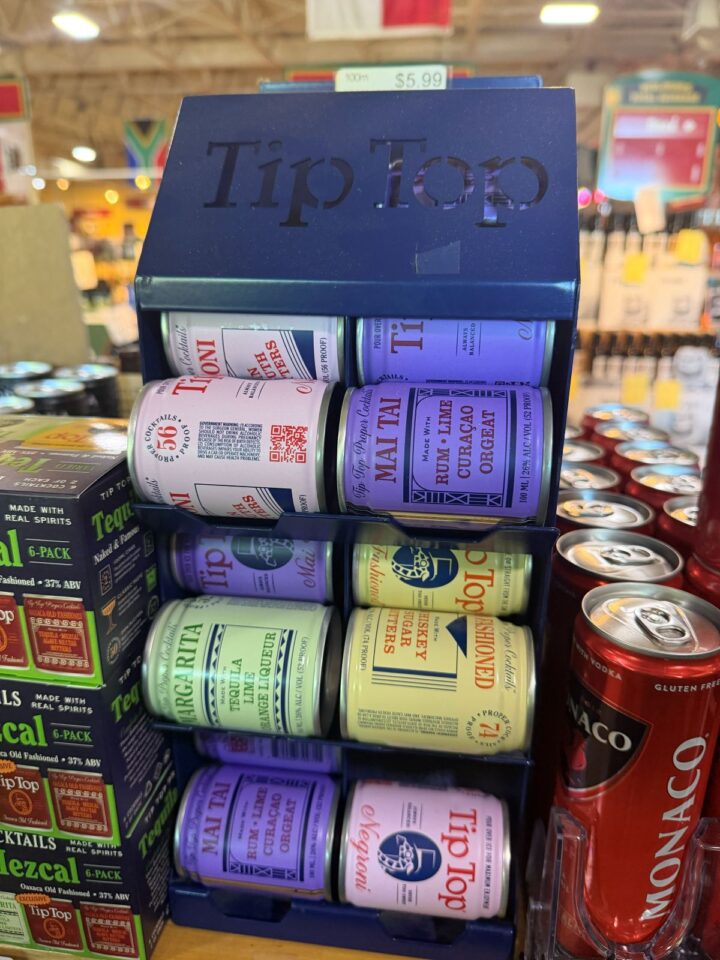
Retail innovation is coming into major play with smaller spirits packages. “From a point-of-sale viewpoint, it’s how do you make these things that are spring fed, or gravity fed?” Dinsmore asks. “Little things like Tip Top ($6 a 100-ml.) in a snail like counter unit that feeds itself is helping drive sales. It’s innovative, small size, entry price point, little cans, and a point of sale making it really easy for an impulse buy.”
Smaller size spirits bottles helps retailers give consumers what they want but also comes with a price. “It’s a higher margin difference by about 5%-7%, but it also brings your average ring down, which in some ways hurts you,” Dinsmore explains. “It’s a more profitable ring, but it’s also a cheaper ring. We have a good selection with opportunities for people, but we don’t have to have every size from every brand, nor do we have the space for it.”
Miniature upscale spirits bottles also draw a certain amount of attention from gift giving shopping. “People come in who want to give their office staff a thank you,” Dinsmore says. “I’ve had people come in and buy Johnnie Walker Blue 200-ml. ($85) for their bridal shower. They can’t afford the big bottle, but they can afford a chunk of the little one. It’s interesting because it touches all consumers regardless of social economic status.”