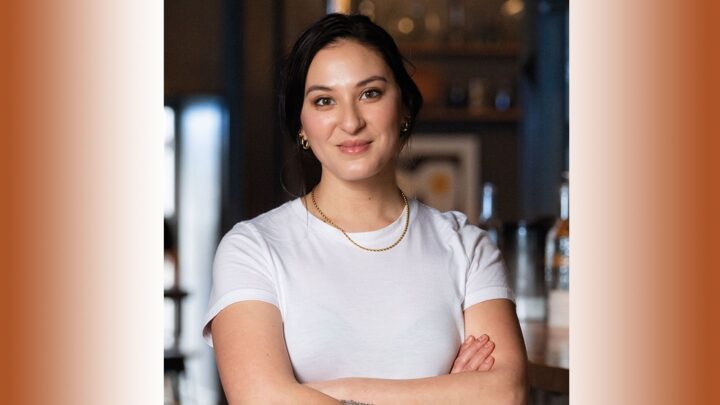
Kendra Hada didn’t set out to become a bartender. She was working as a server at Sunday in Brooklyn in Brooklyn, New York in 2016 when she offered to help out in the kitchen to lighten the load, which led to her being asked to handle kitchen inventory and eventually bar inventory as well. “Next thing I knew, the owners asked me if I wanted to bartend, and that’s how I started,” she says, adding that since the venue didn’t yet have a full-fledged bar program, it was a trial by fire. “I had to wing it, learning everything on the fly.” Learn she did, and her newfound talent landed her a gig at Existing Conditions, the renowned experimental cocktail bar from Dave Arnold and Don Lee, in 2018. “Sunday in Brooklyn was my crash course—it’s where I learned speed and efficiency—and Existing Conditions is where I learned technique and flavors,” Hada says. “We were acid-adjusting juices and cordials, using refractometers and centrifuges to clarify juices. Most people learn how to bartend with the classics—I learned with the author of ‘Liquid Intelligence.’”
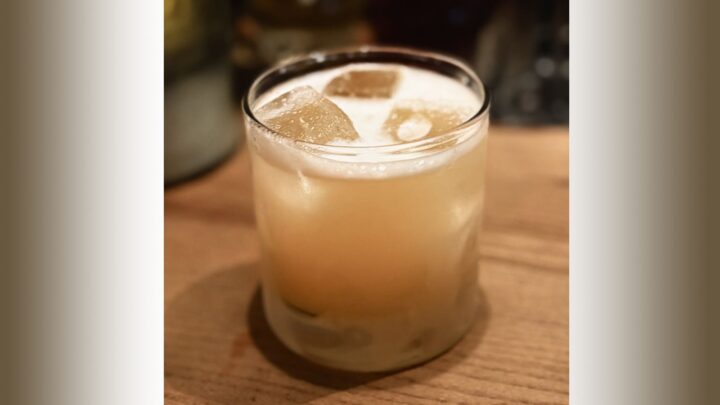
Hada moved to San Francisco in June 2020, in the midst of lockdown, and as the hospitality industry was bouncing back in September 2021 she began bartending at acclaimed cocktail spot ABV, where she remains today, crafting what she calls “spirits-centric” drinks ($13-$19). “We’re very intentional when choosing spirits for cocktails; not all whiskies, for instance, are going to have the same finish or flavor in a drink,” Hada explains. “The spirits we employ are chosen because those are the spirits we think taste best and the distilleries we want to support.” Her Spring Fling Martini ($15) features Nikaido Oita barley shochu—a brand she also proudly represents as an ambassador—Atxa Blanco vermouth, and Awayuki gin, while her Cardi P. ($18) blends Barsol Pisco, Rothman & Winter Orchard Quince liqueur, 2-year-old Clear Creek Apple brandy, lemon juice, and house-made gum syrup and cardamom bitters. Hada adds that ABV is her favorite place she’s worked, largely thanks to her respectful and kind coworkers. “I’m severely hearing impaired in both ears, yet my coworkers treat me the same as anyone else, in terms of job role and expectations,” she says. “They let me have my autonomy to state for myself if I’m struggling, and if I need help, they don’t hesitate to ask what I need to be supported.”