While the overall U.S. table wine market continued to contract in 2025 after peaking in 2020, the premiumization trend remains intact as consumers buy less wine overall but continuespending more per bottle. Total U.S. table wine volume declined 3.9% to 253 million cases last year, down 45 million from its 2020 peak, according to Impact Databank. Wines priced at $10 and above also declined, falling 2.5% to 87 million cases after reaching a high of 93 million cases in 2021. However, the highest-priced segment proved more resilient. Wines priced above $15 per bottle slipped just 1.5%, compared with a 2.8% decline for wines priced between $10 and $15, demonstrating the relative strength of the premium-plus category.
Although premium wines dramatically outperformed the broader market over the past decade, growth has moderated since the category reached its recent peak in 2021, signaling a transition from a period of rapid expansion to a more mature phase. Even so, premiumization continues to reshape the U.S. wine market. Premium-plus wines accounted for just 12.4% of total U.S. table wine volume in 2000, but that share nearly doubled to 23.8% by 2015. Despite continued declines in overall wine consumption, the premium-plus segment’s share climbed to 34.4% in 2025, highlighting U.S. consumers’ ongoing preference for higher-priced wines.
On the retail value side, premium pricing has become the industry’s primary growth driver. In 2000, wines priced $10 TKand above accounted for just 9.5% of total U.S. table wine retail sales by value. By 2015, that share more than quadrupled to 40.3%, and by 2020 it had climbed to 52.6%. Last year, premium wines represented 56.5% of the market’s retail value, as U.S. consumers continue to trade up even as overall wine consumption declines.
At the higher price tiers, imported wines are emerging as a key growth driver relative to their domestic counterparts. Although imported and domestic wines in the broader $10-and-above segment declined at roughly the same pace in 2025, imports priced above $15 were the only portion of the overall category to post a volume gain, rising 2%, while domestic wines in the same tier fell 3%. Imports had already established a strong growth advantage between 2015 and 2020, when wines priced at $10 and above record an average annual compound growth rate of 11.7%, compared with 3% for domestic wines. Even as volume declines became more widespread after 2020, imported wines priced above $15 maintained a 6.2% average annual compound growth rate through 2025, as compared to 1.5% for their domestic counterparts, reinforcing the strength of imported wines at the premium end of the category.
Among the U.S. premium wine category’s leading brands, a handful continue to dominate through strong consumer loyalty and widespread distribution. Million-case domestic brands account for more than 54% of the total domestic premium wine segment, with five labels now exceeding 2 million cases in the U.S. Josh Cellars remains the clear leader at more than 6.8 million cases. On the imported side, million-case brands represent 28% of the premium total. While category leaders such as Stella Rosa and Kim Crawford posted volume declines in 2025, they continue to anchor the segment from a volume perspective.

California Leans Into Innovation
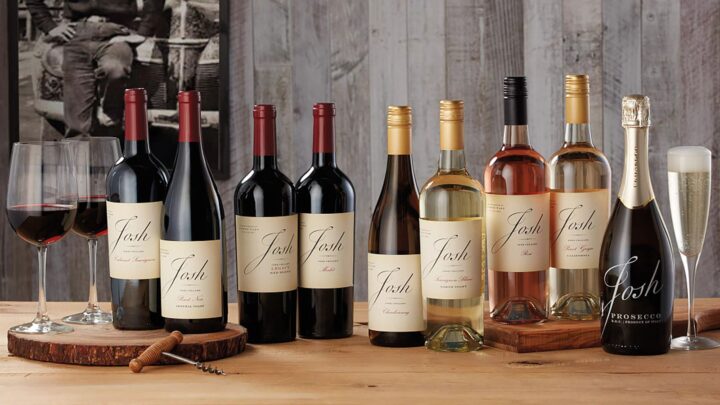
The domestic premium-plus table wine category features a robust lineup of 15 brands surpassing 1 million cases in the U.S. market, collectively totaling 32.1 million cases last year. Josh Cellars alone accounts for more than one-fifth of that volume and has continued to post consistent gains even as the broader premium wine market has slowed. In 2025, Deutsch Family Wine & Spirits’ flagship California brand grew 3.7% to 6.8 million cases—an impressive rise from just 15,000 cases in 2010. Josh Cellars now outsells the category’s second-largest premium brand, Italy’s Stella Rosa, by more than 3 million cases and generated nearly $1.1 billion in U.S. retail sales last year, almost twice Stella Rosa’s retail value.
A key to Josh Cellars’ success has been its ability to capitalize on evolving consumer preferences while extending the brand beyond its core varietals through innovation and advertising investment. In early 2024, Deutsch Family introduced Seaswept, a lower-alcohol blend of Sauvignon Blanc and Pinot Grigio designed to appeal to consumers seeking lighter, more refreshing white wines. The line expanded this spring with the launch of Seaswept Sparkling ($15), positioning the brand to compete for occasions increasingly dominated by RTDs, hard seltzers, and other sparkling beverages, particularly among younger LDA consumers.
“Seaswept and Seaswept Sparkling have introduced a fresh take as refreshing wines designed for high-energy occasions that have typically not been associated with wine,” says Dan Kleinman, chief marketing officer at Deutsch Family Wine & Spirits. “Our loyal consumers remain the foundation of the brand and continue to choose Josh Cellars because they trust the quality and consistency we’ve delivered over the years. At the same time, innovations like Seaswept, Seaswept Sparkling, and Non-Alcoholic Sparkling have helped us connect with more audiences and expand our reach beyond traditional wine occasions, while still reinforcing the approachable, welcoming brand consumers already know.”
The company has also broadened Josh Cellars’ reach into other fast-growing segments. Last year, Deutsch Family introduced a non-alcohol sparkling wine, complementing Josh Cellars Prosecco—one of the fastest-growing premium sparkling wines in the U.S.—and giving the brand an entry into the expanding non-alcohol category. Josh Cellars Cabernet Sauvignon Hearth was also launched to appeal to consumers seeking richer, more full-bodied Cabernet expressions. The company notes that Josh Cellars’ white and sparkling portfolios have been performing strongly with Pinot Grigio, Sauvignon Blanc, Chardonnay, and Prosecco all posting growth.
“Today’s consumers are very intentional about where they spend, and they’re looking for brands that consistently deliver on quality and value while being the right fit for the emotional benefit they want to receive on the occasions they choose wine,” says Kleinman. “This is why Josh Cellars continues to resonate.”
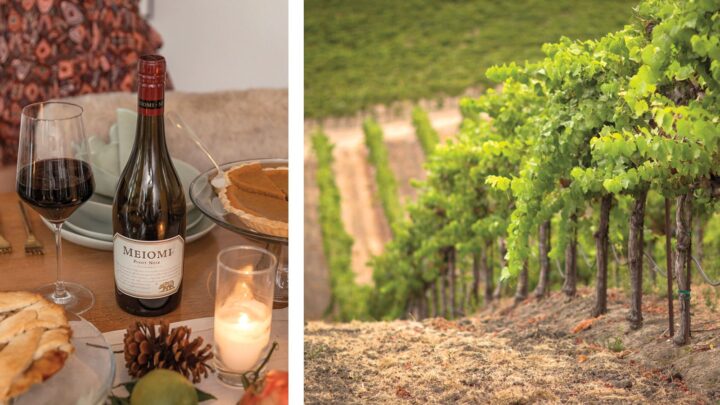
As a number of leading domestic premium wines lost volume in 2025, Meiomi held roughly flat at -0.5% to 1.69 million cases, remaining shy of its 2022 peak of nearly 1.83 million cases. Meiomi also remains one of the industry’s strongest premium brands at retail, ranking third by dollar sales among premium table wines.
A longtime leader in the Pinot Noir category, Meiomi entered a new chapter last year following its acquisition by TKThe Wine Group from Constellation Brands. The company is repositioning the brand through a premiumization strategy that pairs expanded AVA offerings with a refreshed marketing platform designed to resonate with younger LDA consumers. “Our new strategic and creative vision leans into the moments after the moment—whether it’s après ski or after the beach or after a long day at work—when consumers pause and reset and reach for a bottle of Meiomi Pinot Noir,” saysThe Wine Group CMO Helen Kurtz.
The relaunch includes new Monterey and Sonoma County Pinot Noirs that reconnect the brand with the coastal appellations that formed Meiomi’s original tri-appellation blend while introducing a more premium tier to the portfolio. The Wine Group is also refreshing the brand’s image through its new “The Perfect Finish” campaign, which spans its website, brand imagery, and social media, and experiential activations such as the Club Noir pop-up series, which debuted earlier this year.
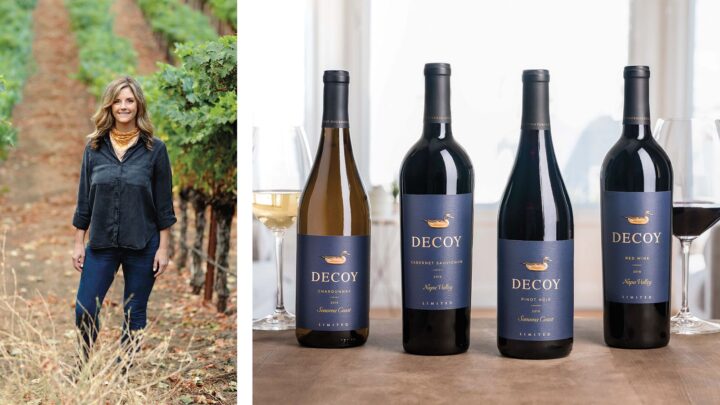
Decoy by Duckhorn continues to show momentum through a focused premiumization strategy. The brand surpassed 1.6 million cases after posting another year of growth in 2025, with volume increasing 2%. At the higher end of the portfolio, Decoy Limited ($20-$30) exceeded 200,000 cases last year and has recently expanded with two new releases: a North Coast Sauvignon Blanc and a limited-time Napa Cabernet Sauvignon. Rather than serving as a permanent addition to the lineup, the Napa Cabernet is intended as a blueprint for introducing appellation-focused, selection-driven wines to the range on a strategic basis.
“Decoy Limited is designed to unlock exploration within a trusted brand,” Chanel Caplan, The Duckhorn Portfolio’s senior vice president of brand management for premium brands, recently told Impact. “North Coast Sauvignon Blanc builds on Decoy’s strength as a leader in Sauvignon Blanc and builds out Decoy Limited’s white wine offering as an accompaniment to our Chardonnay. Napa Valley Cabernet Sauvignon was an opportunity to create a truly special Limited release—leveraging Napa’s equity to deliver a quality halo for the Limited tier and reinforce Decoy’s credibility at higher price points.” The new wines join an expanding Decoy Limited portfolio that includes Sonoma Coast Chardonnay, Paso Robles Cabernet Sauvignon, Alexander Valley Merlot, and other appellation-focused offerings.
The Wine Group’s Cupcake reversed a downward trend last year, posting a 1% volume increase to 1.5 million cases in the U.S. While the premium wine segment has remained challenging, the company says the environment allowed Cupcake Vineyards to double down on the core attributes that resonate with its consumers: quality, fun, and value. That positioning has been reinforced by the brand’s “Serious Wine. Unserious Name.” digital campaign, which highlights its flagship white varietals in an approachable, engaging way.
At the same time, the company is looking to adapt to evolving consumer preferences with innovations that meet changing drinking occasions. “In 2025, Cupcake Vineyards did just that by launching our first Alcohol-Removed Sauvignon Blanc,” says Collin Cooney, vice president of marketing at The Wine Group. “We know that consumers are moderating and that people who drink non-alcoholic beverages also enjoy full-alcohol offerings. Giving consumers a non-alcohol complement to our full-alcohol SKUs is a natural brand progression, and the consumer pull has been very promising.”
Building on that momentum, The Wine Group is expanding Cupcake’s Alcohol-Removed lineup this year with Chardonay, Pinot Grigio, and Brut, providing consumers with alcohol-free versions of some of the brand’s most popular wines for occasions when they want an alcohol-free option.
Imported Leaders Face Pressure
While imported premium-plus wines continue to represent an important and growing part of the U.S. wine market, many of the segment’s largest brands saw volume declines in 2025. Stella Rosa, from Riboli Family Wine Estates, remained the leading imported premium-plus wine brand with more than 3.7 million cases, despite a 7.5% volume decline in the U.S. last year.
After years of outperforming the broader U.S. wine market, Stella Rosa has begun to face many of the same headwinds affecting the category. Even so, the Italian import remains one of the U.S. market’s largest wine brands and continues to benefit from a differentiated position within the category. Unlike traditional table wines, Stella Rosa has built a franchise around sweet, lightly sparkling, fruit-forward wines with lower alcohol levels. The Italian leader has successfully attracted younger LDA consumers who might otherwise choose RTDs, flavored beverages, or cocktails, expanding wine occasions beyond the category’s traditional consumer base.
Innovation also remains central to Stella Rosa’s appeal. Its extensive lineup of flavored wines and continued product development have helped keep Stella Rosa relevant as U.S. consumers increasingly seek flavor variety, lower-alcohol options and lighter, more approachable wine occasions.
New Zealand’s leading wine import to the U.S., Constellation Brands’ Kim Crawford remained relatively resilient in the U.S. last year, slipping just 0.4% to more than 1.7 million cases as many competing premium imports posted steeper declines. While demand for premium-plus table wines has softened, Kim Crawford continues to lead the New Zealand category, with Sauvignon Blanc remaining the portfolio’s growth driver.
The brand also assumed greater strategic importance last year following Constellation Brands’ divesture of much of its mainstream wine portfolio to The Wine Group. As the company sharpens its focus on a smaller group of higher-growth, higher-margin brands, Kim Crawford remains one of the company’s flagship wine brands, highlighting the strength of Marlborough Sauvignon Blanc and Kim Crawford’s position as a leader in the space.
Bright Spots On The Horizon
Although premium-plus wines are no longer immune to the pressures weighing on the broader U.S. wine market, the segment continues to outperform lower-priced tiers by capturing a growing share of consumer sales. Looking ahead, leading suppliers are increasingly depending on premiumization, innovation, and strategic brand-building to drive growth. Imported wines, higher-priced offerings, lower-alcohol options, and occasion-based innovations are expected to remain the U.S. wine market’s brightest opportunities as the category continues to evolve.
Indeed, luxury wines with strong brand recognition continue to fare well.At fine wine importer Wilson Daniels, wines from the likes of Domaine de la Romanée-Conti, Domaine Leflaive, Biondi-Santi, and Gaja, among others, are outperforming. “All in all, depletions are up about 6% at midyear,” says Wilson Daniels president Rocco Lombardo. “The luxury sector continues to outperform. Anything above $20 is doing well, anything above $50 is doing better, and anything below $20 is not doing as well.”