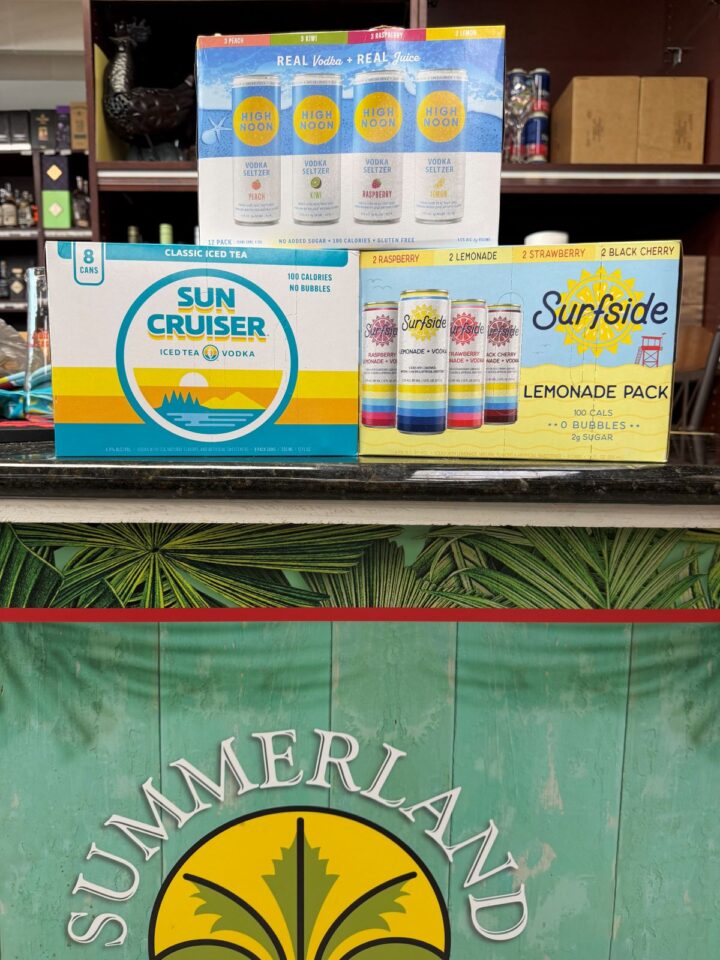
Spirits-based RTDs are maintaining double-digit gains at the beverage alcohol retail tier in the face of industry headwinds. “Spirit-based RTDs were up 27% in sales in our stores in 2025 versus 2024,” says Ian Aker, owner, Summerland Wine & Spirits in Summerland Key, Florida, and his family also owns Florida Cork and Bottle store in Indian Harbour Beach, Florida. “In the first quarter of 2026, they were up 31% versus 2025, so the momentum continues.”
Aker’s stores each carry about 250 spirits-based RTD SKUs, compared to 160 at the end of 2024. Aker is offering free RTD cocktail tastings almost every week now, and in the section of the store where the RTDs are located, he put a TV on the wall and plays Sun Cruiser and Surfside advertisements. “We see consumers looking for non-seltzer RTDs, as well as low-carb and zero sugar options,” he says. “Lemonade flavors are seeing a huge popularity surge.”
In the last year, Sun Cruiser Classic Iced Tea ($17 an eight-pack of 12-ounce cans), Surfside Lemonade Variety Pack ($20.49 an eight-pack of 12-ounce cans), and Tip Top Cocktails ($20 a four-pack of 100-ml. cans), have seen significant growth at Aker’s stores. All three brands are new to Aker’s stores over the last two years. High Noon’s Beach Variety Pack ($30 a 12-pack of 12-ounce cans) is also a top seller.
Vodka-based offerings dominate the category at Aker’s stores, but other spirits are gaining traction. “Casamigos new canned cocktails ($20 an eight-pack of 200-ml. cans) are proving popular, and the gin-based Long Drink ($15 a six-pack of 12-ounce cans) has seen continued growth,” he says.
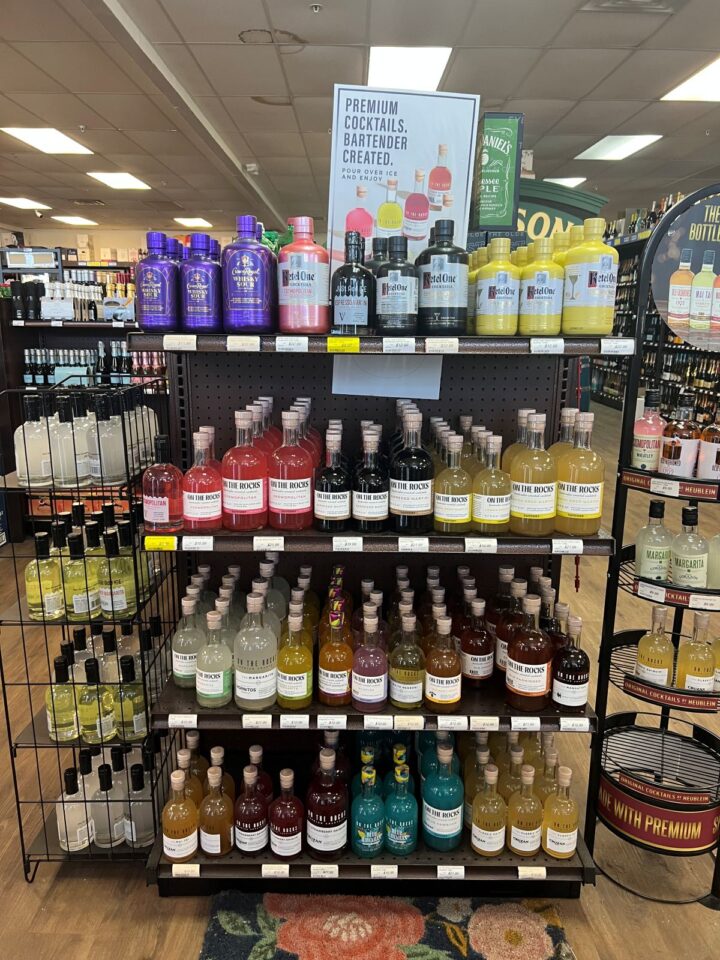
Spirits-based RTDs are experiencing strong growth at the two Kreston Wine & Spirits stores in Wilmington and Middletown, Delaware. “RTDs have performed well and continue growing,” says Jeff Kreston, company vice president. “We’ve always had a large selection of RTDs but have seen more customers realize what they are. Some brands like Cutwater ($13 a six-pack of 12-ounce cans) that were allocated and hard to keep in stock last year have started catching up, so we haven’t seen panic buying as much but continual purchasing habits.”
Kreston carries 765 spirits-based RTD SKUs. “We probably have had more but with less seasonal releases and product issues, we’ve seen a few less SKUs, as well becoming selective on how many more Margarita and Long Island pre-mixed cocktails we need on the shelves,” he says.
In-store tastings, retail displays, and email blast are marketing strategies Kreston utilizes. He notes Tik Tok and other social media platforms have driven category sales and helped introduce top shelf brands to the category, such as the Bulliet Manhattan, Bulliet Old Fashion (each $23 a 750-ml.), and On The Rocks ($22 a 750-ml.). “Letting the customer see the brand they buy and showing it’s in their premade drink helps the purchase,” he says.
Category growth also appears to be gravitating toward line extensions of super-premium ready-to-drink, higher octane, spirits forward, short cocktails. “I’m not sure how many new brands, but definitely line extensions are coming out,” Kreston says. “We always had Ketel Espresso Martini and Ketel Cosmo and now Lemon Drop (each $23 a 750-ml.) has come out. There are new On the Rocks flavors in bottles and cans ($13 a four-pack of 12-ounce cans).”
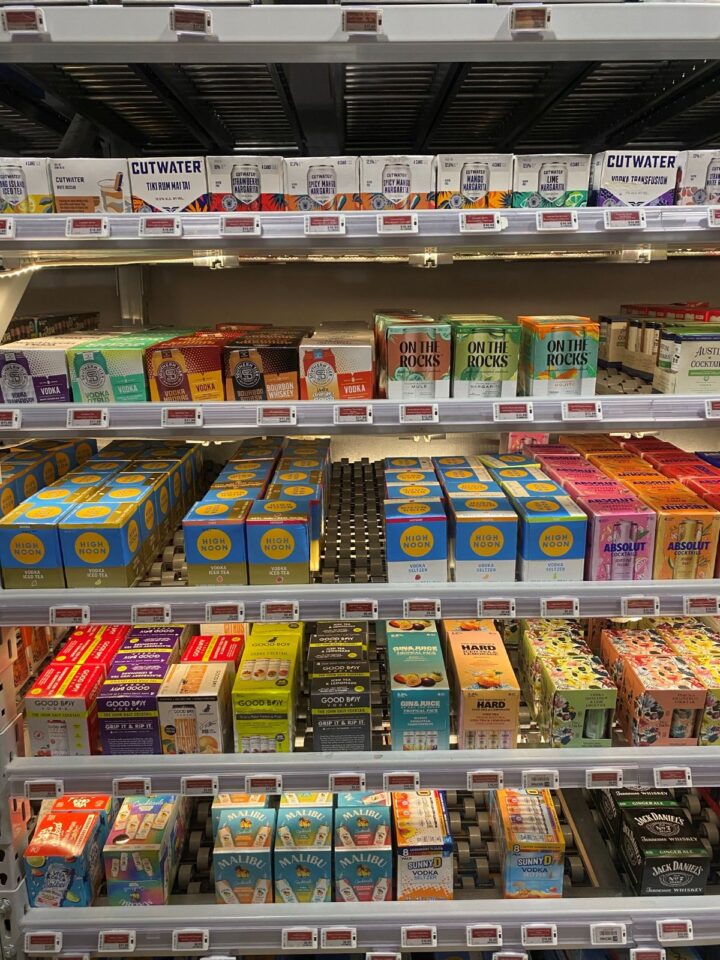
In Albany, New York, spirits-based RTDs do quite well at Empire Wine, especially with rising temperatures. “We’ve seen an increase from this time last year to today,” says Mike Caputo, store internet operations manager. “We have around 16 large shelves dedicated to RTD cocktails, and our checkout line has shelving on both sides, most filled with RTDs.”
Empire has several hundred RTD SKUS in the store with more available online. “We’re always packed to the gills, so SKUs with inventory in our brick-and-mortar location are close to the same this year as last, but online is a whole different beast,” Caputo says. “That never stops growing.”
Empire customers like the low-ABV options like High Noon and Surfside Lemonade (each $9.49 a four-pack of 12-ounce cans). “They are sessionable and easy to crack open,” Caputo says. “It seems like the simpler the cocktail, the better it sells in RTD form. Craft cocktails, of course, have their own following.”
Caputo says convenience, portability, and the fun factor will drive canned cocktail growth. “When High Noon broke out, we were one of the first to bring it in,” he says. “From there, things went wild. I love making my own cocktails, tweak recipes, and experiment with variations, but there’s something special about coming home after closing the store, reaching into the fridge, and pulling out an ice-cold cocktail with no prep work.”
RTDs are redefining beverage alcohol. “We continue to find more room and consider where they should go on the shelf, whether in their own category, or with their brands,” Kreston says. “Trends will change with cocktails, so some will end, and then new ones will replace them.”
While flavors are important, Aker says pricing will ultimately drive category growth. “Volume will sustain as long as they keep the pricing affordable, as customers have gotten hooked on them,” he says. “While certain flavors intrigue customers, it’s really the price point that drives volume. Once you get north of $2.50 a can, the volume drops off. We’re seeing companies produce smaller can sizes to keep prices in the right zone.”