To meet the ever-changing needs of the on-premise sector, spirits suppliers and wholesalers have made a commitment to educating the bartenders and mixologists who serve as the face of the restaurant and bar community. Some of the beverage industry’s biggest companies are offering a varied and growing roster of bartender and mixology classes designed for all levels of the on-trade. If knowledge is power, these companies are working hard to create a highly skilled workforce that can act as liaisons between tiers one and two of the beverage industry—producers and distributors—and tier three, the on-premise outlets that attract consumers and bolster overall business.
Companies like Pernod Ricard, Diageo, Bacardi, Heaven Hill, and Brown-Forman host a wide array of classes designed to educate both new bartenders and seasoned veterans alike, and they’re creating trade advocacy departments specifically to handle bartender education. Similarly, Southern Glazer’s Wine & Spirits provides intensive multi-session experiences that teach the bar trade about specific spirits types and cocktail-making techniques. It all adds up to an immersive and far-reaching set of programs that offer top-notch education and ultimately strengthen the beverage industry overall.
“As a supplier, we can only be as strong as the health of this industry,” says Pernod Ricard’s senior manager of trade advocacy Nicolette Diodati. “By creating educational resources, we can help build a more equitable, sustainable future for the hospitality and service industry. There is a true thirst for knowledge and the engagement is inspiring.” She notes that bartender education is critical for Pernod Ricard. “My department was built to uphold our commitment to engaging and transforming the hospitality industry through education, access, and strategic programming that inspires the world’s greatest hospitality practitioners,” Diodati adds. “We’re dedicated to building educated bartenders around the globe and creating a sustainable future where innovation and excellence thrive.”
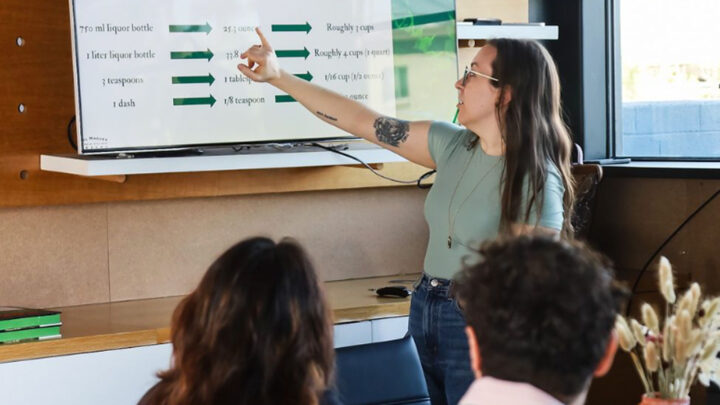
Pernod Ricard’s bartender education programming spans from the foundational BarSmarts to in-depth branded experiences that go over spirits history, production, and distillation. BarSmarts is an online program that covers bartending basics with a curriculum spanning from drinks-making technique, bar prep, and training to drinks history and the exploration of classic cocktails. Upon completion of the first level, further courses are unlocked. And on the opposite end, Pernod Ricard offers Jameson Black Barrel Irish whiskey certification and the Tequila-centric Tahona Society by Olmeca Altos, both in partnership with Portland Cocktail Week Oregon. The branded platforms offer multiple levels of education and can incorporate up to a six-week course
For a more casual experience Pernod Ricard also has brand ambassador programming that includes national education components hosted by representatives of the company’s key brands in markets nationwide. Diodati says that Pernod Ricard revamped its trade advocacy efforts in 2024, and that she now runs significantly more programs than she did even just a few years earlier. “Our initiatives span all formats,” Diodati adds. “Some are online only, self-guided, and available in multiple languages, while others are in-person, tailored, and guided. Education is the key to industry sustainability and progress.”
Investing In People
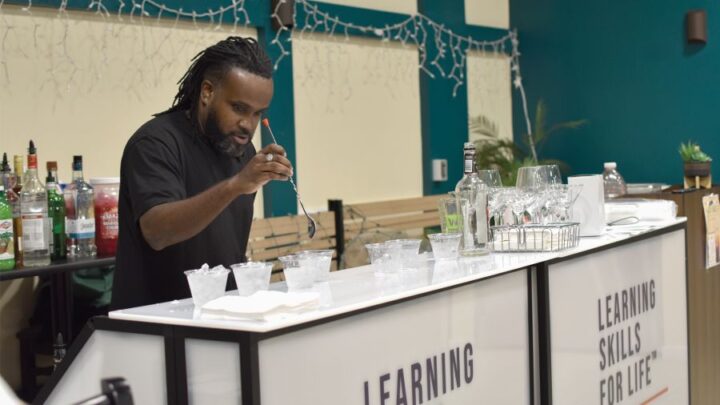
For Diageo, bartender education is an investment in people that pays dividends back to the company many times over. Diageo offers several teaching initiatives, including Learning Skills For Life, which includes both online and in-person classes BRANDSacross North America, oftentimes in partnership with local community organizations and hospitality schools. Learning Skills For Life focuses on entry-level bartending and hospitality skills as well as business talents like budgeting and financial literacy, and it targets underemployed and underserved populations.
Diageo’s in-person classes span from two to six weeks in cities like Baltimore, Chicago, Houston, and New Orleans, and its bartending programs teach basics on more than 140 cocktails and customer service skills. Participants take quizzes throughout the program and have to demonstrate what they’ve learned at the end by making seven cocktails in ten minutes, including using correct glassware and garnishes. Members of the class also do a mock job interview, and they celebrate with a graduation ceremony at which they receive certificates for completion of the course and Diageo’s Serve Safe program.
“We know a vibrant, thriving hospitality sector is essential to the success of our business,” says Dr. Danielle Robinson, director of community engagement and partnerships at Diageo North America. “We also know that the hospitality sector has been facing challenges. For Diageo, it’s critical that we invest in training the next generation of talent so the hospitality industry can continue to grow, innovate, and reflect the consumers it serves. We believe this can be a critical driver of economic opportunity.”
Robinson adds that along with benefiting from a knowledgeable bartender base, Diageo also reaps rewards by building lasting relationships in the on-premise, noting that some of its bartender trainees go on to become brand ambassadors. Last year, Diageo had more than 3,000 people complete its online and in-person training programs.
Heaven Hill Brands boasts a full suite of bartender training programs, from foundational cocktail classes to advanced and technique-driven workshops. Company ambassadors host regional programming in key markets across the U.S. that’s designed to meet bartenders where they are with regard to their skillset. More advanced classes include bartending sessions like the art of espumas, mastering agar-agar, and maximizing molecular mixology techniques, and these are complemented by category masterclasses that offer focused deep dives into spirits categories, from gin and gin cocktails to American whiskey immersions.
These programs provide students with tools and ingredients, and Heaven Hill hosts upwards of 40 trade education events annually across the country. While the company offers distillery immersion programs for bartenders who can travel to Kentucky, it also offers traveling experiences in markets that Heaven Hill’s advocacy team identifies as having a need and an interest. Many of the programs are free to attendees.
“Education should be an investment we make for the trade, not one we expect from them,” says Elayne Duff, Heaven Hill Brand’s director of advocacy. “Providing practical, advanced training supports the next generation of bartenders and ensures our partners have the tools they need to succeed. It also strengthens our relationships—bars see us not as suppliers but as collaborators in their craft. We believe knowledge builds loyalty. By helping bartenders grow their skills, we help them grow their business and, in turn, ours.”
Looking forward, Duff expects Heaven Hill to continue supporting and growing its commitment to bartender education initiatives. She notes that the company’s ambassador team is expanding and says that as technology evolves the company is looking into hybrid learning models, global collaborations, and deeper category education for key spirits types.

Strengthening Relationships
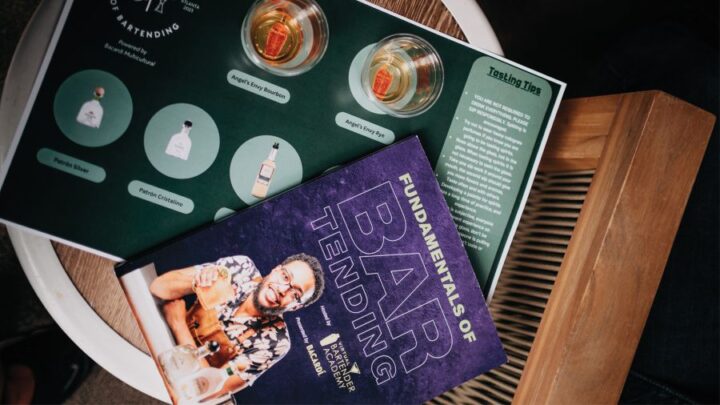
Bacardi similarly focuses on building relationships with bartenders nationwide, and it offers several programs designed to hone skills while teaching novices and veterans alike. The company’s Shake Your Future program is a global initiative aimed at empowering underrepresented and unemployed young adults who want to start careers in bartending. Further, Bacardi’s Fundamentals of Bartending is a core focus for the company, offering hands-on training in operations, cocktail building, and hospitality skills, and its Bacardi Center of Excellence at Florida International University offers specialized curriculum on cocktail history, spirits distillation, and service.
Bacardi has a team of 80 ambassadors who work on brand and mixology education efforts, and their work is supplemented by the online program Free Pour, which gives bartenders access to category and mixology education from their homes, workplaces, and personal devices. “The platform offers a wide range of content, from in-depth category education and mixology techniques to curated articles, insights, and trends shaping the beverage industry,” says Adrian Biggs, Bacardi’s director of trade advocacy. “Bartending is more than pouring drinks—it’s about human connection, hospitality, and expertise. These programs help ensure that skilled, passionate bartenders remain central to the guest experience and they also help us build a more inclusive and diverse workforce.”
Biggs adds that Bacardi has and will continue to prioritize educational programs, most of which highlight Bacardi-owned brands. He describes the company’s commitment to bartender education as long-term. “These programs are part of Bacardi’s broader commitment to developing the next generation of bartenders through hands-on experience, formal education, and mentorship,” Biggs says. We view it as our responsibility to invest in the people behind the bar. We plan to expand reach, enhance content, and continue supporting the next generation of bartenders to ensure the human touch in hospitality remains irreplaceable.”
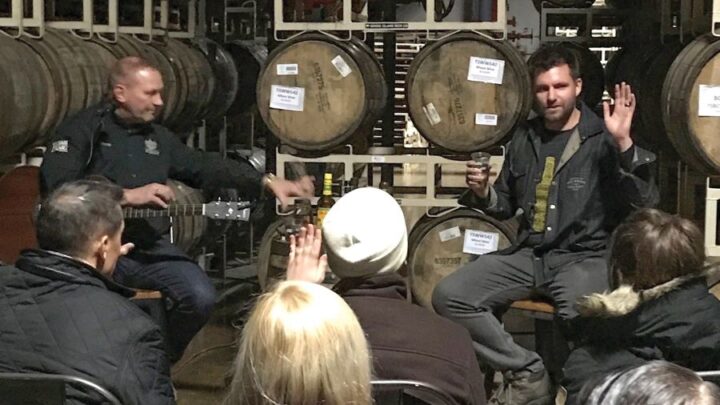
Brown-Forman teaches through brand immersion and the company’s trade advocacy director Emily Arseneau says its current premier education offering is Jack Backstage, a multi-day intensive curriculum designed to provide bartenders with a full knowledge base about Jack Daniel’s Tennessee whiskey. To qualify for Jack Backstage, mixologists must win one of the brand’s global bartender competitions, and upon doing so they get to spend three days at the Jack Daniel’s distillery, including sleeping accommodations at the brand’s Airstream camp and hands-on activities led by the whiskey’s production experts that include visiting the distillery and rickhouse, barrel raising, and a formal tasting. Jack Backstage is offered nearly every week from March to November.
“We view Jack Backstage as one of the most powerful conversion tools we have, and it’s an investment into a deeper relationship,” Arseneau says. “We find that bartenders are floored to realize every drop of Jack Daniel’s is distilled in one place and by showing them the entire process, from source to bottle, we underscore the value of quality and why it matters in cocktails.”
Fostering Loyalty
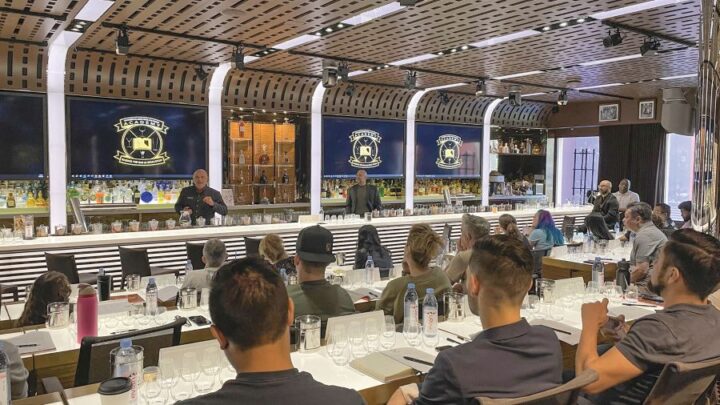
Bartender education spans beyond just the supplier tier—distributor Southern Glazer’s Wine & Spirits (SGWS) has been offering bartender education for 25 years. The company’s director of mixology Livio Lauro operates a classroom space out of the company’s Las Vegas offices, with classes held in the Larry Ruvo Academy Room to honor the senior managing director of SGWS Nevada, who started the company’s wine academy three decades ago and added a spirits curriculum soon after. SGWS offers a few tiered cocktail and spirits programs, starting with Cocktail 101 and Spirits 101, which help new bartenders learn the basics. This is complemented by the eight-week course the Academy of Bartending and Cocktails and the ten-week course the Academy of Spirits and Fine Service.
Each week brings a different topic and focus, and bartenders are expected to travel to Las Vegas to fully immerse themselves in the programs. To complete the cocktail academy, participants have to create their own signature drink, and upon doing so they get a certificate. For the spirits course, there are final exams and bartenders can get a “certified spirits expert” title if they score high enough. Beyond those intensive courses, Lauro also hosts themed seminars to address new bartending and cocktail trends, such as the recently added Aperitivo World, and he notes that all the SGWS educational programming is free to attend for bartenders.
“The bar world is so intimidating, and these experiences are life changing for many people,” Lauro says. “As more bars are opening, there’s not enough expert staff anymore, and the industry is evolving and becoming more complex. We’re definitely going to expand education opportunities—we have to because the industry is changing so much.”