
Marketers are navigating a rocky foundation for Cognac in the United States, the confluence of changing consumption habits, economic uncertainty, the rise of ready-to-drink and cannabis-infused drinks, and other factors all weighing heavily on the category. Add in federal tariffs—at 15% as of press time—and the reality of the current landscape intensifies.
However, that’s not to say that marketers aren’t scrambling to position their brands for engagement and re-engagement from fickle consumers. And while the national volume numbers tell a dismal story, some say there are signs of progress.
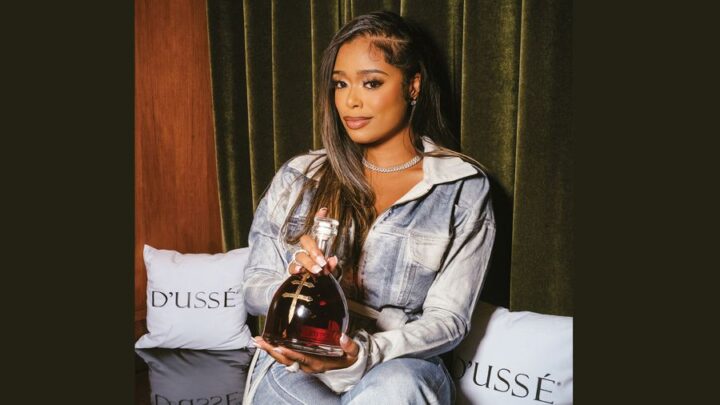
Gigi DaDan, general manager of Bacardi-owned D’Ussé Cognac, acknowledges that the luxury demand and at-home consumption that helped surge the category forward in 2021 have since faded, but she notes the cultural momentum for the spirit is still strong. “This presents an opportunity for brands like ours, that can translate that heritage into more relevant and modern codes, such as exciting cocktail strategies or new and rich experiences for consumers at home, at cultural events, or the on-premise,” she says.
In fact, DaDan says demand is staging a bit of a turnaround. “The U.S. market is stabilizing and we’re seeing encouraging signs of growth among younger consumers who are discovering Cognac through music, fashion, sports, and the on-premise,” she says. “Person-to-person sharing and gifting remain an important part of category recruitment, but the rise of premium cocktails and a renewed appreciation for quality craftsmanship is bringing new energy to Cognac.
Brian Radics, CMO of San Francisco-based Hotaling & Co., which imports Hine Cognac, paints a slightly improving, but still challenging, landscape for Cognac. Noting some of the factors impacting many spirits types—economic uncertainty, post-Covid-19 inventory surpluses throughout the value chain, changing consumption habits, the rise of RTDs, and intense competition from big industry players—Radics also acknowledges more Cognac-specific realities, such as volume losses to Tequila and American whiskey.
“Cognac, as a relatively small spirits category in the U.S., can be more fickle than other categories,” Radics contends. “In the U.S., there is one dominant player—along with only a few other large brands—that really define the category. These lead brands wrap themselves up in popular culture cues across music, sports, and celebrity lifestyles. By definition, there are cultural cycles that are difficult to predict and can turn sour for a period of time, as happened in the U.S. post-Covid-19.
“Yet, the Cognac category declines have bottomed out in recent months as we see an uptick in volume,” Radics continues, noting that volume is still down year over year, but is less negative than in the past few years. “Forecast data I have seen has Cognac returning to both volume and value growth over the next three years,” he says. “All said, Cognac brands need to work harder than ever to re-establish a relevant relationship with consumers.”
John Guilarte, director of marketing for Camus Cognac, also offers a positive spin on a difficult situation. “While volume is down, we’re seeing stronger engagement at the higher end of the market. Consumers today are more educated, more curious, and more willing to invest in products that offer craftsmanship, authenticity, and a strong narrative,” he says.
Volume Dip
Cognac depletions in the U.S. have been erratic for the past decade. There was an initial slow build from 2015-2020, before a sharp spike in 2020 and 2021, when volume peaked at 8.49 million cases, according to Impact Databank. By 2022 the negative impacts of that build-up were being felt, with the market losing about 2 million cases in a single year. In 2024, depletions had fallen further to 5.15 million cases.
At the same time, volume in the U.S. market has become more concentrated around a single brand. Hennessy Cognac accounted for 62.3% of the overall Cognac market in the U.S. in 2024, and was the only brand in the top five to post a depletions gain, up 2% to 3.2 million cases.
The momentum appears to be waning for the leading brand, however. Hennessy’s volume in NielsenIQ channels was down 6.5% in the year-to-date ending November 15, 2025, as the Cognac category continues to struggle to find traction. Brand owner Moët Hennessy blamed Cognac woes as a catalyst for the 7% organic drop in company-wide first-half revenue to €2.6 billion ($3 billion).
Rémy Cointreau also felt the squeeze. Rémy’s flagship Cognac division saw first-half sales slip 8% to €300 million ($347 million), despite “strong sales growth in the U.S. for the second consecutive quarter, driven by low comps and improved depletions,” the company said in its half-year report. While boosted by improvement in Rémy Martin VSOP, value depletions are still trending negative by mid to high single-digits, with volume down low to mid-single-digits year-over-year, according to Impact Databank. Rémy Martin Cognac was the 43second-largest in the U.S. in 2024 with volume at 622,000 cases, a 21.2% decline.
While Rémy’s decline was the steepest among the top five brands, others clearly struggled as U.S. consumers continue to favor whiskey and Tequila. D’Ussé fell 18% to 525,000 cases, Courvoisier slipped 4.5% to 406,000 cases, and Martell slumped 10.9% to 139,000 cases in 2024, according to Impact Databank.
Pricing Challenges
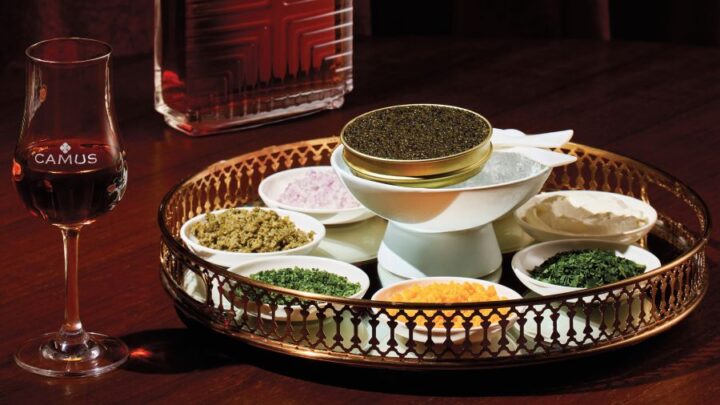
Economic uncertainty has made some consumers shy away from luxury spirits, but marketers say there remains some enthusiasm for luxury Cognac marques. “We’re seeing growth at both ends of the spectrum,” says Camus’ Guilarte. “On one side, there’s demand for ultra-premium and rare Cognacs for collectors seeking single barrels, small batches, or provenance-led releases like Les Ateliers. On the other, there’s renewed interest in VS and VSOP for cocktails, especially in mixology forward accounts.
“One of the most exciting developments is the U.S. is our introduction of the Les Ateliers, our allocated and limited-edition collection that allows us to showcase rare eaux-de-vie, experimental cask finishes, and unique blending techniques,” Guilarte continues. “It’s a passion project that’s now proving to be a powerful brand builder, especially among collectors looking for something different from the usual mainstream options.”
Earlier this year, D’Ussé launched what DaDan calls its “grandest arrival yet,” the D’Ussé VSOP 1.75-liter. “We’ve already seen incredible momentum for it at retail and on-premise, and it has far outpaced our expectations,” she says.
Despite enthusiasm for select luxury products, pricing and premiumization remain a key concern. Cognac’s challenges have been exacerbated this year by tariff increases and, more generally, economic uncertainty. Price discounting had been significant in the past couple of years as marketers sought to regain volume and share; now, an additional tariff needs to be factored in and, at the same time, consumers are watching their dollars more closely. “Tariffs have certainly created headwinds for the entire category, but our goal is to protect accessibility for our consumers while maintaining the care and quality that define D’Ussé,” notes DaDan.
Tariffs add “a layer of complexity” to pricing strategy in this volatile sector, says Guilarte. “For smaller independent houses like Camus, there’s less buffer to absorb these cost increases compared to some of the global conglomerates,” he adds. “We’ve taken a very measured approach, we’ve made selective pricing adjustments, but always with the long-term consumer relationship in mind. With major players like Hennessy dropping retail prices to recapture volume in a downward market, there’s a delicate balance between holding brand positioning and driving sales.”
Radics says the tariff uncertainty over the spring and summer months was difficult to navigate. “Now that there is more certainty, I expect to see suppliers taking more deliberate actions that best tie to their strategy in this new reality of higher costs,” he says. “For Hine Cognac, we at Hotaling & Co. have a longstanding relationship with our French partners and plan to mutually absorb as much of the tariffs—and other costs of goods increases—as possible to minimize the
impact on our American Hine Cognac fans.”
Notably, Hine doesn’t produce a VS Cognac, instead focusing on more luxury marques beginning with VSOP. “So far, together we have been able to avoid increasing prices,” Radics adds. “But I’m not sure how long into 2026 we can continue absorbing the tariff costs.”
While marketers may be holding the pricing line, some consumers are nevertheless feeling the squeeze. Ryan Oehmsen, co-owner and director of wine and spirits of New Jersey’s White Horse Wine and Spirits, says he sees the impact directly. “Sales on all the higher-end Cognacs— VSOP, XO, and above—have basically come to a stop,” he says. “We’ve had to discontinue quite a few and just keep smaller amounts of others in stock.” T. Cole Newton, proprietor of New Orleans restaurants Twelve Mile Limit and The Domino, has pared his Cognac selection to Hennessy VS only. “It sells at a steady rate, but it is far outstripped by the top products in other categories,” he says.
Newton says pricing is prohibitive, especially when it comes to courting newer consumers. “The price of Cognac has gone up considerably in the last decade or so, even among the lower tiers,” Newton notes. “Given the high standards for the category, this puts Cognac at a disadvantage as the market has seen a drift away from premium options. There simply are no affordable options for entry level consumers.”
New Enthusiasm?
Younger, legal-drinking-age consumers are the holy grail of the spirits world, and virtually every brand is trying to tap into that demographic for growth. Cognac is certainly no exception.
D’Ussé’s DaDan targets new and existing consumers through experiences. “Our youngest consumers…are incredibly tapped into cultural conversation, which makes us primed to engage with them through various digital and in-real-life connections,” she says. “For us, that means thoughtful collaborations with musical artists, designers, and nightlife that feel accessible but also offer a new and meaningful experience.”
Tapping into that cultural conversation also requires knowledge. “Education is also key for recruiting the newer generations, so we’re always working to demystify and modernize Cognac while showing the versatility of D’Ussé,” she adds.
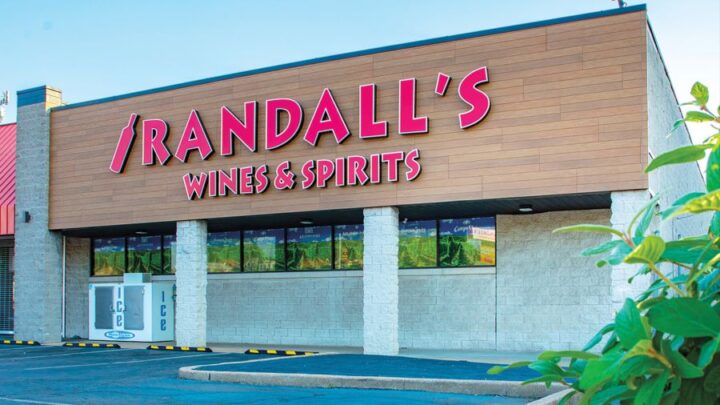
At retail and in restaurants and bars, some industry executives say there are signs of enthusiasm. Others, however, aren’t seeing it yet. Todd Randall, managing director of the Randall’s chain of wine and spirits stores in Missouri and Illinois, says Cognac is languishing a bit in his stores. “The category has softened quite a bit after the surge during the pandemic years,” he says. “Volume is down overall, and while there’s still steady interest in the core VS and VSOP items, movement isn’t what it once was. Many of our customers who used to buy Cognac regularly have shifted toward American whiskey or Tequila.”
Randall believes Cognac marketers could do more to win the coveted audience. “Younger consumers respond to authenticity, mixability, and social-media storytelling,” he says. “What’s missing is a push from suppliers for on-premise education and sampling; that’s still the most effective way to win younger drinkers back to the category.”
Oehmsen of White Horse Wine and Spirits, has had a different experience, at least with one brand. “Hennessy VS is actually trending up from last year across all sizes,” he says. “The biggest driver has been the 375-ml. and 200-ml. bottles. Other brands, though, are pretty flat or trending down. Rémy and the higher-end items like Hennessy VSOP have taken the biggest hit, which I think has to do with the current economic climate. People are still drinking, but they’re trading down to what fits their budget.”
On-Premise Innovations
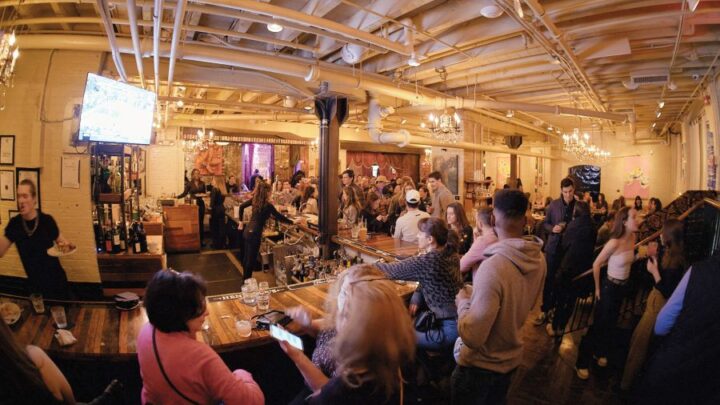
Cognac has made some inroads through use in cocktails, although as a more expensive spirit, it can be cost-prohibitive for some restaurants and bars. But that’s not always the case. Jack Bardy, owner of three Boston establishments—The Beehive Eatery & Bar, Cósmica Mexican Food & Bar, and Spy Bar at the Revolution Hotel—is using Cognac liberally and is seeing the benefits. “We’re seeing Cognac gain new traction through cocktails. Guests, especially those in their 30s and 40s, are curious about it as an alternative to Bourbon or Tequila,” he says. “At Spy Bar, where our program leans into spirit-forward and hi-fi cocktails, Cognac is being rediscovered as part of the ‘return to classics’ movement. Younger drinkers, in particular, are open to it when it’s presented in a fresh, modern way.”

At Spy Bar, two popular cocktails are the Midnight Sidecar ($16), which contains Pierre Ferrand 1840 Original Formula Cognac, Cointreau, and fresh lemon, served in a glass with a sugared rim, and the Velvet Revolution ($17), made with Hennessy VSOP Cognac, Lustau East India Sherry, Benedictine liqueur, and Angostura bitters. Meanwhile, The Beehive features the Hive Royale ($15), which includes Courvoisier VSOP Cognac, honey syrup, and fresh lemon, topped with sparkling wine. At Cósmica, the Borderies Blossom ($16) includes Camus Borderies VSOP Cognac, lime, pineapple, agave syrup, and a touch of chili salt.
Bardy’s embrace of Cognac notwithstanding, there remains significant work to be done to motivate a new set of consumers to choose the French spirit. Marketers acknowledge that reality but are ever-optimistic. Through partnerships, sponsorships, traditional advertising, experiences, and more, they’re intent on connecting. As Oehmsen puts it, “It’s about getting your brand out there in new ways and trying different approaches until something sticks.”