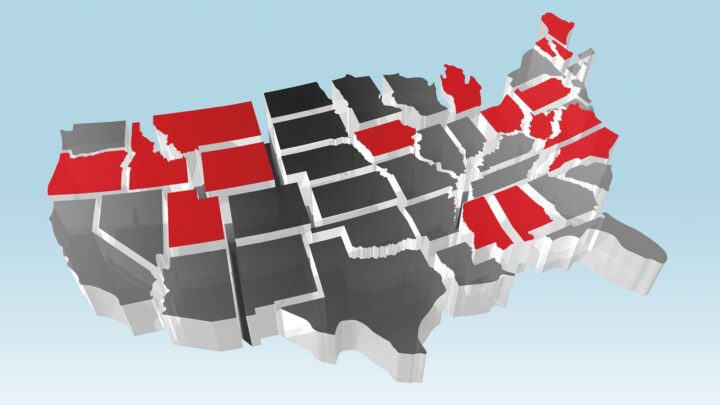
Faced with growing challenges for consumers’ discretionary income, spirits volume and value decreased overall in control states last year, down 1.4% to 60.4 million 9-liter cases and 2.8% to $13.2 billion, respectively. Explosive sales growth from spirits-based RTDs—up 22.6% to $434.4 million—and a modest Tequila gain—up 0.2% to $2.5 billion—wasn’t enough to offset declines in all other spirits categories in the 17 control states and Montgomery County, Maryland. “Suppliers have gone from focusing on growth to focusing on share, especially the publicly traded companies,” says David Jackson, COO at the National Alcohol Beverage Control Association (NABCA).
Jackson notes spirits consumption faces growing pressure from multiple factors, including health issues and the growing use of GLP-1 weight loss drugs, Gen Z not drinking the same amount as other generations, and the popularity of Delta-9 THC beverages. “We don’t know how much impact has come across from the THC beverages, but a lot of liquor stores are selling it, not so much in control states, but definitely in the open states, and they are making up some of their shortfall with this product,” he says.
Growth Catalyst
Despite many spirits categories struggling, there are positive signs for the spirits industry overall in control states. Taken as a whole the category suffered declines, but spirits volume actually increased in five control states and Montgomery County, according to NABCA and Impact Databank. Spirits volume increased 1.3% in both Pennsylvania, to 9.63 million 9-liter cases, and Utah, to 1.65 million cases. Category volume was up 0.4% in Mississippi to 2.2 million cases and 0.2% in both North Carolina, to 7.72 million cases, and Alabama, to 3.61 million cases.
Montgomery County, Maryland expanded sales of spirits-based RTDs to beer and wine retailers last January and experienced a 6.4% gain in spirits volume to more than STATEShalf a million cases in 2025. “Montgomery County finished positive in cases by quite a bit, but mainly because of the new distribution on RTDs,” Jackson says.
Pennsylvania also expanded RTD sales in September 2024 to grocery and convenience stores. Spirits-based RTDs were up more than 20% in both volume and dollar sales in Pennsylvania last year. Pennsylvania and Montgomery County’s expansion of RTD sales were the two biggest recent regulatory changes in control states, according to Jackson. “It’s had a pretty big impact with increased distribution and increased sales,” he says.
The booming growth of spirits based RTDs nationwide is the industry’s biggest growth catalyst in decades. RTDs continue surpassing other categories in overall sales. Last year, RTDs sales in control states were greater than those of Scotch, gin, and Irish whiskey. Spirits RTDs are primarily driven by vodka- and Tequila-based concoctions, though whisk(e)y-, rum, and gin-based offerings are also in the mix. “The biggest trend change has been within the cocktails and the canned cocktails,” Jackson says.
Single-barrel Bourbon releases and lotteries for allocated offerings also continue creating consumer excitement and promoting premiumization. “People are lining up for specialty Bourbons,” Jackson notes. “It’s usually done on allocations. A lot of states do a form of lottery to be able to get it. People are still lining up when the time comes.”
The other significant bright spot among control states last year was that spirits in Utah were up in both volume and value, as sales inched up 0.2% to approximately $331.8 million. “It might be the only state positive in both dollars and cases in the whole country,” Jackson says.
Control State Leaders
Despite a 3% decrease to $2.04 billion last year, Michigan remained the No. 1 control state by spirits sales. The Wolverine State ranked No. 2 in spirits volume, as it decreased 1.9% to 8.7 million cases. The Michigan Liquor Control Commission (MLCC) offers more than 15,000 spirits products. “We continue to work with our partners in the spirits industry to ensure consumer demand is satisfied, whether through longstanding popular brands or the introduction of cutting-edge new products,” says MLCC chairperson Kristin Beltzer.
Single digit volume growth in Pennsylvania has spirits volume approaching 10 million cases, and it remained the No. 1 control state by spirits volume. Spirits sales in Pennsylvania decreased 1.3% to $1.85 billion and it ranked as the No. 2 control state by spirits dollar sales. “The spirits category showed a consumer preference shift towards value, with the year-over-year change in dollars per liter falling,” says Darrell Clarke, chairman of the Pennsylvania Liquor Control Board (PLCB).
North Carolina is the No. 3 control state in both spirits volume and sales. Although spirits sales in North Carolina decreased 1.8% to $1.83 billion, the Tar Heel State is right on the heels of Pennsylvania for the No. 2 position among control states. Spirits volume inched up in North Carolina and is slowly approaching 8 million cases. “North Carolina ABC boards are offering more barrel selections and specialty Bourbons in their stores, which customers appreciate,” says Hank Bauer, chairman of the North Carolina Alcoholic Beverage Commission.
North Carolina followed the overall top spirits trends last year: spirits-based RTDs increased 31% and on 3.3% growth and Tequila was the leading category by dollars. In other action, consumers are trading down to smaller sizes, with cases of 375-ml. packages up 17.2%. “We continue to see increased use of cold box storage space, as legislation passed in the past two years allows suppliers to provide coolers for brands,” Bauer says. “We are also seeing ABC boards decrease overall selections in their stores and increase shelf space for proven top brands.”
The North Carolina ABC’s top priority is securing funding for a new warehouse. “Staff have been working with the General Assembly on it,” Bauer says. “Sunday sales in ABC stores are another topic included in last year’s draft legislation, although we’ll see if anything happens this year.”
The North Carolina ABC system is celebrating its 90th anniversary this year with its “90 Years of Spirited Service” campaign. “North Carolina was both the first southern state to enact Prohibition and the home of the nation’s most legendary bootleggers and moonshiners,” Bauer says. “That interesting blend creates a rich history and many great stories. Since the first sale at an ABC store in Wilson on July 2, 1935, our ABC system has grown to annual sales of nearly $2 billion.”
Bauer is upbeat about spirits sales in The Tar Heel State this year. “Things can change, but we project that North Carolina can finish the 2026 fiscal year either flat or down by less than 1%,” he says. “There are various factors, such as THC products, weight loss drugs, and generational differences affecting the industry. It’s encouraging to see North Carolina continue to perform ahead of many national trends, and for local ABC Boards to continue innovating and making changes in their stores to benefit customers.”
Premiumization Trends
Ohio ranked as the No. 4 control state in 2025 in both spirits volume—down 4.3% to 6.61 million cases—and value—down 4.8% to $1.69 billion. Premiumization trends, however, remain strong. In 2025, the Ohio Liquor Luxury Collection generated $4.6 million in sales following its September 2024 launch. “The collection was expanded to include products priced at $199 and above—versus the previous $249 or more—to better align with consumer purchasing behavior and expand accessibility,” says Jackie DeGenova, superintendent of Ohio’s Division of Liquor Control (OHLQ). “Featured items priced above $249 grew 26% in dollar sales. Products in the $199–$249 tier grew 11%.”
American whiskey remains Ohio’s largest category by dollar sales, followed by Tequila and vodka. American whiskey growth is concentrated in the premium and super-premium price tiers. “While the category declined overall last year, results varied across price tiers, with growth concentrated in premium and super-premium segments, particularly among highly sought-after and allocated products, where consumer demand remains exceptionally strong,” says DeGenova.
While decreasing 3.7% in volume and 4% in sales to $423 million, American whiskey accounted for 25.4% of total Ohio spirits sales. “Some mainstay brands have struggled to maintain their market share,” DeGenova says. “At the same time, well-positioned heritage brands and emerging craft producers are finding success through innovation and expanded product offerings, limited and special releases, and a clear focus on quality and differentiation.”
Tequila volume declined 0.9% in Ohio last year. Sales decreased 3.7% to $389 million, representing 23.4% of total spirits sales. “This is not necessarily a shift to less-expensive brands,” DeGenova says. “Instead, we are seeing growth in smaller package sizes, with shoppers continuing to buy within their preferred brands and quality tiers while calibrating purchase size to occasion and budget.”
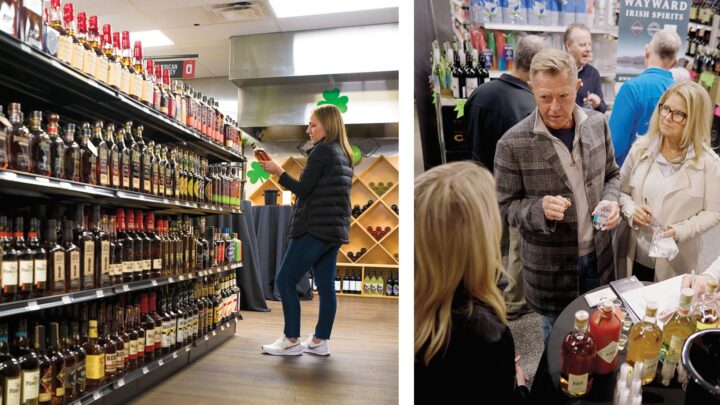
Experiential engagement remains a key driver of consumer interest in spirits at Ohio retail. In-store tastings, distillery tours, special bottle releases, and guest appearances by distillers and brand ambassadors continue to draw strong participation and traffic. OHLQ partners with distilleries and brands for large-scale, multi-city tasting events, in-store raffles for allocated products, special release events with master distillers, and celebrity bottle signings and book signings. “Consumers are increasingly interested not only in what they are buying, but how it is made, reinforcing the importance of education, storytelling, and in-person experiences in the retail environment,” DeGenova says.
Key OHLQ initiatives this year will focus on American and international whisk(e)y, Tequila, and programming tied to America 250-Ohio. Engagement programs will continue, including Single Barrel Saturday, in-store raffles and surprise releases, OHLQ exclusive single barrels, and appearances from leading distillers and industry personalities. “These initiatives continue to support consumer discovery and premiumization, driving in-store traffic across Ohio’s OHLQ locations,” DeGenova says.
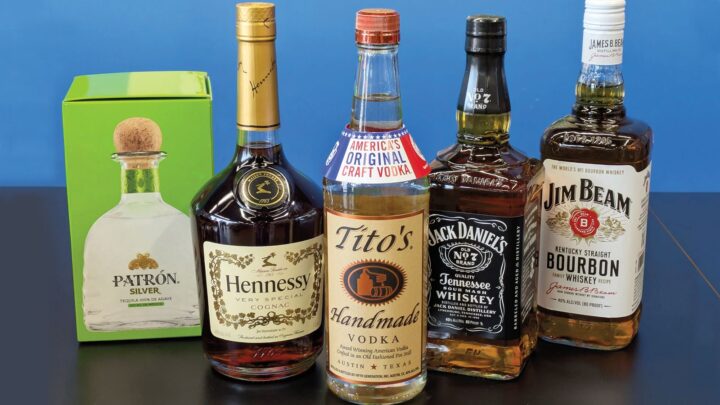
Premium spirits brands and higher-end offerings also remain popular in Virginia, which was the No. 5 control state in 2025 in both volume—down 1.9% to 5.65 million cases—and sales—down 2.7% to $1.4 billion. Two of Virginia’s top five selling spirits brands last year were super-premium, and the other three were premium offerings. While premium Tito’s vodka ($23 a 750-ml.) is the No. 1 selling spirits brand in Virginia, super-premium Hennessy V.S. Cognac ($38) ranked No. 2, and Patrón Silver Tequila ($50) ranked fifth. Jack Daniel’s ($27) ranked third and Jim Beam ranked ($17) fourth.
RTDs, Tequila In Control
Jackson anticipates RTDs and Tequila will continue to grow this year in an otherwise soft spirits market. “The winning categories of RTDs and Tequila are likely to continue being the only two positive drivers there,” he says. “I don’t see anything turning around in the next year.”
Premiumization trends and events, however, will continue creating bright spots. “It creates a positive atmosphere when people are lined up and have an interest in the high-end products,” Jackson says. “Stores make it an event. People go in for the allocated products and then they buy something else while they are there.”