At a time when the entire spirits industry is struggling to maintain and grow volumes, any product that resonates with a new generation of legal-drinking-age consumers is going to be viewed favorably. Marketers say flavored whiskies, perhaps more than their non-flavored counterparts, are key vehicles for harnessing the interest and allegiance of that group.
“Flavored whisk(e)y continues to play a very important role in the category because it’s often how consumers first enter whisk(e)y,” says JD Recobs, co-founder and CEO of Misunderstood whiskey. “While the broader spirits industry is experiencing some moderation in growth, we’re still seeing strong interest in products that are approachable, versatile, and easy to enjoy.”
Regan Clarke, U.S. vice president of American whiskey at Suntory Global Spirits, also notes the appeal. “We’ve found flavored whisk(e)y is attracting new people to the category,” she says. “Consumers today are seeking exploration and leaning into experimentation. Flavored whisk(e)y outperformed its unflavored counterparts last year with younger generations, particularly Millennials and Gen-Z, seeking approachable and adventurous flavors that fit into their social and lifestyle occasions.
“Our data says that flavored whiskies also attract more multicultural consumers,” Clarke continues. “Our goal is to ensure that our flavored innovations combine quality and versatility, ensuring we are aligning with evolving taste preference and occasion-driven needs.”
John Eason, CEO and founder of Sidewalk Side Spirits, notes that everything in the spirits industry is difficult right now. “Consumers have more choices than ever, not just within whiskey but across the entire beverage space,” Eason says. “THC seltzers, RTDs, and the broader wellness movement have all taken some air out of the category. That said, flavored whiskey still attracts consumers who want something approachable and fun. People are always looking to try something different, and flavors can bring new drinkers into whisk(e)y.”
By The Numbers
As a group, flavored whiskies declined last year at a pace similar to their non-flavored counterparts. The results weren’t cause for celebration—like all spirits, whiskies are seeing a downturn in volume as consumers move away from beverage alcohol consumption. For flavored whiskies, the decline in 2025 was 3.5%, dropping volume to 17 million cases last year, according to Impact Databank.
Between 2019 and 2024, volume of flavored whiskies in the U.S. increased at an average annual growth rate of 4.4%, adding nearly 3.5 million cases over those five years. Some years saw growth among many major brands, while in others growth was attributed to just one or a few brands. For example, the 0.5% increase in 2024 was due almost entirely to the introduction of Crown Royal Blackberry ($31 a 750-ml.). Vice president of Crown Royal at Diageo Hadley Schafer says Blackberry’s versatility is key to its ongoing success. “Its approachable profile works across a range of cocktails, from simple pairings like Crown Royal Blackberry and lemonade to non-traditional whisk(e)y serves like a Mojito,” Schafer says. “The versatility in the serves has helped bring new LDA+ drinkers into the category and created new occasions for enjoying Crown Royal.”
In 2025, none of the top ten brands added volume, according to Impact Databank. Fireball, the industry’s largest flavored whisky by a wide margin, declined 2.5% to 7.65 million cases. In September 2025, Sazerac released Fireball Blazin’ Apple ($16 a 750-ml.), the first-ever flavor extension for the hugely popular cinnamon whisky brand, to expand its appeal.
Crown Royal Regal Apple ($31 a 750-ml.) was the leader among four Crown Royal flavored whiskies in the top ten in 2025, though it declined 5.5% to 1.56 million cases. Crown 61Royal Peach ($31) came in at No. 5 despite a 12.5% decline to 665,000 cases. The whisky’s Blackberry variant is hot on Peach’s heels, registering volume of 600,000 cases after an inaugural year in 2024 at 610,000 cases. Finally, Crown Royal Vanilla ($31) came in at No. 10 with an 8% decline to 395,000 cases.
Ole Smoky ranked third in 2025 but volume slipped 4.5% to 1.1 million cases. That decline, however, came on the heels of an average annual growth rate of 23.8% over the previous five years, according to Impact Databank. Other leading brands also saw volumes slip, while brands outside the top ten made some headway. Impact Databank shows that brands outside the top ten collectively gained 2.1% to 2.8 million cases last year, which suggests consumers are exploring the multitude of brands and flavors available.
Approachable And Easy
Marketers agree that one defining characteristic of flavored whisk(e)y is its approachable nature. Karoline Walker, brand manager for Jack Daniel’s flavors, says flavored whisk(e)y is a vital recruitment tool as marketers seek to attract new consumers. “We’ve found that even as general consumption patterns shift, there is a consistent flavor-first audience who view flavors as a more approachable entry point into the whisk(e)y world,” she says.
Aaron Wilke, director of legacy spirits at Heaven Hill Brands agrees, noting that flavors work to keep whisk(e)y brands top of mind. “Even in a slower environment, flavors tend to perform well because they deliver variety and accessibility, which keeps consumers engaged within the whisk(e)y category,” he says, noting that flavors in particular offer “approachable, versatile options” that work well in cocktails or mixed drinks.
Wilke’s counterpart, Max Stefka, associate vice president of global whisk(e)y brands for Heaven Hill Brands, says flavors can serve as a whisky entryway. “Flavors lower the barrier to entry for people who may not have traditional whisk(e)y in their rotation yet, while also giving existing whisk(e)y drinkers a new way to enjoy the spirit in casual occasions,” he says.
Fun is also a factor. “Flavored whisk(e)y continues to offer an approachable entry point into whisk(e)y and resonates strongly with consumers looking for something fun, flavorful, and easy to enjoy in social settings,” agrees Shane Fitzharris, senior vice president of commercial at Infinium Spirits.
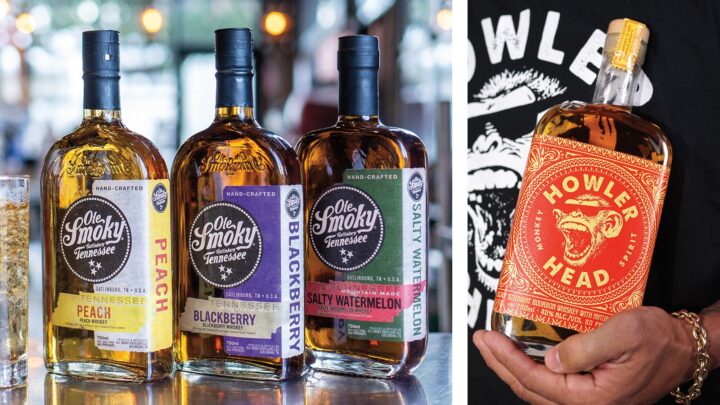
Fitzharris says Howler Head banana-flavored whiskey is likely only a starting point for the brand. “Looking ahead, we’re tracking broader flavor trends—from nostalgic favorites to globally inspired tastes—while staying true to the playful, unexpected character that defines Howler Head,” he says. “There’s a lot of runway for creativity in this space, and we’re excited about the possibilities.”
While the approachability factor positions flavored whisk(e)y as an entry-level drink, its appeal isn’t limited to that audience. “In reality, the consumer base is pretty broad,” notes Eason of Sidewalk Side Spirits. “Some people are newer whisk(e)y drinkers who enjoy something a little sweeter and more approachable, while others are traditional whisk(e)y drinkers who will reach for flavored whisk(e)y on certain occasions.”
Misunderstood’s Recobs agrees. “While Bourbon connoisseurs tend to stick to straight Bourbon whiskeys and higher proofs, we definitely see traditional whisk(e)y drinkers using flavored whisk(e)y as a tool behind the bar or in cocktails, for example in an Old Fashioned variation or a mule where the flavor adds complexity without needing additional syrups or modifiers,” he says. “At the same time, flavored whisk(e)y brings in consumers who might not otherwise reach for whisk(e)y at all.”
New Flavors, New Enthusiasm
Apple is a standard flavor for many brands, but last year its profile was raised with an introduction from a category heavyweight. In September 2025, Sazerac released Fireball Blazin’ Apple, the first-ever flavor extension for the hugely popular cinnamon whisky, to extend its appeal. Other mwflavors run the gamut—honey, cinnamon, peanut butter, peach, and many others—as marketers seek to inspire consumers and create new consumption trends.
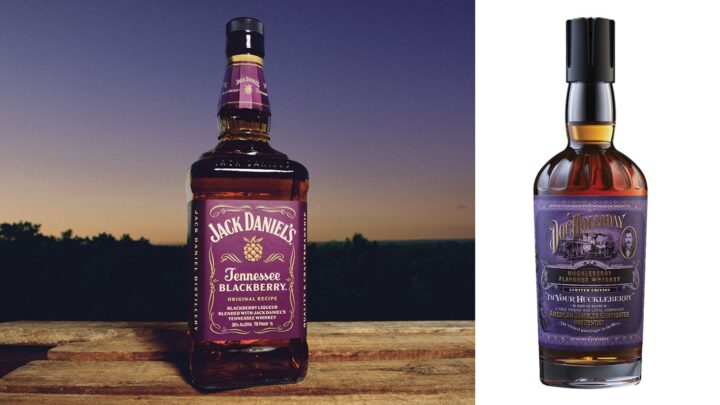
In December, World Whisky Society launched Doc Holliday Huckleberry Edition flavored whiskey ($36 a 750-ml.), the brand’s first foray into flavors. “The launch of Doc Holliday Huckleberry Edition came from two converging ideas: growing consumer curiosity around flavored whiskey and the opportunity to create something that felt authentic to the Doc Holliday legend,” says Alex Kogan, partner with Aiko Brands, which owns World Whisky Society. “Huckleberry was an obvious fit. The 63huckleberry.’ It allowed us to create something distinctive without losing the character of the whiskey itself.”
Buoyed by the early success of the brand, World Whiskey Society is gearing up for more, and it has turned to social media for help. “One of the most exciting aspects of this (Huckleberry) launch has been the level of engagement from our community,” says Kogan. “Recently, we invited our consumers on Instagram to participate in a poll to help influence the next flavor in the Doc Holliday lineup. We already have several concepts quietly developing behind the scenes, but we’re proud to say the next release will be shaped directly by the voices of our loyal consumers.”
For Ole Smoky, the flavor churn is constant, ensuring that consumers “always have something new to discover,” according to Will Ensign, vice president of marketing. “On average, we’re launching one to two new whiskey flavors every quarter,” Ensign says. “In 2025, this continued with a range of new products introduced as distillery exclusives, including Espresso whiskey which we’re planning to launch in wholesale as a limited time offer later this year.” Flavors like Salty Caramel, Salty Watermelon, and Blackberry have been stand-outs in recent years.
Blackberry has been a hit for many producers, with Crown Royal Blackberry, in particular, surging since its launch in 2024. Schafer says the brand is “focused on our core flavors” for now: Crown Royal Apple, Crown Royal Peach, and Crown Royal Blackberry. “That said, we’re always keeping a close pulse on evolving consumer preferences to understand what they would love to see in the future,” she says.
Jack Daniel’s Tennessee Blackberry ($29 a 750-ml.)launched in August 2025 and was “a primary contributor to our net sales growth in the whiskey segment for the first half of our fiscal year,” says Walker. The brand maintains the company focus for now, she says, adding, “While we are always listening to our friends, our current focus is on maximizing the incredible momentum of Blackberry and ensuring it finds a permanent home on every back bar and retail shelf.”
Walker adds that “our Jack Daniel’s Tennessee Honey, Tennessee Fire, and Tennessee Apple all serve different occasions, but Tennessee Blackberry is resonating deeply with today’s palate.”
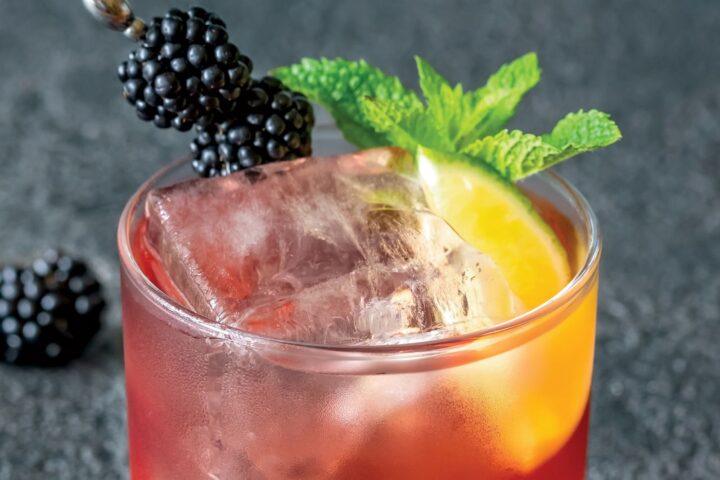
Evan Williams also counts Blackberry ($28 a 1.75-liter)among its flavors, which Stefka says is “easy to enjoy as a chilled shot, over ice, or in simple cocktails like a Blackberry Lemonade or Blackberry Cobbler made with cream soda.” In fact, like Doc Holliday, Evan Williams is looking to social media for traction. “Recently, we’ve been focusing on organic ‘TikTok famous’ experimental recipe combinations using ingredients like Dr. Pepper and cream soda,” he says.
Going Natural
One move embraced by a handful of producers is to move to more natural, less sweet flavors. Misunderstood whiskey’s Botanical Series, for example, focuses on whiskey flavors inspired by nature. The signature Ginger Spiced Whiskey was joined last year by Misunderstood Orange Blossom Bourbon, which is made with the essence of orange blossom honey.
“Consumers today are paying much closer attention to what’s actually in their drinks, which is why we focus on real ingredients and balanced flavor rather than overly sweet profiles,” says Recobs. “You’ll see additional releases in our Botanical Series, along with new concepts across the Misunderstood portfolio. We’re always experimenting, but our philosophy is quality and originality over quantity.”
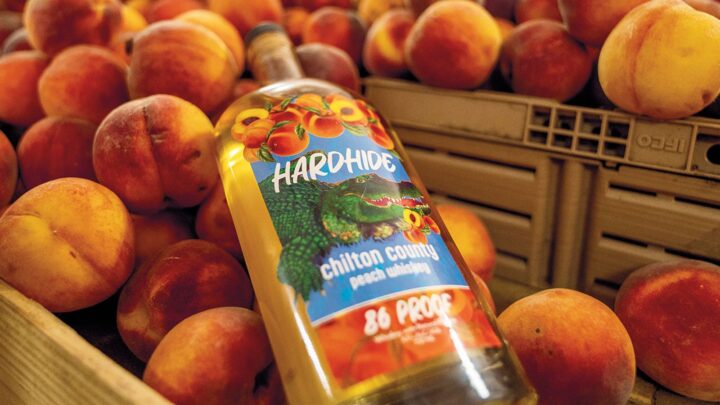
Sidewalk Side Spirits’ Eason notes that Hardhide Ponchatoula Strawberry whiskey ($34 a 750ml.) sources local Louisiana strawberries. “Our goal was to create something that still drinks like whiskey,” he says. “While many flavored products are bottled at 30% or 35% abv and rely heavily on artificial flavoring, we wanted more whiskey and real fruit character in the bottle.”
In addition to the strawberry whiskey, Chilton County Peach ($32 a 750-ml.)is also in the Hardhide lineup. Eason hints at more to come, but for now says that “with the distribution environment the way it is, our focus is really on establishing our core flavors first and making sure Ponchatoula Strawberry and Chilton County Peach continue to grow.”
While the innovation flavor train continues to steam through the industry, the current market realities are giving some producers pause. Stefka, for example, says Heaven Hill expects flavored whiskey “to remain an important growth driver within the broader whiskey category” because of its ability to attract new drinkers into the category while also satisfying existing consumers. But he says restraint is in order. “We expect some in the segment to be forced to cull down underperforming flavor variants as retailers become more discerning in their stocks,” Stefka says. “Due to this, we’re being judicious with which and how many flavors we bring to market.”