While still a small category, the non-alcohol beer (NAB) segment has emerged as a top-of-mind sector for beer retailers around the country. “In 2025, non-alcohol beer continued to be one of our strongest performing beer segments,” says Christine O’Connell, director of beer and hard beverage at Total Wine & More, a chain of nearly 300 stores across the U.S. The category’s growth is driven by increased customer interest in moderation, new innovation, consumer demand beyond the “dry January” window, and the stores’ expansion of NAB sets and displays, she notes.
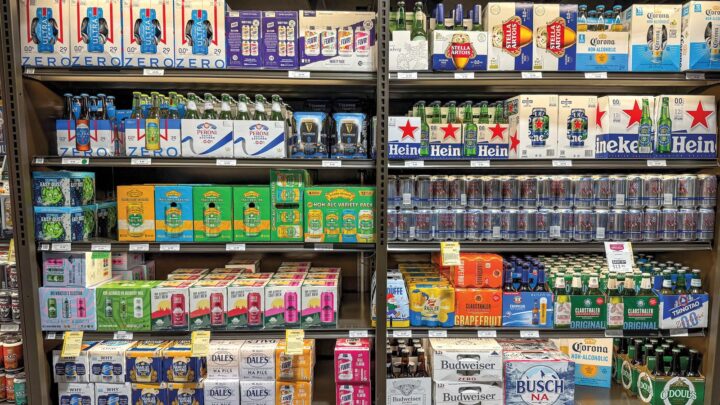
At Wilbur’s Total Beverage in Fort Collins, Colorado, beer buyer Jeff Matson is equally enthused. “Sales of NABs are going up,” the retailer says, as health-minded consumers have found that the products are “a way to have a beer and not worry [about driving under the influence].” Indeed, Wilbur’s is so committed to the category that it now devotes three full cooler doors to NABs, or as many as 50 different products, generally priced at $20 a 12-pack. “It’s not just a trend,” Matson says of the segment. “They’re here to stay.”
On-premise operators are also getting behind the fledgling category. At Monk’s Pub in Chicago, for example, about ten different bottled and canned NABs ($7-$8 an 11.2- to 16- ounce serving) are now featured on the menu, representing a range of styles, from sour to Trappist ale to porter. “We treat non-alcoholic beers the same way we treat regular beers,” explains general manager Melissa Shary. “We like to have a selection by style, including styles that perform well seasonally, such as stouts in the winter and wheats in the summer.”
‘Wellness-Minded Drinking’
Non-alcohol beers are certainly a bright spot in a beer market that’s been experiencing year-after-year declines. According to Impact Databank, sales of NABs jumped 23% to nearly 30 million (2.25-gallon) cases last year, up from 24 million in 2024. That followed several previous years of strong growth for the category.
NAB marketers and retailers point to a variety of factors for the gains. Of course, an increased focus by many consumers on health and wellness has been a key contributor. “Health and wellness are global mega trends,” says Bill Shufelt, co-founder of Athletic Brewing, whose 2.9 million cases ranked as the No. 1 NAB brand in 2025, according to Nielsen. Pointing to innovations ranging from GLP-1 medications to fitness wearables, Shufelt notes, “there’s a whole confluence of things driving the health and wellness trend, and these non-alcoholic brews are absolutely benefitting.”
Demographics are also playing a role, as, unlike in the past, younger consumers are including NABs in their drinks options. “We continue to see consumers shift toward moderation and wellness-minded drinking, a trend reinforced by younger demographics and changing social habits,” says O’Connell.
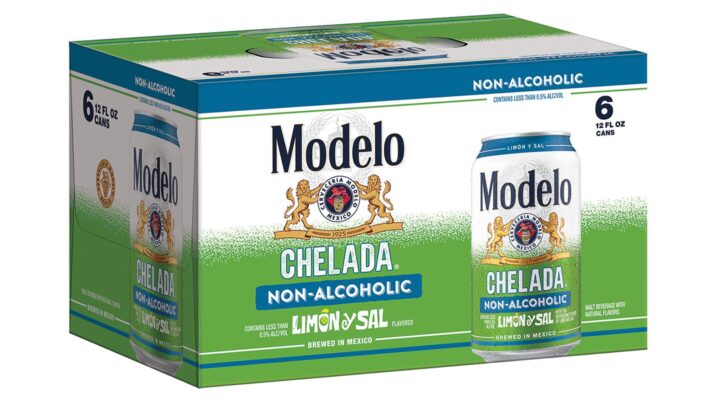
Logan Jensen, vice president of brand marketing for Modelo at Constellation Brands, adds, “the surge in non-alcoholic choices and moderation reflects a broader shift toward personalization—different occasions call for different choices.” As such, more consumers are embracing a “damp” moderation lifestyle, she continues, as 92% of non-alcohol beer buyers also purchase traditional 2026beverage alcohol products. Modelo entered the NAB segment earlier this year with the launch of Modelo Chelada Limón y Sal non-alcoholic beer in select markets.
Marketers and retailers also agree that thanks to technological and brewing advances, the quality of the products has improved in recent years. “Non-alcoholic beers have gotten a lot better,” says Nick Weiland, brand director for Shiner beer at Spoetzl Brewery in Texas, which now markets two NABs. “Technology has improved so much over the last decade that it’s making it possible to brew much better NABs than ever before.” Total Wine’s O’Connell adds, “improved product quality has reshaped consumer expectations, drawing in shoppers who want the beer experience without alcohol.”
In recent years, the “dry January” reset for many consumers has helped showcase NABs, as they’ve found that they can still imbibe in beer-drinking occasions but without the alcohol. Sales of the beers at Monk’s Pub, for example, have “increased substantially over the last two to three years,” Shary says, driven by what her customers call “Dryuary.” The Chicago bar has seen a “big uptick” in sales of NABs in recent Januarys.
But according to Jensen and O’Connell, demand for NABs is expanding beyond the first few weeks of the year. “Research shows that moderation is becoming more of a lifestyle than a once-a-year occasion, and consumers are signaling they want sessionable, flavorful choices year-round,” the Constellation Brands executive notes. “While participation in the moderation trend increases in January, we’re also seeing this expand well into the year.”
Leading Brands Soar
According to Impact Databank, many leading established NAB brands posted growth last year, several at double-digit rates. Athletic—with a range of products available at retail and even more online—posted a gain of 20%. “We like to think that we’ve reinvented the way non-alcoholic 2026beer is made,” says Shufelt, noting that Athletic now operates four breweries completely dedicated to producing NABs. Distribution of the company’s products continues to expand, now reaching 100,000 accounts across the country, including major chains like Whole Foods, Sprouts Farmers Market, Target, Wegman’s, and Total Wine.
Led by its Run Wild IPA, Athletic continues to innovate its portfolio of products. Earlier this year, the brand launched two cocktail-inspired NABs—the Moscow Mule and Paloma, both designed to be served over ice—at select retail accounts. Athletic Lite Lime & Salt, meanwhile, is rolling out nationally this spring. Run Wild on draft “continues to gain traction,” Shufelt says, shipping nearly 10,000 kegs a quarter, and more styles may be added to the company’s draft program. Additional innovation—including limited-time offers, collaboration brews, and special packaging—is also planned for the summer season.
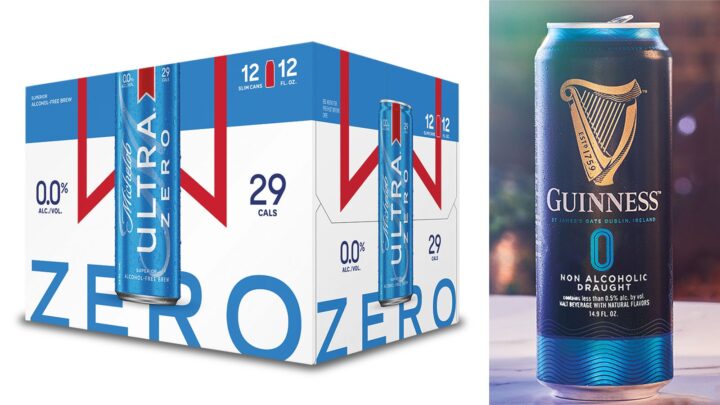
While an early leader in the NAB space, Athletic is now joined by non-alcoholic extensions of leading beer bands, all jockeying for a prominent position. Introduced in January 2025, Anheuser-Busch’s Michelob Ultra Zero quickly reached sales of nearly 1.6 million cases last year, according to Nielsen. Ricardo Marques, senior vice president of marketing for Michelob Ultra, says Ultra Zero offers consumers “unique-to-category attributes with only 29 calories [per serving], less than half the calories of major competitors.” Earlier this year, the Michelob Ultra Zero line was expanded with Zero Lime, and Marques says that initial consumer response has been “promising.” Along with parent brand Michelob Ultra, both Ultra Zero and Ultra Zero Lime will be included in a dedicated ad campaign for the FIFA World Cup 2026, Marques reveals.
Constellation Brands’ Corona Non-Alcoholic brew soared in 2025, reaching 2 million cases, according to Impact Databank. Rob Nelson, vice president of brand marketing for Corona, says the brand is seeing a strong response to packages such as 6-pack bottles and 12-pack cans. Indeed, a 12-pack of bottles launched early this year, and “it’s already off to a strong start,” he notes. For 2026, “our top priority is driving availability and boosting retail awareness,” says Nelson, adding that Corona Non-Alcoholic will be featured with Corona Extra and Corona Light in relevant displays.
Heineken 0.0, meanwhile, remained the top-selling imported NAB in 2025, according to Impact Databank, despite a slight drop in volume to 4.2 million cases. Earlier this year, Cold Pressed Lime and Nectarine Juniper expressions were added to the line. Sales of Guinness 0 increased at a double-digit rate last year, according to Karissa Downer, Guinness brand director at Diageo Beer Co. “That momentum reflects both increased distribution and strong consumer pull,” she says. “As availability expanded, particularly in high-visibility on-premise accounts, trial and repeat followed.”
Wave Of Entries
This year has already seen a wave of new NAB entries from large and small marketers alike. “Since rolling out at the top of the new year, Modelo Chelada Limón y Sal non-alcoholic is off to a great start, with early performance matching the positive feedback we received from local teams and regional accounts,” Jensen says. With the full-strength Modelo Chelada Límon y Sal a popular flavor, the non-alcoholic version is “the perfect option to deliver on the trend of flavor and moderation,” she adds. The brand was introduced in markets including Illinois, Texas, Florida, and California. At press time, no plans for expansion had been announced.
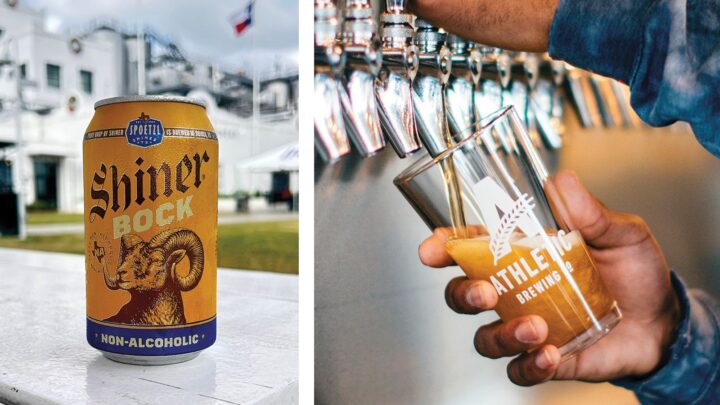
At Spoetzl, meanwhile, Shiner Bock non-alcoholic beer joined Rode0 NAB earlier this year, and according to Weiland, “the demand has been huge, and we’re actually having some trouble keeping it in stock. We spent the last couple of years working on the recipe because it had to deliver on the classic Shiner Bock taste.”
Numerous other craft brewers have also been pouring into the NAB space. “We’ve been watching from the sidelines and have observed the ratcheting growth of non-alcoholic beers,” says Steve Wheeler, chief sales officer at Mahou USA—parent company of Founders Brewing Co.—of the recent introduction of its Nonetheless family of non-alcoholic beers. Pointing to the segment’s market share growth to more than 2% of the beer category, he says a share of 4%-5% isn’t unrealistic. Nonetheless Golden is the first entry in the line, with more expressions expected.
Optimism Abounds
While Shufelt concedes that it can be frustrating when a major beer marketer adds NABs, obtaining fast national distribution, he points to the “positive sum” of the new entries. “We expect this to be a $5 billion category by 2035,” he says, “and we intend to be a leading share player no matter who comes in.”
Total Wine also welcomes the explosion in brands. “While the segment has grown quickly, the customer base for non-alcoholic beer is expanding at an equally fast pace,” says O’Connell. “We continue to see room for innovation, particularly in styles such as IPAs, seasonal releases, and flavor-forward offerings.” While SKU counts vary by market, Total Wine’s NAB selection can reach up to more than 100 items, she says, with most 6-packs priced from $10-$15.
Retailers and marketers are optimistic that the NAB segment will continue to expand. “Based on customer engagement patterns, supplier investment, and the broadening of consumption occasions, we expect NABs to remain a durable growth segment,” says Total Wine’s O’Connell. And with so many NAB consumers also purchasers of full-strength beverage alcohol, Weiland adds, “it’s not about abstention.” Rather, he says, it’s a chance to position the products as “a complementary purchase alongside customers’ usual go-to-beers.”