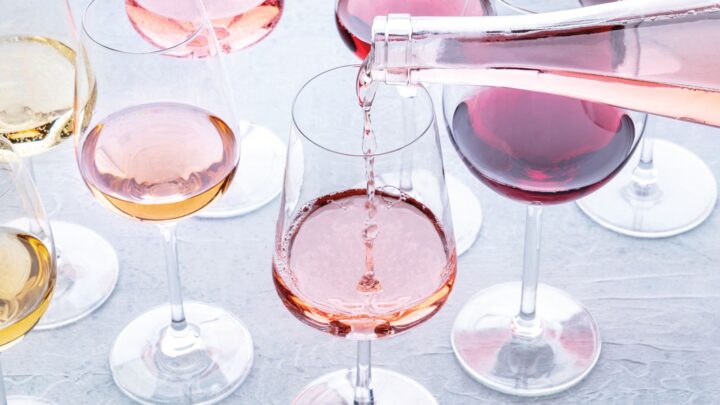
Ever since rosé wines caught fire in the early aughts, imported French rosé has dominated the category in the U.S. Last year, total leading French rosé brands increased 8.9% to 2.7 million cases and seven of the top ten French rosés experienced growth, according to Impact Databank. In the retail space, demand for French rosé remains steady. “Rosés from Provence are still by far the biggest driver for us,” says Faraah Grande, chief marketing officer at Zachys Wine & Spirits in Port Chester, New York. “There’s interest in discovering rosés from California and Italy, but not at the same level as French rosés.”
Provençal rosé wines hit a peak of 2.14 million 9-liter cases in 2018, according to Impact Databank. Since then, rosé volumes have struggled to maintain consistent growth, with headwinds like supply chain issues, the 15% U.S. tariffs on imported wines (since struck down by the U.S. Supreme Court), evolving consumer drinking trends, and inflation all taking a toll on Provençal wine sales. Shipments dropped to 1.42 million cases in 2025, down from 1.80 million cases in 2024. Now, French rosé brands are looking to get back on the path to growth.
Brand Strength
“After several very challenging years for rosé, we’re finally starting to see some positive momentum,” says Shawn Miller, senior vice president and national sales manager at Vineyard Brands, which imports the No. 1 French rosé brand La Vieille Ferme. “The category experienced an incredible influx seven or eight years ago, as seemingly every producer was making a rosé and the market became oversaturated before a correction began three to four years ago. France has always been the leader and is now back to over 50% of all sales for still rosé in the market.”
La Vieille Ferme has seen consistent growth since 2023 and leapt 23.5% to 607,000 cases in 2025. The brand notably dethroned Château d’Esclans’ Whispering Angel last year, taking its place as the No. 1 rosé brand nationwide. Produced in the Southern Rhône and Ventoux regions, La Vieille Ferme by Famille Perrin has seen traction on social media in recent years and is often referred to as “the chicken wine” by younger legal-drinking-age consumers because of the chicken illustration on the wine’s label. While La Vieille Ferme’s portfolio also includes several white and red wine offerings, the rosé accounts for about 75% of the company’s sales in the U.S.
“La Vieille Ferme offers exceptional value in an environment that has seen California wine prices rise significantly over the past decade and European wine prices rise more recently in response to tariffs,” Vineyard Brands’ senior vice president of marketing and brand strategy Catherine Cutier recently told Market Watch sister publication Shanken News Daily. “The shared ambition is to maintain La Vieille Ferme’s position as an everyday luxury.” La Vieille Ferme typically retails for $9 a 750-ml., with 1.5-liter magnums ($13-$18 depending on the market) and 3-liter boxes ($20) 39of the wine also available. “La Vieille Ferme does very well, often for banquet events,” says Ole Thompson, wine director and wholesale manager at retail store Esquin Wine & Spirits in Seattle. “Whispering Angel also sells well but seems to have lost some traction.”
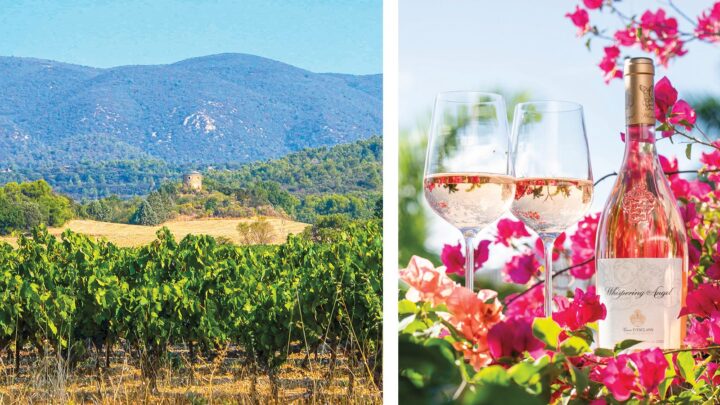
Whispering Angel, now the No. 2 selling French rosé in the U.S., saw softer growth in 2025, rising 2% to 535,000 cases. Like La Vieille Ferme, Whispering Angel has seen year over year growth since 2023 and has garnered a cult following among U.S. rosé drinkers since the early 2000’s. The brand celebrated its 20th anniversary in March, releasing a limited-edition bottle for its 20th vintage featuring Château d’Esclans’ founder Sacha Lichine’s signature, as well as the brand’s traditional marks.
“This anniversary marks a turning point, not just for Whispering Angel, but for rosé as a category. Two decades ago, the category was largely dismissed, seen as overly simple, seasonal, and lacking the depth of other wines,” says Julia Cuissart de Grelle, head of Château d’Esclans at Moët Hennessy USA. “Château d’Esclans challenged that perception, introducing a bone-dry, pale, and more refined style that shifted expectations. That shift helped ignite the “rosé revolution.” Provence rosé, once overlooked, is now the global standard, and the category has moved well beyond summer into a year-round staple.”
Joining its portfoliomate among leading French rosé brands is The Beach by Whispering Angel. The Provençal rosé is sustainably made and puts part of its proceeds toward beach preservation. “Through The Beach by Whispering Angel and its partnership with The Surfrider Foundation, now celebrating its fifth year, the brand has expanded its commitment to more environmentally conscious initiatives, ranging from lighter glass bottles and recycled promotional materials to coast-to-coast beach cleanups and support of Surfrider’s Ocean Friendly Restaurants program,” says Cuissart de Grelle. The Beach by Whispering Angel fell 2% to 160,000 cases in 2025, according to Impact Databank.
The No. 3 French rosé brand, Gérard Bertrand, was in growth mode in 2025, jumping 9.5% to 422,000 cases, surpassing the 400,000-case mark for the first time. When it comes to Gérard Bertrand’s varied stable of wines, rosé is a big growth-driver, consistently making up about 65% of the company’s U.S business every year. Last year, that percentage jumped to 80%. “Rosé has historically represented a majority share of our U.S. business and remains a central pillar of our strategy,” says brand founder Gérard Bertrand. “Our momentum comes from the consistency of our long-term approach. We have been investing for many years in organic and biodynamic viticulture, in building a strong and recognizable brand platform, and in developing our international markets with discipline.”
Gérard Bertrand’s Cote des Rosés ($18 a 750-ml.) is a bestseller for the brand. “Cote des Rosés is clearly our leading brand in the U.S. market, driving both volume and visibility thanks to its strong identity and consumer appeal,” says Bertrand. Recently, the Cote des Rosés line was extended with Esprit de Cote des Rosés ($25 a 750-ml.), a sparkling rosé expression that, according to Bertrand, is a natural progression for the brand which already has a strong presence in the U.S. market. “With this sparkling rosé, we’re addressing more celebratory and spontaneous consumption moments, while remaining anchored in quality and elegance,” he says. “From a brand perspective, it retains everything that made Cote des Rosés successful: its visual identity, emotional appeal, and shareability, while adding the dimension of effervescence. It’s both a product innovation and a strategic lever to expand the brand across occasions.”
Star Power
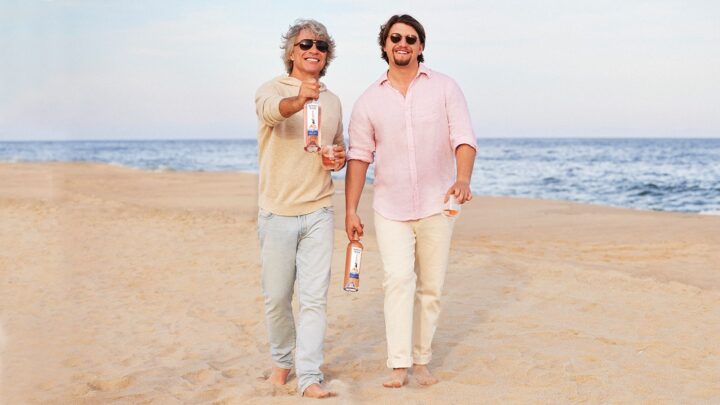
A standout in last year’s French rosé market was Hampton Water ($22 a 750-ml.), a rosé wine brand founded by singer Jon Bon Jovi and his son, Jesse Bongiovi. Hampton Water had another year of double-digit growth in 2025, soaring 25% to 127,000 cases. The brand, which launched in early 2018, has maintained a strong presence in the imported rosé space over the last few years. And while the star power behind Hampton Water helped to propel it into popularity in its early years, executives say the brand’s story and overall quality is what has kept consumers coming back.
“The Bongiovi name definitely helped create early awareness, but long-term success comes down to the quality of the wine and the authenticity behind it—what really resonated is the story,” says Hampton Water’s co-founder Jesse Bongiovi. “Hampton Water is not a ‘celebrity brand’, it’s a family business, and we have built this brand from the ground up, bringing on partners like Gérard Bertrand to help to bring it to life, and I think people can feel that. The name might get you in the door, but it’s the wine and the honesty that keep people coming back.”
Hampton Water has been building its brand over the years, recently launching the Lily Pond Group, a brand incubator that, according to Bongiovi, is “dedicated to building brands grounded in authenticity, quality, and compelling storytelling.” The brand also released its first offshoot, Hampton Water Bubbly ($30 a 750-ml.), in 2024, and executives say the response from consumers has been positive. “Consumers already connected with Hampton Water as something social and unpretentious, and Bubbly naturally extended that,” says Lily Pond Group and Hampton Water CEO Michael Misiorski. “What’s been especially encouraging is seeing it embraced not just for celebrations, but as an everyday sparkling option, exactly as we intended. We were very deliberate in keeping it aligned with the brand: lighter, lower sugar, and high quality. That consistency
has resonated.”

Outside France
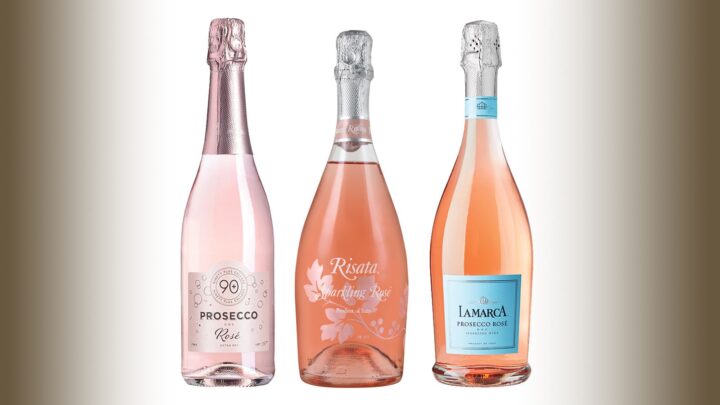
When it comes to rosé, the story from Provence and France as a whole is much more optimistic than that of other countries. Leading imported rosés outside of France declined 4.8% to 808,000 cases last year, according to Impact Databank, with only three out of the top eight non-French imported brands seeing growth (La Marca Prosécco rosé, Risata, and 90+ Cellars Prosécco rosé). La Marca Prosécco Rosé was the No. 1 import outside of France last year, with 3.5% growth to 300,000 cases, according to Impact Databank. Stella Rosa followed close behind at No. 2 with 270,000 cases, but fell 8.5% from 295,000 cases in 2024, marking its fourth consecutive year of declines. And No. 3 brand Roscato dropped 1% to 64,000 cases, continuing a pattern of decline that has been going on for several years. While France is still the leading import country by far, Italy also has some top-sellers, as well as New Zealand and Chile, though at a much smaller scale. “Imported rosés sell better than domestic rosés in general.” says Esquin Wine & Spirits’ Thompson. “Spain, Italy, and Portugal all have bottlings that do very well at our stores. Local rosé from Washington is also a big seller.”
Leading domestic players had a similarly hard run in 2025, with leading brands down 5.5% to 1.76 million cases. The top three leading domestic rosé brands all declined, with No. 1 domestic brand Bota Box down 5.5%, No. 2 brand Josh Cellars falling 2.5%, and No. 3 brand Dark Horse declining 10%. Of the 25 leading domestic brands, ten fell by double digits last year. But not all hope is lost for domestic rosés. Chateau St. Michelle (+2.9%), Mumm Napa (+9%), Black Box (+4%), Bota Box Breeze (+3.5%), and Angels & Cowboys (+4.9) all experienced growth. At Hazel’s Beverage World in Boulder, Colorado, Angels & Cowboys is the top selling domestic brand, according to wine manager Bob Howd.
At retail, the sale of rosé tends to be dependent on two factors: occasion and quality. “We sell rosé all year long, but there’s definitely more interest and movement when the weather is warm,” says Thompson at Esquin Wine & Spirits, while Grande at Zachys adds, “Most of our rosés arrive by March/April and sales start to pick up in April. Our biggest month for rosé sales is always May, with the first of consistently warmer days, along with graduations, Mother’s Day, etc. Sales are strong through August and even September, but start to slow down from there.” At Zachys, rosé is one of the biggest wine categories. “Rosé is typically always strongest in the store, whether it’s adding a bottle or two during warmer weather months or stocking up on a few cases for upcoming pool parties, beach days, or graduations,” Grande says.
Gradual Evolution
wine, and rosés sold outside the value tier were often overpriced and undersold. But these days the premiumization trend continues to affect the wine industry and the rosé category is no exception. At Seattle’s Esquin Wine & Spirits, customers are seeking out middle-tier rosé offerings. “A variety of rosés sell in our stores, but as with other wines the focus recently has been on value, generally wines that are over $10, but less than $40,” says Thompson. As for Hazel’s in Colorado, the clientele is “affluent, well read, and well-traveled,” according to Howd, and their purchasing reflects that. “As far as price categories go, there’s strength up and down the scale, with bargain hunters hitting sub-$10 for case purchases in particular, but with $14-$20 really being in the wheelhouse for most of our shoppers. Most surprising has been the development of the $24-$40 category over the past few years,” he says. “It doesn’t seem like that long ago when I was first offered a rosé that would crack the $20 shelf-price threshold, I told the sales rep he was nuts for thinking anybody would buy such a thing. Now that premium level moves very strongly, relatively speaking. I think that means rosé has successfully cast aside its previous cheap, unsophisticated image.”
The leading rosé brands are also seeing consumer buying preferences skew toward the premium end of the market, but importer Bertrand says consumers are looking for quality and 43brand identity to back the heftier price tag. “We do see a clear trend toward premiumization, but it’s important to understand what drives it. Beyond the price, it’s about meaning, origin, and credibility,” says Bertrand. “Consumers are increasingly willing to trade up when the wine carries a strong story and a clear identity. We will continue to expand our core brands, particularly Cote des Rosés and Esprit, while strengthening our presence in the premium and icon segments.”
The pressure on rosé, and the wine industry overall, will remain a factor in future success. “Like much of the wine industry, imported rosé has faced shifting consumer habits, inflationary pressures, and growing competition from spirits, RTDs, and non-alcohol beverages. As rosé became more mainstream over the last decade, the category also became significantly more crowded, making strong brand identity and consistent quality more important than ever,” notes Château d’Esclans’ Cuissart de Grelle. “But Provence rosé has remained relatively resilient. Consumers continue to gravitate toward trusted brands with authenticity, provenance, and a consistent style. Château d’Esclans helped define the modern rosé category, and that strong foundation continues to resonate with consumers globally.”
After two decades, rosé has been changing its narrative, and the category is at a turning point. Pink wine will continue to thrive in summer months, and as quality gets better and the overcrowded market continues to condense, rosé could see more growth in the coming years. But Esquins’ Thompson says rosé will have to fight for its cooler space. “Some of the novelty has worn off of the category, but there will always be demand for good rosé,” he says. “At this point there are too many different products for the amount of space available in coolers and on shelves.”