As the spirits industry continues to face significant declines in the U.S., rum has been one of the hardest hit, notes Gabriella Ripepi, chief marketing officer of Destilería Serrallés, producer of Don Q rum. “This trend is driven primarily by the contraction of the white rum segment, which has experienced the steepest pullback in off-premise demand,” she notes. But it’s not all bad news. “Beneath those topline declines, we’re seeing a shift in how consumers are shopping the shelf; more drinkers are moving toward dark rums, which is a positive development for the category overall, as dark rums tend to be more premium in nature,” Ripepi says. “Consumers across the spirits industry are increasingly prioritizing quality over quantity, choosing to drink less but drink better. For rum, a category that had been slower to premiumize compared to others, this shift represents an important and encouraging evolution.”
Indeed, though aged rum has declined in recent years along with the broader rum category, it has still performed slightly better than unaged rum, according to Zach Poelma, senior vice president of commercial intelligence for Southern Glazer’s Wine & Spirits, who notes that aged rum dropped 6.1% over the past year compared to unaged rum’s 7% decline. “Even in a softer environment, aged rum continues to offer consumers a premium experience at a more accessible price point than many aged whisk(e)y expressions, which may help support its relative resilience,” he adds.
Nima Ansari, spirits buyer for Astor Wines & Spirits in New York City, says that aged rum is “an important and growing category” for the store. “Compared to unaged rum it far exceeds it currently in terms of number of SKUs and on average the prices are higher, naturally making it more significant in most respects compared to unaged variants,” he says. “It’s still perhaps slower than I would like to see but there is undeniable progress being seen in the growth of super premium rum expressions. Europe has been ahead of the U.S. in respect of rum connoisseurship whereas in the States the spirit has mostly been relegated as a seasonal drink exclusively meant for mixing. Thankfully that’s changing in no small part due to the arrival of iconic bottlings and brands from the likes of Hampden, La Maison & Velier, Foursquare, the growth of independent bottlings, and much more. The level of complexity, collectability, depth, flavor, and quality matches, if not in certain cases exceeds, that of any other spirit.”
Aged rum has certainly been slower to catch on here in the U.S., but producers and suppliers remain patient and optimistic. “Rum hasn’t quite reached its sensational moment like Bourbon, vodka, or Tequila have in the past two decades, and premium and super premium rums are an even smaller sub-category but are experiencing increasing interest,” says Olivia Stewart, president of Baton Rouge, Louisiana-based Oxbow Rum Distillery. “The biggest challenge is education: American consumers are still learning what aged rum can be, how different styles compare, and what is often in the bottle that isn’t being claimed on the label. There is a real opportunity to help consumers move beyond the old assumptions about rum and understand it as a premium, complex aged spirit.”
Opportunity Abounds
Poelma points out that especially in today’s economy, aged rum has a strong value proposition. “As inflation continues to be front of mind for consumers, aged rum offers value compared to other aged spirit types, especially whisk(e)y—in the upper end of both segments, aged rum is on average priced 27% below whiskies in the same range,” he says. “Legal drinking age Gen Z are showing increased interest in the broader rum category, particularly as they explore premium spirits at accessible price points. As conversations continue about Gen Z’s relationship with alcohol and some of the financial pressures they face, this could be an intriguing opportunity for them to drink aged spirits at a more affordable price point.”
Poelma adds that Southern Glazer’s is seeing strong performance across a range of aged rum brands in its portfolio, including Ron Barceló, Appleton Estate, Santa Teresa, Diplomático, Planteray, Kuleana, Denizen, Bumbu, Brugal, Cruzan, and Mount Gay. “While the broader spirits industry continues to face macroeconomic pressure and moderation trends, aged rum remains well-positioned within premium spirits due to its accessibility, versatility, and value proposition,” he says. “Household penetration is lower for rum compared to other spirits categories, so there’s an opportunity to recruit new consumers. Brands that successfully balance heritage storytelling, authenticity, and modern consumer occasions are likely to outperform.”
At Astor Wines & Spirits, Ansari notes that aged rum sales are led by “brands that excel at elevated expressions,” including Smith and Cross from Jamaica, Planteray rums from around the world, El Dorado from Guyana, and Foursquare from Barbados. “Emerging and more premium expressions from Hampden, Alambique Serrano, and the House of Velier are all in the mix as well,” he adds. “If you’re a quality product and living within the $30-$50 range you have potential to thrive and continue to grow at a large scale. However, you can also say that the pricing at large for the category has been almost artificially undervalued for too long—for generations. That’s changing and mostly for the right reasons.”
Ansari adds that aged rum still isn’t finding as many customers as it deserves. “It’s clear to me that there’s still a deficit in the way the stories and histories of many of these producers are being told and reaching consumers,” he says. “From a professional standpoint the value is clear on my end and for myself personally there is no doubt these are some of the most exciting things to be drinking these days. Closing the gap on not only providing more great expressions for consumers to stock their bars with but to also help them understand just how much inherent value goes into each drop of great rum will go a long way to get rum to where it needs to be.”
At the rum-focused tropical bar Three Dots and a Dash in Chicago, aged rum appears in most of the cocktails as well as in many of the rum flights offered. “Aged rum remains one of the great values in the distilled spirits market and I don’t think it’s going anywhere,” notes beverage director Kevin Beary. “Quality rums have been on a steady increase in terms of availability in our market for the last ten years. I’m seeing an encouraging trend toward quality taking over cheaply made rum or lightly aged rums with color and flavor additives.”
This is indeed a welcome trend to rum producers, who have long attempted to draw more attention to the premium aged segment of rum. “A significant share of U.S. rum sales remains concentrated in lower-priced and flavored offerings, which has restricted the category’s ability to grow in the super-premium and ultra-premium segments—our task is to shift the narrative by championing authentic, aged expressions and highlighting the craftsmanship behind premium rums,” says Allison Varone, head of marketing for Campari America, owner of Appleton Estate, with a portfolio ranging from $22 a 750-ml. for its Signature Blend up to $140 for its 21-year-old. “We see a clear opportunity to recruit dark spirits enthusiasts, including whisk(e)y and Cognac drinkers, by highlighting Appleton Estate’s aged-statement rums such as the 8-, 12-, and 15-year-old expressions. These premium rums appeal to consumers looking to expand their repertoire with new, sophisticated sipping experiences.”
Diplomático, the No.-4 super-premium ($25-plus range) rum label in the U.S., is similarly focused on recruiting drinkers from other aged spirit categories. “More drinkers are discovering that super premium rum can be every bit as complex and sippable as a great Bourbon or Scotch—Diplomático sits right at the center of that movement,” says Camille Zahniser, vice president and group director for emerging brands at Brown-Forman. “We offer a price to quality ratio that resonates; the liquid stands up beautifully as a neat pour, yet it’s still accessible enough to elevate a cocktail without feeling out of reach. That balance of craftsmanship, transparency, and everyday luxury has helped us connect with both seasoned rum fans and people exploring the category for the first time.”
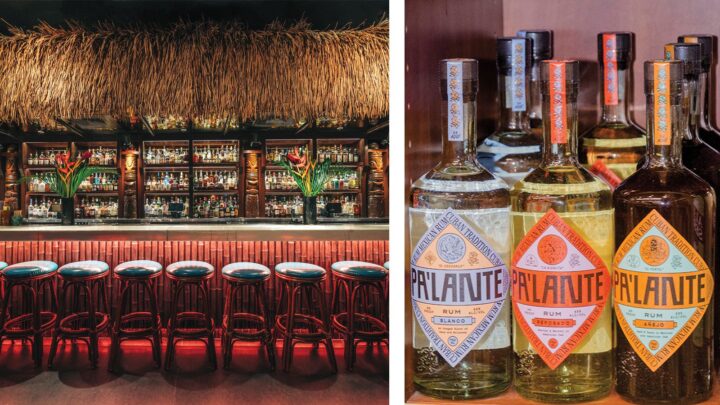
Despite economic pressures, Guillaume Lamy, managing director for Maison Ferrand USA, owner of No.-1 super-premium rum Planteray, is confident in the brand’s pricing strategy. “In an environment where many brands are trading down, we’ve chosen not to chase lower price points—instead, we’re committed to delivering the highest possible quality at prices that remain accessible, and to clearly articulate why the product is worth trading up for,” he explains. “Building and reinforcing that value proposition requires sustained effort: a dedicated team, constant trade engagement, and ongoing retail activation. That approach will continue in 2026, with even greater emphasis on retail visibility and leveraging the strong visual identity of the range to stand out on the shelf.”
Vying for space in an increasingly crowded category, Palm Republic rum launched in 2024. Along with an unaged variant the brand offers an aged expression ($50 a 750-ml.) that includes a blend of rums from Panama, Jamaica, and the U.S. Virgin Islands aged up to 8 years in Sherry casks. “The rum industry is moving away from gimmicky, thematic branding toward genuine quality cues—traditional production techniques, provenance, and authentic storytelling. That aligns perfectly with our brand,” says co-founder Brad Parkes. “While the overall category faces some macro headwinds, the ultra-premium and luxury rum tiers are posting strong value and volume growth. Commercially, the most dynamic activity is happening above the $30 retail threshold, which is exactly where we compete.”
Focused Efforts
Parkes notes that Palm Republic is in a strong position thanks to its planned distribution strategy. “We took a deliberate, conservative approach to our initial launch in key markets—Florida, California, and Texas—and the early sell-through has validated our thesis,” he says. “Consumer appetite for sipping-quality rum has never been higher in the U.S., and we’ve focused on placing Palm Republic in accounts where the liquid gets the attention it deserves. Based on that strong response, our immediate focus is deepening our distribution within those footprint states while selectively planning our next expansion phase.” Parkes adds that the company will remain focused on its two core offerings for the time being. “That said, limited and small-batch releases are definitely part of our roadmap,” he says. “The ultra-premium segment is expanding with offerings targeted at spirits enthusiasts and collectors. We’re planning innovative product development in the future that will naturally fit with our brand identity.”
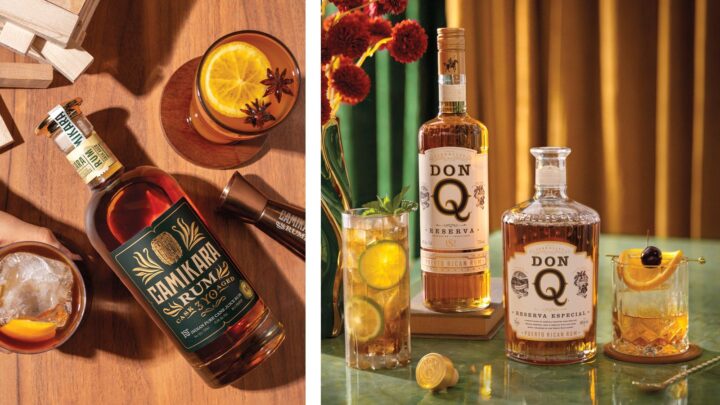
With collectors in mind, Don Q in November introduced the Don Q Double-Aged Pedro Ximénez Cask Finish Rum ($50 a 750-ml.), the latest addition to the brand’s Selección Exclusiva series with only 2,000 bottles available in select retailers across the U.S. and through the brand’s website. “Our portfolio is rooted in high-quality, premium dark rums, and we’re seeing growing consumer interest in expressions that deliver richer flavor and heritage rather than simply competing on price,” Ripepi says. “The opportunity in off-premise is about helping shoppers discover better rum, not just more rum.” Earlier this year, the brand unveiled TKDon Q
Reserva ($21) and Don Q Reserve Especial ($40). “These two additions expand and elevate our premium rum portfolio while showcasing the expertise, care, and tradition that have defined Destilería Serrallés for generations,” Ripepi says. “Both expressions highlight meticulous aging and refined, well-balanced flavor profiles designed to appeal to a wide range of rum drinkers and occasions.”
For a smaller craft U.S.-based brand like Oxbow rum, “intentionality matters more than ever,” Stewart says. “It’s not about more logos or louder marketing; it’s about knowing who you are as a brand and why you exist,” she notes. “Our strategy is amplifying transparency and the authenticity of both our rum and our story. Rum can be appreciated with the same seriousness and reverence as fine Bourbon, but the American market has not always been conditioned to see it that way. Many consumers still associate rum with overly sweet beach drinks or memories of drinking it when they were younger, but rum can be far more nuanced and sophisticated. We aim to shift that perception through education and positioning our brand like that of a premium Bourbon—that is why our standard line includes an aged molasses-based rum, Oxbow Barrel Aged Straight Rum ($50 a 750-ml.), and aged cane juice-based rum, Oxbow Single Barrel Rhum Louisiane ($61).”
Camikara Indian rum launched in the U.S. market in 2023 with a limited-availability 12-year-old rum ($100 a 750-ml.) followed by a 3-year-old ($30) and 8-year-old last year ($45). “The response to Camikara’s aged rum portfolio has been extremely encouraging, particularly among consumers and bartenders seeking authentic, additive-free, and craft-led spirits,” says Madhu Kanna, head of international business for brand owner Piccadily Agro Industries. “There is a growing appreciation in the U.S. for premium aged rums with distinctive provenance and strong storytelling and Camikara’s pure cane juice origin and Indian maturation profile have helped the brand stand out meaningfully in that space.”
Kanna adds that the company is expecting strong double-digit growth for the brand driven by increasing consumer awareness, expanded retail presence, stronger on-trade advocacy and continued premiumization within the rum category. “There’s growing curiosity around sipping rums and non-traditional rum-producing regions, which has opened the door for differentiated brands like Camikara,” he notes. “Camikara’s positioning as India’s first pure cane juice aged rum has played a key role in helping the brand stand apart from conventional molasses-based rums.”
Ansari of Astor Wines & Spirits is encouraged by the recent broadening of the rum market. “One of the most exciting and heartening things to emerge in recent years is the expansion of accessibility to the wider rum world—there are now incredible rums coming from not only the iconic addresses in Jamaica and Barbados but also from all over Mexico, the clairins of Haiti come to mind, Australia, Japan, Africa,” he says. “All of these artisanal expressions are adding to the overall wealth of the category for drinkers.”
With smaller brands from all around the world bringing excitement to the segment, aged rum has a lot of runway ahead. “I’m confident it will continue to move in the right direction even if that means it happens more on a micro level for the time being,” Ansari says. “The brands that prioritize authenticity and transparency will continue to make a strong impact.”