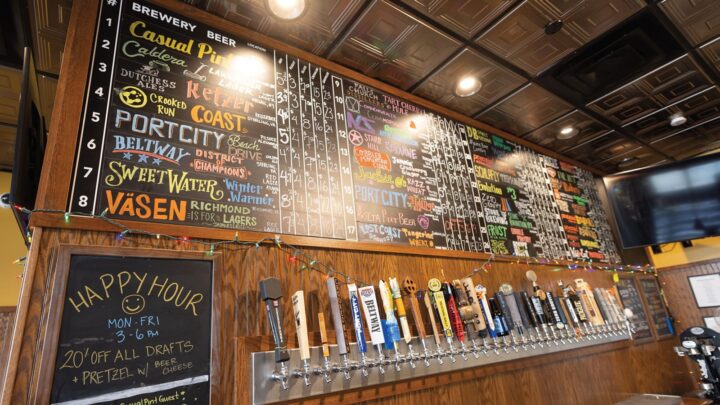
The year 2024 was a defining one for the craft beer industry. For the first time in nearly two decades, craft brewery closures outpaced openings, another sign that the engine fueling enthusiasm and curiosity among beer lovers in recent years has lost momentum and future sales patterns are likely to replicate that of the overall beer market.
According to the Brewers Association, 430 breweries opened in 2024, while 529 closed their doors. In addition to a reduction in new entries, the craft beer sector has been redefined of late by a wave of mergers between breweries and acquisitions from brewing interests and beyond. For an industry that enjoyed numerous years of high single- and double-digit growth, consolidation is today’s bellwether. “Craft has been going through a painful period of rationalization as demand growth has slowed and retailers and distributors look to simplify their offerings or add options for flavor and variety outside of the craft category,” says Bart Watson, president and CEO of the Brewers Association. At press time, the culling
of craft breweries was trending even lower in 2025 and a further year-over-year reduction in the ranks was expected.
We’re seeing signs of a maturing industry, not a dying industry,” adds Matt Gacioch, economist at the Brewers Association. Indeed, the fast growth that the category enjoyed year over year in the 2010s has served as an unfair point of reference, he continues, so that recent low single-digit rates of sales declines seem much worse. Craft beer sales declined 3.1% to 23.1 million (31-gallon) barrels in 2024, according to the Brewers Association. Through the first half of 2025, the trade group estimated that craft production had further decelerated and was down 5% year over year.
Independence Fray
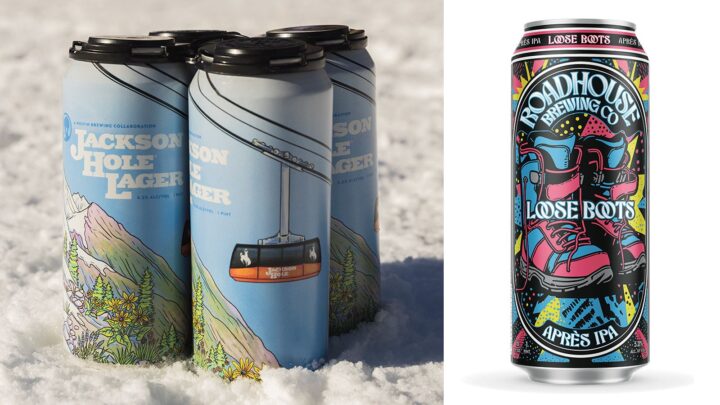
Increasingly, once fiercely independent craft brewers are finding that the path to survival may mean giving up a bit of that independence. While craft brewers have teamed up for years in efforts to gain more clout in the marketplace, the pace has quickened of late. Established craft collectives such as Duvel Moortgat USA and Artisanal Brewing Ventures have now been joined by often regionally-focused craft-on-craft mergers and acquisitions. In recent years, for example, New York’s Bronx Brewery and Captain Lawrence Brewing merged, while Wyoming’s Roadhouse Brewing acquired neighboring Melvin Brewing and formed Pure Madness Brewery Group. In late 2024, Massachusetts’s Lord Hobo Brewing merged with Maine’s Lone Pine Brewing, and fellow New England craft brewers Mass Bay and Finestkind announced their union with the formation of Barrel One Collective. Greater Good Imperial Brewing was added to the Collective in 2025.
“With a combined 75 years of craft brewing expertise, this merger represents our commitment to setting these companies on an exciting growth trajectory and continuing to bring the very best products to our fervent customer base,” said Dan Kenary, Mass Bay co-founder and CEO and president of Barrel mwOne, when the initial deal was announced. Today, Barrel One operates breweries or retail businesses in four states (Massachusetts, New Hampshire, Vermont, and New York). Both Mass Bay and Finestkind have experience of their own with craft mergers or acquisitions, with the former’s portfolio consisting of brands from Harpoon, Long Trail, Clown Shoes, Otter Creek, and Catamount breweries, and the latter’s comprised of Smuttynose, Wachusett, and Five Boroughs breweries.
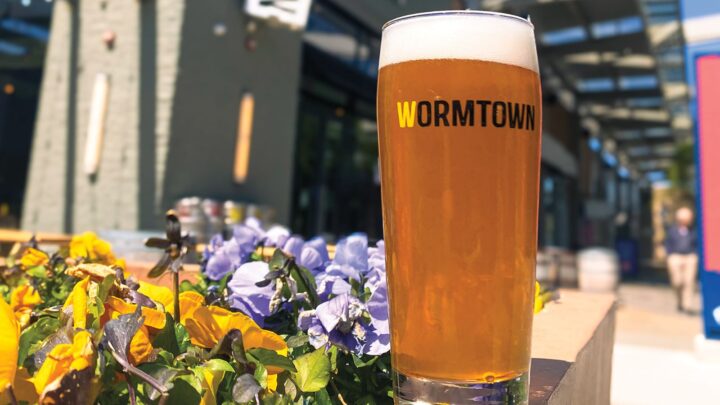
Hendler Family Brewing Co. (HFB) is another New England-based collective of craft breweries and brands that continues to add to its portfolio. In 2024, HFB, parent of Jack’s Abby Craft Lagers, acquired fellow Bay State breweries Night Shift and Wormtown. Last year, HFB agreed to take over most of the production of New York’s Sloop Brewery. Sam Hendler, co-founder and CEO of HFB, says that the pandemic, supply-chain instability, inflation, and worker shortages have all combined to put pressure on Massachusetts breweries. As a result, “the business model that worked in the last decade and saw thousands of breweries open isn’t working anymore,” he notes. The evolution of the business will require that craft breweries either “get larger, scale production, and be profitable in the wholesale distribution business or get smaller with a taproom model that rips out distribution costs,” Hendler says. Opting for the first scenario, HFB has some form of distribution in 17 states and more acquisitions could be in its future. “We believe in craft beer,” Hendler says. “We want to see the businesses that we grew up with have successful businesses. We want to be a stabilizing force in the industry.”
Covid Connection
Covid-19 and a host of other factors have contributed to the consolidation the craft beer business is seeing today. “Covid was particularly unkind to craft beer in terms of how big the impact was on the on-premise channel,” Hendler says. Skyrocketing costs post-pandemic have exacerbated woes for brewers, adds Gacioch, pointing to higher prices for raw ingredients, packaging, real estate, and labor. While the Brewers Association executive maintains that increased prices on craft beer haven’t been large enough to sustain small beer makers, some retailers say category price hikes have chased some consumers away. “Consumers today are reconsidering the high price point of a 4-pack of craft beer when they can spend the same amount on a 12-pack otherwise,” says Matt Sahajian, beer manager at Julio’s Liquors in Westborough, Massachusetts. Josh Robinette, CEO of Casual Pint Franchising, with 18 on-premise “beer-stros” in multiple states, also cites “a tremendous price increase on craft beer in the last few years.” While Casual Pint has been forced to raise its prices, he notes that because the hikes were modest, “we had to take some margin.”
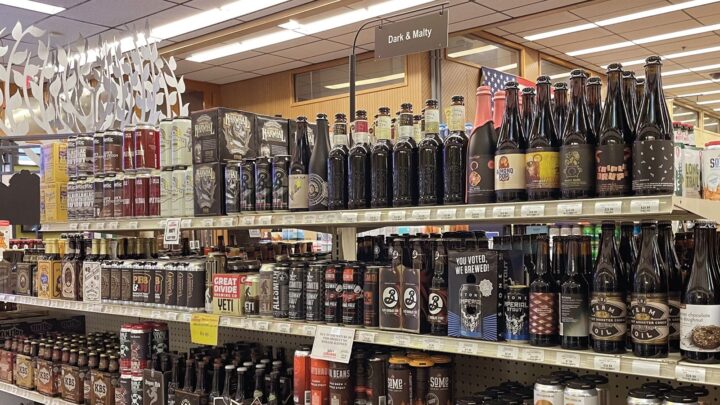
As with the overall beer category, craft growth has been hampered by competition from products like hard seltzers, flavored malt beverages, RTDs, and in some markets, CBD beverages and cannabis. At High Spirits Liquors in Providence, Rhode Island, beer manager Mikey O’Brien says that CBD beverages, seltzers, and RTDs have cut into sales of craft brews, as have non-alcoholic beers. “We used to have three or four SKUs. Now, we have entire shelves dedicated to these products,” the retailer says.
The consumer base for craft beer, meanwhile, appears to be shrinking, as millennials age and cut back on the drinks and some Gen Z members abstain entirely from beverage alcohol. “Consumers aren’t as outgoing as in years past,” says Bump Williams, CEO of Bump Williams Consulting, which provides data and consumer behavior insights to beverage companies. “Gambling and gaming at home prevent potential beer drinkers from going out and socializing.” And for those that do drink beer, the immense variety that has become craft beer’s hallmark isn’t as important as it once was. Craft beer’s “self-proclaimed innovation didn’t bring new shoppers to the category,” Williams explains. Rather, the proliferation of products and packages has forced a SKU reduction for beer wholesalers and retailers alike.
Beyond craft-on-craft acquisitions, former non-beer companies are now making their mark on the category, while multi-national brewers have largely abandoned craft. Tilray Brands’ craft beer arm, for instance, was ranked the No. 4 craft brewer in the country by the Brewers Association in 2024, and Monster Beverage Corp.’s beer subsidiary came in at No. 10. Beginning with its acquisition of Georgia’s SweetWater Brewing in 2020, global cannabis-supplier Tilray has gobbled up established breweries around the country, many of which were previously owned by Anheuser-Busch InBev and Molson Coors. Its holdings now include brands under the Shock Top, 10 Barrel, Redhook, Widmer, Montauk, Hop Valley, Terrapin, and Revolver banners. Speaking to analysts in the fall, Irwin Simon, Tilray chairman and CEO, said the company is working with its distributors to streamline its beer portfolio and to focus on brands “in regions where they have the most strength.”
Monster Beverage, meanwhile, entered the craft beer business with its acquisition of the former Canarchy collective in 2022. Today, the Monster Brewing division is comprised of craft brewers including Oskar Blues, Cigar City, Perrin, and Deep Ellum, in addition to the Beast Unleashed and Nasty Beast, Monster’s FMBs. Williams notes that with craft beer sales on the decline, non-beer companies are able to acquire some brands at “rock-bottom prices compared to years past.” They also “love the performance of beer distribution networks and see the value of their strengths in penetrating convenience stores and retail relationships,” he says.
Rocky Times Ahead
With craft-on-craft mergers and partnerships, costs can be lowered easily and brewing efficiencies improved, Williams notes, “hopefully giving the brewers more clout and presence at retail and with distributors.” Indeed, the consolidating of production at HFB has been “significant,” Hendler says, while the company’s sales and marketing teams are now working more efficiently, “pitching more brands but giving us a better density of coverage.” Benefits of the mergers also extend to consumers, Hendler adds. “It makes it more likely that the brands that they love will survive during a difficult period for the industry.”
It’s widely believed that craft consolidation, including brewery closures, mergers, and partnerships, will continue in 2026 and beyond. “The previous business model for craft beer no longer pencils,” says Hendler. “These businesses need to evolve and consolidation is one of the ways to do that.” While the next few years are expected to be rocky for the category, optimism remains that craft beer will bounce back. Gacioch notes that craft beer has experienced rough times in the past. “Just like before, the industry will adjust, adapt, innovate, and move forward,” he says