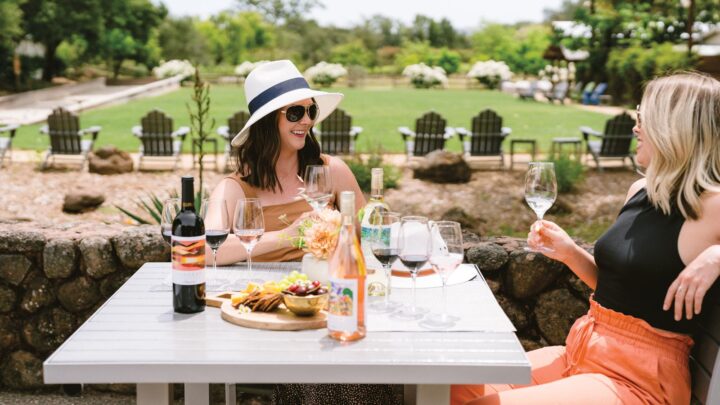
Last October, in honor of the Come Over October national wine promotion, Jackson Family Wines launched several initiatives. Kendall-Jackson and La Crema wineries offered complimentary tastings and seasonal snacks every Thursday afternoon as part of a Social Hour—Harvest Edition program. And at Copain and Freemark Abbey Winery, wine flights were offered daily on a complimentary basis to visitors.
“The response was strong—we saw nearly 800 guests at Kendall-Jackson Social Hours in October alone, many of whom might not have otherwise visited that month,” says Kristen Reitzell, senior vice president of marketing and communications for Jackson Family Wines. “The program also drove incremental wine sales.” Building on that success, the company is continuing the Social Hour programming for Kendall-Jackson and La Crema through at least the first quarter of this year, with complimentary tastings every Sunday.
Come Over October was created in 2024 by Come Together—A Community for Wine Inc. The campaign encourages people to gather together to enjoy wine. While designed to appeal to the broad consumer community, some wineries have adopted it to help expand tourism to their properties and region. “We saw a lot of wineries throughout California and beyond, and retailers and others, galvanizing to take advantage of the message,” notes J. Lohr Vineyards & Wines co-owner and chief brand officer Cynthia Lohr. “We saw a lot of enthusiasm, a lot of uptick, a lot of strategies and tactics to support an industry-wide initiative such as Come Over October.” The initiative spawned an offshoot in spring of 2025, called Share and Pair Sundays, while the original gained momentum in its second year.
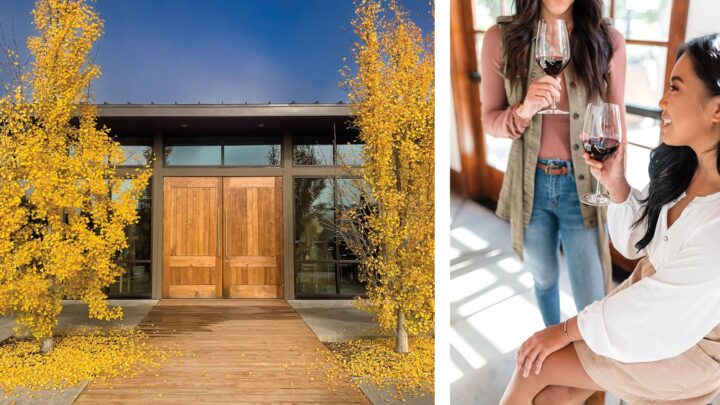
Challenging Landscape
Those efforts—along with many others—are part of a concerted effort by California wineries and regional wine associations to turn the tide on declining visitor trends. Estimates vary and each winery’s experience is unique, but the consensus is that the faltering economy and changing consumer demographics, along with a general downward trend in consumption overall, are dampening enthusiasm for wine tourism.
The Silicon Valley Bank 2025 State of the U.S. Wine Industry report noted the ongoing challenges. The annual report had predicted a return to growth in its 2024 edition but acknowledged in its latest release that they had gotten it wrong. The bank had pinned its 2024 growth expectation on waning post-pandemic travel to Europe, known colloquially as “revenge travel.”
“While revenge travel may have been an accurate cause of visitation declines in 2022 and 2023, the continuing trend indicates that other causes may also be at work,” the 2025 report noted. It cited evolving travel patterns of luxury consumers, shifts in travel and purchasing patterns of older consumers, and demand for new experiences by younger consumers.
Nicole Knoth, who serves as DTC marketing manager for Benziger Family Winery and Imagery Estate Winery, says a combination of factors are contributing to the downturn in California wine tourism. “International visitation has declined, travel and tasting costs have risen, and younger consumers are engaging with wine differently, often prioritizing experiences, accessibility, and digital discovery over traditional wine culture,” she says. “We have found that wineries that offer creative, value-driven, and experience-forward programming continue to attract interest despite broader trends.”
Saracina Vineyards director of winemaking Alex MacGregor notes that macro-economic factors are also at play. “From our perspective, broader economic pressures are playing a meaningful role,” he says. “The high cost of living in California and ongoing inflation have made people more cautious about discretionary travel and spending, which naturally impacts wine tourism across the state.”
MacGregor adds that for Saracina in particular, the impact has been minimal. “Our visitor base is almost entirely domestic and largely made up of people already traveling through the region rather than making a dedicated trip specifically to us,” he says. “That said, once guests are in Mendocino County, our estate itself becomes a strong draw—many visitors discover Saracina while driving along Highway 101 and are compelled to stop by when they see the vineyards and welcoming entrance.”
Similarly, Stuart Spencer, executive director of the Lodi Wine Winegrape Commission, says the vast majority of visitors to the Lodi region are from California, and most hail from the region or nearby. Because of that proximity, “we saw somewhat less of a downturn at first, but it’s still not like it was pre-pandemic.” Spencer says that the region has been impacted by a larger, California-wide factor rooted in the pandemic years. By necessity, tasting rooms implemented formal, seated tasting opportunities during the cautious post-pandemic months, he notes.
“A seated format is a more costly experience from a labor perspective, so the cost of wine tastings grew considerably across the state,” he says, noting that the practice “stuck” in the post-pandemic years. “We here in Lodi embraced that less coming out of the pandemic and had a lot of wineries that were not requiring reservations, but we were seeing that the customer was just expecting [the more formal, costly approach]. Instead of going to, maybe, three or four wineries in a day, they were going to one or two and visiting less overall.
“I think the whole experience became more exclusionary, more costly, and more challenging, especially for people that have less income and available funds,” Spencer continues. “Simultaneously, we’ve got the downturn in wine and alcohol consumption in general. We have an aging demographic, and those baby boomers have been fueling the wine industry. Then I think California tourism was down in general overall, an we’ve also seen kind of a net migration of people out of California.”
That’s a lot of factors at play to explain the ongoing challenges. But while visitor numbers may be down, that’s not the only story, says Reitzell of Jackson Family Wines. “The narrative around a ‘downturn’ misses an important shift that’s actually happening,” she says. “When you measure by dollars rather than volume, the premium wine category is growing. Consumers are trading up for quality and authenticity. The decline in sub-$10 bottles is evidence of premiumization, not decline.
“The real challenge isn’t lack of interest from younger consumers—it’s that we’re navigating a fundamental shift in how people discover and engage with wine,” Reitzell continues. “Today’s consumers, especially younger ones, are curious and eager to learn, but they’re digital natives who prefer self-directed exploration across hundreds of touchpoints rather than traditional channels.”
Courting Visitors
Despite the daunting wine tourism landscape, wineries and regional associations are mobilizing to capture, or recapture, some excitement around experiencing wine firsthand, at its source, and they’re finding innovative ways to make that happen. Barbara Cox, director of communications and engagement for Sonoma County Vintners, says Sonoma County wineries are responding to the tourism downturn with an expanding slate of “innovative experiences that reflect Sonoma County’s creativity, hospitality, and sense of place.”
Those include experiences such as truffle hunting at Ehret Family Winery, horseback riding throughout the property at Bartholomew Estate Winery, and a rock-and-roll tasting focused on storytelling in the Backstage Lounge Experience at Rob Cabral Wines. More broadly, Sonoma County Tourism has various campaigns promoting the region and last year launched a program called Sonoma County Signature Experiences, which offers options such as meet-the-makers, outdoor recreation, and wine and food experiences.
“This allows travelers to have truly transformative experiences,” says director of public relations Birgitt Vaughan. “Promoting walk-in or no-reservation tastings and seasonal experiences like harvest dinners, winemaker hikes, and communal tastings with unique deals and incentives are being used to bring visitors back and offset the decline in tasting-room traffic,” she adds.
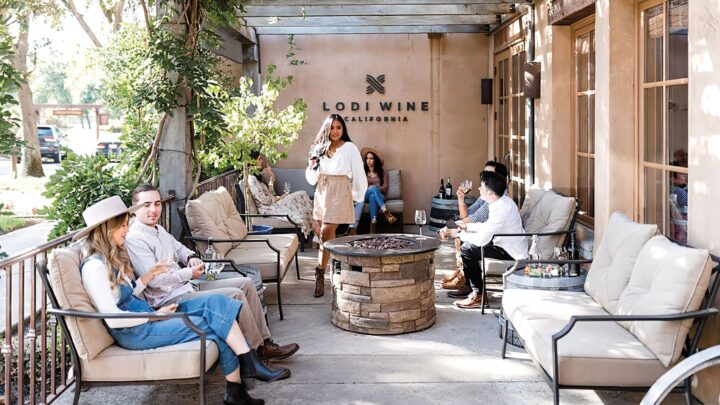
In Lodi, Spencer says the region is doubling down on its more casual approach with a No Reservations campaign designed to diminish the “exclusionary” image of wine tasting that has emerged in recent years throughout California. The message is that Lodi is “a much more approachable and accessible place to go wine tasting, where it’s not that costly or complicated.
“I think the other piece of this, as we transition from [reliance on] Baby Boomer visits to the Millennial generation, is to recognize that Millennials have a different set of values and things they’re looking for,” Spencer continues. “Wine tasting has evolved into much more of a family experience—people want to bring their kids with them, and they’re looking for wineries that are kid friendly and/or dog friendly.”
Data Driven
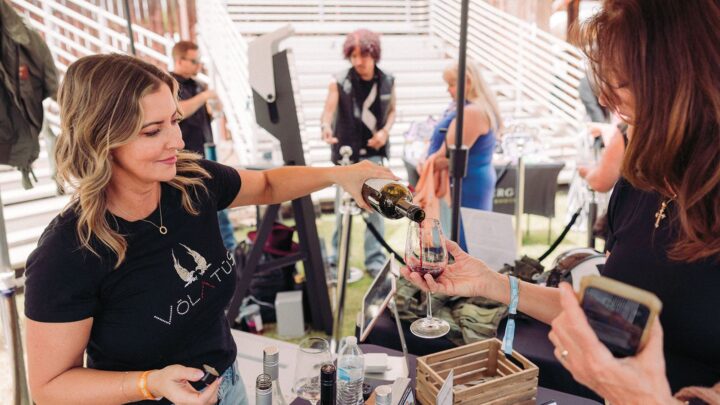
Paso Robles is taking a data-driven approach to ascertain markets ripe for engagement and has identified Los Angeles and Dallas as prime targets, according to Paso Robles Wine Country Alliance marketing and communications director Krista Smith. It’s also leaning into its podcast, titled “Where Wine Takes You.” Weekly episodes are “used as a platform to tell the many stories of Paso Robles wine country,” Smith says. “To complement the podcast we’re really focusing on social media this year—primarily around video content creation because we know that’s an excellent way for us to highlight all there is to experience in Paso Robles wine country. But in addition to our own content, we also plan to expand our strategic partnerships with social media influencers and think a little outside the box.” Smith says the organization’s marquee event, Paso Wine Fest, grew by about 3.5% last year and also had a strong showing from younger visitors. But she acknowledges the more general slowdown in wine tourism in the region.
J. Lohr Estates is highly supportive of the efforts of the Alliance and similar organizations both within and outside of Paso Robles. For J. Lohr specifically, one unique offering that is sparking interest is a “sustainability climb.” Visitors “get a kick out of the opportunity to, in a very safe manner, ‘walk the catwalk’ near our bottle ready tank farm in the back of our campus there, allowing them to overlook the 3-acre solar tracking array that…became operational in 2009,” Lohr says.
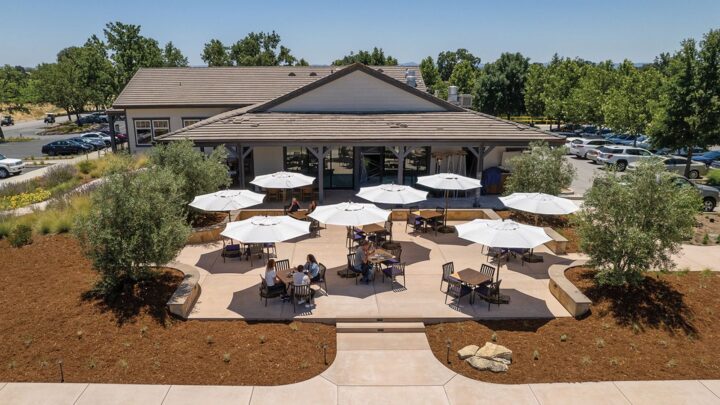
J. Lohr also recently revamped its wine center to pay homage to Jerry Lohr’s South Dakota farmhouse. “When we underwent that reimagination, we pulled out a lot of the visual cues from his farmhouse, opened up the veranda, and we have a demonstration vineyard right off of the veranda,” Lohr says, noting that the family wants to “tell a different kind of story than they might know about J. Lohr from their first touchpoints [of] Riverstone Chardonnay or Seven Oaks Cabernet. They may not know the depth and breadth of our family involvement, about our sustainability initiatives, or our site-specific plantings, or our 41 different wines and the many varieties that we plant. We want to share our stories in a very relaxed manner because we know that we have something really unique.”
Cave tours are on offer at Saracina in Mendocino County. “At Saracina, we focus on offering immersive visits driven by experiences that allow guests to truly connect with our wines and our property,” says MacGregor. In addition to various tasting options, “we encourage exploration of the estate through guided property and cave tours, which have become a major point of interest. Saracina is one of only two wineries in Mendocino County with caves, and that uniqueness consistently draws visitors who are looking for something memorable and distinctive.”
New Opportunities
California wineries will have new opportunities for visitor engagement with the recent passage of Assembly Bill 720, which allows wineries to host a limited number of events at estate vineyard properties beyond their bonded winery site. Bonterra Organic Estates senior vice president of marketing Rachel Newman says legislation like AB 720 will benefit not only her company’s vineyards in Mendocino County, but wineries across the state. “AB 720 offers a solution that is simple, yet powerful: allowing a limited number of events at estate vineyard properties, enabling consumers to connect with California wine in a more meaningful way,” Newman says. “There’s not one advertisement or influencer campaign that can replicate the power of standing in a vineyard, touching the soil, tasting the wine, and experiencing the story for yourself.”
Visitors “want to go back to the source,” agrees Lohr. “They want to understand a grape’s origins. They want to see and be TKpart of the setting. They want to feel the soil. They want to see the soil striations in a backhoe pit. They want to taste the grapes while on the vine.” While planning is in the early stages, Lohr anticipates “inviting more consumers for some limited-opportunity tastings right in the vineyards. At J. Lohr, we’re owners of 4,000 acres of sustainably farmed estate vineyards, and we relish the opportunity to bring people out to get their boots dirty with us.”
MacGregor of Saracina adds that while it may not change his own winery’s current approach, the new law “supports the continued evolution of wine tourism across the state,” he says. “More flexible regulations create opportunities for wineries to thoughtfully expand how they engage guests, particularly through experiences that highlight the natural beauty of vineyard properties. For visitors, that translates into more reasons to explore wine regions in new and memorable ways.”