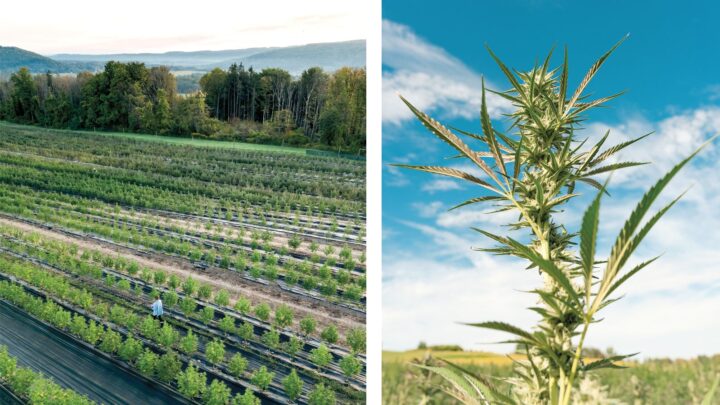
Cannabis drinks have been on a prolific growth tear over the last year. The segment benefited from huge gains in sales and depletions, as well as increased sophistication in production, flavors, and packaging. Alcohol producers, wholesalers, and distributors are investing in the category, further bolstering its success. As hemp-derived THC beverages continue to increase share and gain more widespread acceptance among consumers across broad demographics, the category is poised for sustained long-term growth as it edges further into the mainstream drinks arena. That is, if federal regulations don’t get in the way (see corresponding story on page 70).
Industry estimates put the value of cannabis drinks sales at about $1.4 billion last year. Many analysts predict largescale growth for years to come, pending legislative changes, as hemp-based THC sees an ever-expanding audience. THC Drinks grew by 133% in 2025, reaching 1.6 million case equivalents, a nearly 1 million case increase over 2024, according to the Hemp Beverage Alliance and Vermont Information Processing. In addition, the category showed a 129% gain in points of distribution last year, led by an increase in low-dose hemp THC drinks in the 6-mg.-10-mg. potency range. Products with less than 10-mg. of hemp-based THC can be sold in liquor stores, groceries, and convenience channels in many states, further boosting exposure and sales.
“We’ve seen the appetite for low-dose cannabis drinks skyrocket—people have completely integrated the beverages into their socialization and unwinding routines,” says Cann CEO and co-founder Jake Bullock. “Cann’s approach since day one has been the antithesis of the ‘stoner’ stereotypes previously associated with cannabis use. From formulation—Cann never tastes like cannabis—to our visual identity designed to make Cann look like a craft cocktail, we’ve shifted the perception of cannabis. Along the way we’ve seen THC beverages become a formidable subcategory in the beverage industry at large.”
Industry Players
Cann is among the top hemp-derived THC drinks brands in the United States and it has a varied portfolio of low-dose options, ranging from 2-mg. and 3-mg. up to 5-mg. and 10-mg. THC canned offerings in flavors like Lemon Lavender and Orange Cardamom (from $72 for an 8-pack to $138 for a 24-pack of 12-ounce cans). The brand also offers a 750-ml. bottled Spritz ($64) that contains 17 servings of to be mixed. Cann is available off-premise in more than 30 states and also offers online sales where legal.
This summer, Cann introduced a 0-mg. THC line extension in its most popular flavors, a first for the cannabis drinks category. The THC-free line contains electrolytes, magnesium, L-theanine, and passion flower, functional ingredients intended to boost mood without intoxication, and because they have no THC they can be both sold widely at retail and shipped nationwide ($33 an 8-pack of 12-ounce cans). Bullock says the 0-mg. line is a strategic move to expand the brand’s distribution, get ahead of potential category-ending legislation that threatens the THC drinks segment, and appeal to consumers who remain wary of cannabis.
“Cann has a strong presence at off-premise retail accounts and excels in liquor stores and traditional grocery retailers, and we’ve seen great success on-premise too—Cann has been sold at music festivals, bars, and restaurants,” Bullock says, adding that the brand does well across a wide array of demographics. “Our micro-dosed approach is intentional, allowing for an approachable trial for new drinkers. We’re at an interesting inflection point given the evolving legislation of the category. We’re confident the future is promising for THC drinks.”
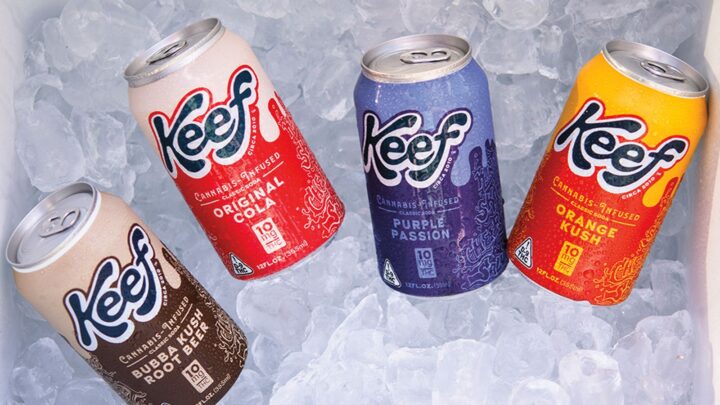
Keef is also a category leader. The brand has a line of 10-mg. THC sodas, from Original Cola and Bubba Kush Root Beer to Purple Passion and Orange Kush, available in 18 states ($30 a 4-pack of 12-ounce cans). These join THC-enhanced still and sparkling waters that also contain TKCBD or CBG and high-dose offerings like soda Xtreme and mocktails, each with 100-mg. THC and sold only in regulated markets. Keef’s chief revenue officer Blake Patterson credits the success of cannabis drinks to the brands building the category, but also to wholesalers, retailers, and trade associations advocating for the segment.
“As a category, we’re still in the infancy stage,” Patterson says. “The growth potential is off the charts. For cannabis, the beverage category provides the greatest opportunity for consumer adoption and industry standards. I don’t want to compete [with beverage alcohol]—I want to complement it. There’s room for everyone at the table and we’re here to be an incremental sale not a replacement. We see baskets with both THC and alcohol more often than not. The great unknown is establishing a functional and legal market. Once that happens we’ll be in a competitive marketplace like any other, and we look forward to the opportunity.”
Crescent 9 THC seltzers are the top-selling THC drinks in U.S. grocery, liquor, and convenience stores, according to NielsenIQ. Crescent Canna CEO Joe Gerrity agrees that cannabis drinks are still in their infancy and that they have tremendous room for future growth. “Consumer awareness is still very low, but it’s drastically higher than it was even a year or two ago,” Gerrity says. “Many believe this category will rival craft beer as far as popularity goes.”
Crescent 9’s portfolio includes 5-mg. and 10-mg. seltzers in flavors like Sour Watermelon, Raspberry Lime, and Ginger Lemonade ($55-$65 a 12-pack of 12-ounce cans), as well as higher-dose 20-mg. and 50-mg. seltzers and the THC-infused spirit alternative Ellora, which is available in 750-ml. bottles in a few different potencies. Ellora has elements of citrus, blue agave, and floral notes, and Gerrity says the large-format product is becoming more popular nationwide ($60-$70 a 750-ml.). Overall, the Crescent 9 portfolio has distribution in 20 states, and while the majority of sales come from the off-premise, it does have a presence in restaurants and bars too.
“Cannabis drinks are in a much more professional landscape now—these companies are operating as any other beverage company would,” Gerrity says. “There’s also a lot of innovation going on in the industry, from large-format products to healthy additives that complement the affect of THC. There’s a lot of crossover with wine consumers, and these drinks offer an alternative for those who want to have a social presence. Our consumers are proudly sitting at the bar next to someone having a Martini. They fit in with modern society.”
Innovation Abounds
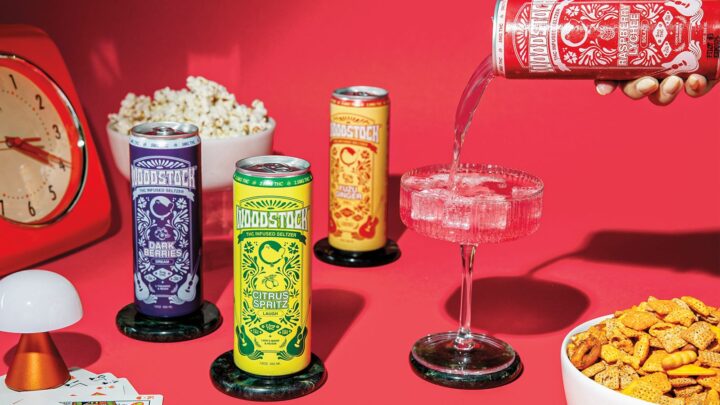
As the cannabis drinks category continues to mature, new brands are getting creative to stand out among the sea of emerging products. Woodstock Goods launched a line of THC seltzers last year in 2.5-mg., 5-mg., and 10-mg. doses, in flavors like Citrus Spritz, Raspberry Lychee, and Cherry Pomelo. Each label is built around a functional ingredient to complement its hemp-derived THC, including L-theanine, Lion’s Mane, Cordyceps, Reishi, and non-intoxicating cannabinoids like CBD and CBG. The Woodstock Goods portfolio is sold in four states and online ($17- $18 a 4-pack of 12-ounce cans).
“Growth has been accelerating— there’s real education happening,” says Woodstock Goods CEO Richard Lee. “A few years ago the idea of a THC beverage sitting next to a seltzer on a liquor store shelf seemed unlikely. Now, major spirits distributors are building dedicated hemp beverage divisions and retailers are getting on board. We’re seeing alcohol industry players lean into hemp rather than fight it, treating it as a complementary growth category rather than a threat.”
New York’s Ayrloom brand took a unique approach to THC drinks when it launched a Honeycrisp apple cider infused with cannabis in 2023. Today, the company offers a few THC ciders, plus sparkling waters, lemonades, teas, and sodas in formulas that primarily contain both 10-mg. THC and 5-mg. CBD (some extensions have other THC and CBD combinations). The hemp-derived beverages are sold in 11 states ($40-$70 a 12-pack of 12-ounce cans).
“There’s still a meaningful segment of canna-curious drinkers who are learning what to expect,” says Kaelan Castetter, head of external affairs or Ayrloom. “We’re working to lower the stigma around cannabis and empower people to incorporate it mindfully into everyday life. Even with the patchwork of different hemp rules, cannabis beverages have grown fast everywhere they’ve been allowed because people want them.”
Winemakers Joel Gott and Charles Bieler entered the THC drinks space in 2022 with the launch of Señorita THC Margaritas and the brand expanded heavily last year with a focus on live entertainment venues and large retail chains. The brand is now owned and marketed by Rythm Inc, which also produces Rythm THC beverages and the non-alcohol agave spirit 1777. Earlier this year, Señorita and Rythm entered a partnership with Chicago’s United Center arena to offer their THC drinks throughout the space during concerts and special events. The drinks are now sold at a dedicated branded bar and at grab-and-go stations throughout the United Center. In addition Rythm Inc.’s portfolio is available at Navy Pier in Chicago and the Grand Ole Opry in Tennessee, and in stores like Circle K, Target, and Total
Wine & More.
“Those partnerships are a great sign of where consumer interest and the category are heading,” says Rythm Inc.’s general manager of beverage, Rick Schepp. “Most of our business is through retail, simply because that’s where regulations currently allow the category to grow most efficiently. But on-premise and entertainment venues are a huge priority for us. Consumers are increasingly discovering THC beverages at the same places they traditionally shop for other items, which helps normalize the category and introduces it to new consumers in a familiar setting.”
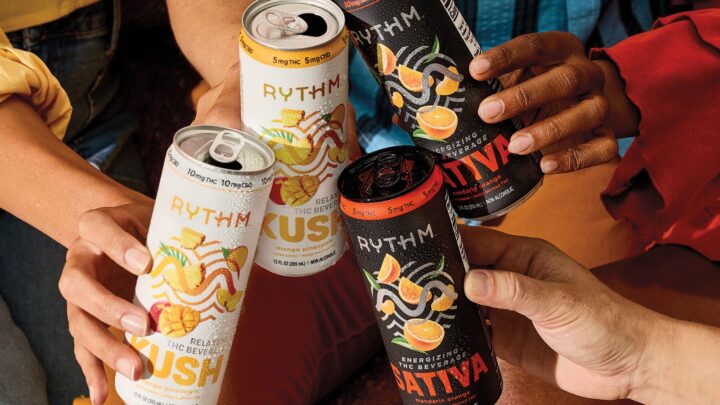
The Señorita portfolio includes two Margaritas—Mango and Lime-Jalapeño—plus a Grapefruit Paloma and a Ranch Water, each available in 5-mg. and 10-mg. formulations ($17 a 4-pack of 12-ounce cans). Meanwhile, 1777 THC agave spirit touts its inspiration in Mexico and contains blue agave from Jalisco, with flavors of lime, dragon fruit, and oak, and 10-mg. THC per 1½-ounce pour ($45 a 750-ml.). Rythm’s THC drinks include the Mango Pineapple-flavored Kush line, containing 5-mg., 10-mg., or 25-mg. THC doses mixed with CBD and L-theanine, and the Mandarin Orange flavored Sativa line, offered in similar THC potencies but mixed with caffeine ($17-$25 a 4-pack of 12-ounce cans).
Making Moves
While the on-premise channel has been slower to fully embrace THC drinks, it’s seeing steady interest in markets where the segment is legal in restaurants and bars. Chicago’s The Beetle Bar and Grill offers eight different THC beverages, from the 5-mg. Flora Passion Fruit Margarita ($8 a 12-ounce can) to the 25-mg. Marz Bong Water sparkling water ($12 a 16-ounce can). General manager and beverage director Colleen Carrel says the drinks do well at her bar, especially with guests who don’t want alcohol. “It’s an alternative that’s much more attractive than mocktails because you feel relaxed and euphoric from THC drinks,” Carrel explains. “There’s a lot of momentum occurring in this industry.”
Much of that momentum is fueled by retail stores. Large players like Total Wine & More stock a full roster of THC drinks, spanning some 50 brands and more than 150 labels, with a focus on low-dose hemp-derived drinks at 10-mg. THC or less. “The entire term ‘adult beverage’ is being redefined,” Eric Brewer, Total Wine’s senior vice president of government relations and public affairs, recently told Market Watch sister publication Shanken News Daily. “Traditionally that’s been spirits, wine, and beer, but there’s no question that as those products have faced headwinds in sales in the past number of years, two of our largest growth areas are THC-infused beverages and non-alcohol adult beverages. THC beverages will become a part of the permanent adult beverage category.”
Regional stores are seeing similar success. Garfield’s Beverage Warehouse, with 11 stores around greater Chicago, stocks nearly 20 brands and myriad flavor variants across its THC drinks retail space. Elliott Kurtz, the general manager of Garfield’s in Deerfield, Illinois, says the stigma that once surrounded cannabis drinks has largely faded. Cann is the store’s best-seller in 5-mg. and 10-mg. varieties, and Señorita and Wynk also do well. Kurtz says cannabis-infused non-alcohol spirits are rising too.
“Originally the category was a little taboo, but over the past two years people have warmed up to the idea of an alcohol alternative,” Kurtz adds. “A lot of these people go back and forth with alcohol and THC. The sky is the limit with these drinks and new products are getting very creative. Making these drinks illegal would be moving backwards in the industry—it’s stopping an emerging category before it even starts.”
For a report on the pending legislation that would once again ban cannabis drinks in the United States, and a look at how companies across the beverage industry are working to save the category, see the feature story on page 70.