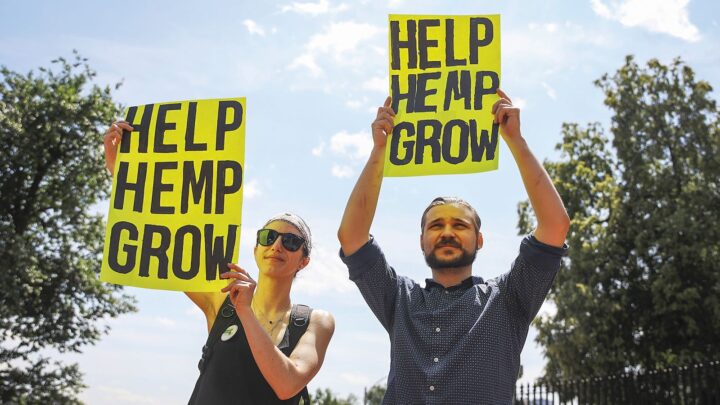
Hemp-derived THC drinks are in the midst of an unsettling paradox: Coming off their most successful year yet in terms of sales and depletions, the category is poised to all but disappear thanks to pending federal legislation that would decimate the segment and close the loophole that originally created the category. Companies that have spent the last several years building legal THC beverage brands—a segment valued at roughly $1.4 billion in the U.S. last year—are now faced with complete uncertainty regarding their future.
The THC drinks category was created eight years ago thanks to the 2018 Farm Bill, which legalized industrial hemp containing less than 0.3% delta 9 THC by dry weight. The bill created a loophole that allowed companies to follow the 0.3% hemp-derived THC rule but still craft products with a total THC concentration above that limit. Federally, cannabis is categorized as either marijuana or hemp, with marijuana listed as a Schedule I controlled substance and hemp considered an exemption per the 2018 Farm Bill, which adds further complications. On the state level, many state governments have enacted legislation allowing for hemp-derived THC products to be sold legally in a variety of stores, including alcohol retailers, grocers, and convenience channels. Overall, about 40 states allow for the medical use of cannabis and roughly 25 allow recreational cannabis sales.
In 2025, Congress narrowed the definition of hemp in its Agriculture Appropriations Act (Public Law 119-37), redefining legal hemp and more strictly limiting intoxicating hemp-derived cannabinoids. Often referred to as the Hemp Reclassification Law, the measure calls for a max of 0.4-mg. of total THC per container, effectively banning all THC drinks, edibles, and other products currently on the market, as even the lowest-dose beverages contain at least 1-mg. of THC. The 2025 measure was originally set to take effect November 12, 2026, and would’ve put almost every currently operating THC drinks company out of business. That November deadline has now been pushed back to December 11, 2026 thanks to the Senate passing a short-term funding bill in August that offered a one month reprieve for consumable hemp-derived THC products.
Of course, multiple groups are working to protect the definitions in the 2018 Farm Bill. One of the most notable efforts, the Lawful Hemp Protection Act, is a bipartisan federal bill introduced by Republican Kentucky Senator Andy Barr and Democratic Minnesota Senator Angie Craig that would create a formal regulatory framework for hemp-derived consumer products containing THC. The measure aims to establish nationwide rules for the cultivation, processing, lab testing, and product labeling of hemp-derived THC items, as well as mandate that cannabinoid products be crafted from hemp grown and packaged in the United States, thereby banning synthetic and non-natural compounds. It would also set up a federal oversight structure through the Alcohol and Tobacco Tax and Trade Bureau, creating milligram-based excise taxes for hemp-derived beverages.
The Lawful Hemp Protection Act was introduced in July and at press time was awaiting committee review. Advocates for the act helped push for the extension to the November 12, 2026 deadline on the Hemp Reclassification Law to give the Protection Act time for due process. Separately, President Trump’s administration has called on the Justice Department to reclassify state licensed medical marijuana and FDA-approved cannabis products to Schedule III drugs, while also advising Congress to update the federal definitions of hemp-derived cannabinoids.
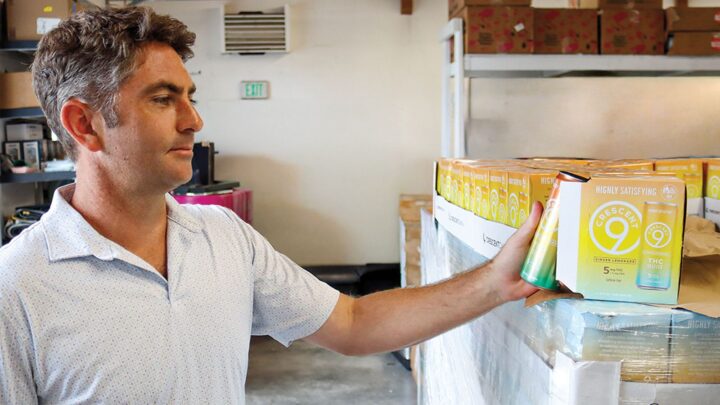
“If the law changes, it would be catastrophic,” says Joe Gerrity, CEO of New Orleans-based cannabis company Crescent Canna, which produces the top-selling cannabis drinks brand Crescent 9 THC seltzer. “We would have to shut down our hemp operations and we’d likely be sitting on two to three months of inventory that we would have to destroy. It would destroy five-plus years of growing this business.”
Staying The Course
While THC drinks companies wait for an extension or reworking of the Hemp Reclassification Law, they’re trying to operate as normally as possible. But that’s no easy feat. “Trying to keep business operating when there’s a cliff coming so soon has been tremendously difficult,” Gerrity says of the impending reclassification law set to start in December. “Farmers are unsure if they should put more crops in the ground and companies like ours are not sure if we should carry inventory. The uncertainty is the most challenging part.”
Some THC drinks companies are getting creative to stay afloat amid the uncertainty. Cann, a leading cannabis drinks company with a wide range of products and potencies, launched a 0-mg. drink this summer. The new label ($33 an 8-pack of 12-ounce cans) is available in the brand’s already popular THC-infused flavors and instead of cannabinoids it’s enhanced with electrolytes, magnesium, L-theanine, and passion flower to naturally affect mood without intoxication. Cann CEO and co-founder Jake Bullock says the launch timeline was strategic.
“We’re focused on continuing to meet consumer demand while adapting to the state-by-state regulatory landscape,” Bullock explains. “The 0-mg. launch broadens the channels Cann can be sold in—for the first time we’re able to sell nationally in all 50 states. The 0-mg. line is a strategic move not only to expand our current distribution but also to offer a non-intoxicating version of our drinks. We know there’s a better answer than a federal ban. Our focus now is to work with Congress and advocate for regulation, not prohibition, which would eliminate the bad actors the ban targeted in first place while keeping responsible players in business.”
Many hemp-derived THC drinks companies have joined the #SaveHempBevs advocacy push and the Hemp Beverage Alliance, which formed in 2023 and now boasts hundreds of member organizations across the United States and Canada. The group’s goal is to work on advocacy together. Cann is a member, and so is Massachusetts-based Woodstock Goods, a brand that offers several low-dose drinks between 2.5-mg. and 10-mg. THC. Woodstock Goods CEO Richard Lee calls the Hemp Reclassification Law a threat to tens of thousands of farmers and producers, as well as millions of consumers.
Lee says the goal of the Alliance is to delay or replace the reclassification law with more sensible, workable regulation, as well as carve out a beverage-specific section for any new law that would hopefully include a resolution to the inconsistencies among state laws and remove the restrictions on paid advertising. “The state-by-state inconsistencies—different serving size limits, different labeling rules—make compliant multi-state expansion slow and expensive, and continued restrictions on paid advertising platforms like Meta limit how we can reach and educate new consumers,” Lee explains. “Beverages are a small, easily-regulated slice of the broader hemp category and shouldn’t be caught in rules aimed at edibles and other higher-dose products. If the category gets regulatory clarity, hemp beverages can become a genuine, mainstream alcohol-alternative segment—something sold and consumed the same way beer, wine, and spirits are today.”
Advocacy Work
Expanding understanding among lawmakers is a key strategy for Ayrloom, a New York-based THC drinks company with a range of ciders, teas, lemonades, sodas, and sparkling waters. The company hosted its second legislative tour this summer, during which it invited New York lawmakers to its facility to get an up close and personal education on THC drinks. “A lot of policymakers have never thought about cannabis as something you drink,” says Ayrloom head of external affairs Kaelan Castetter. “We’ve found that showing them the actual product and walking them through our facility cuts through more stigma than any position paper we could hand them.”
Castetter adds that Ayrloom supports legislation that would let liquor stores, which already have age verification built into their businesses, carry low-potency beverages. “A federal ban won’t make demand disappear, it will just push it underground, which is worse for everyone because it creates more risk and underage sales, no quality control, and nobody to hold accountable,” he says.
The concept of thoughtful regulation is also top-of-mind for Rythm Inc., a company whose portfolio includes two different Rythm-branded THC drinks lines, as well as Señorita THC Margaritas and Mexican-inspired cocktails, and the large-format agave-based THC spirit 1777. Rythm Inc.’s general manager of beverage, Rick Schepp, says his company is staying the course until the legislative mess is cleared up, though he adds that regulatory consistency going forward is a must.
Some companies are offering incentives to encourage their consumers to take action. The #SaveHempBevs campaign, which is supported by the Wine & Spirits Wholesalers of America, includes a letter-writing effort in which THC beverage consumers are urged to write their Congressional representatives about Hemp Reclassification. Woodstock Goods is supporting the measure by offering a 40% discount to all consumers who submit a photo of their letter to the company. Similarly, THC seltzer brand Wynk offered a free 12-pack of its products to the first 1,000 responders who wrote their local senator in support of delaying the TKNovember 12, 2026 Hemp Reclassification deadline while also supporting the Lawful Hemp Protection Act.
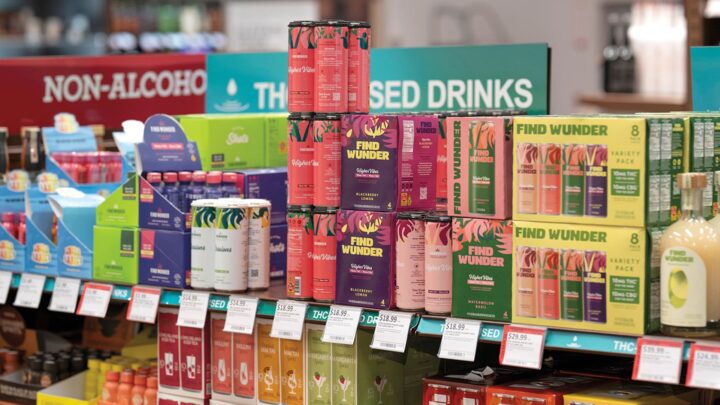
Retailers are also getting in on the action and many have joined the recently formed Beverage Alcohol Merchants Coalition (BAMCO) to support responsible federal and state regulations for adult-use hemp drinks. The group has big-time drinks retail members, including national player Total Wine & More; Florida’s ABC Fine Wine & Spirits; Texas’s Spec’s Wine, Spirits & Finer Foods; and West Coast operator BevMo by Gopuff. BAMCO’s priorities include regulations that would require adult-only sales, low-dose per-serving limits, mandatory testing, responsible packaging, and distribution among licensed retailers and wholesalers. Some retailers have also joined the Coalition for Adult Beverage Alternatives (CABA), a group that includes liquor store owners as well as distributors, THC drinks producers, and cannabis companies.
Total Wine & More has been active on advocacy, as Eric Brewer, the company’s senior vice president of government relations and public affairs, has been a steady voice for THC drinks regulation. Total Wine stocks a large variety of low-dose THC drinks. “We’re demanding regulation—it’s absolutely necessary for the long-term health of the public and the industry,” Brewer recently told Market Watch sister publication Shanken News Daily. “Total Wine appreciates the introduction of the Lawful Hemp Protection Act for helping to move this important conversation forward—it’s a constructive step toward a responsible framework for low-dose hemp beverages. The strength of our argument for low-dose hemp beverages being regulated within the three-tier system is its simplicity—we already have an existing system under which wine, spirits, and beer are sold. The overwhelming sense is that eventually we’ll have regulation, not prohibition. The question is simply when it will occur.”
At press time, the Lawful Hemp Protection Act was awaiting review and due process. Hemp beverage advocates remain in full support of the delay on Hemp Reclassification and restrictions on hemp-derived THC products. Extending the deadline allows current brands and retailers to continue selling hemp-derived THC beverages for at least another month, giving lawmakers more time to review and work on the Hemp Protection Act.
For a look at the hemp-derived THC drinks category and its explosive success over the last year, see the feature story starting on page 26.