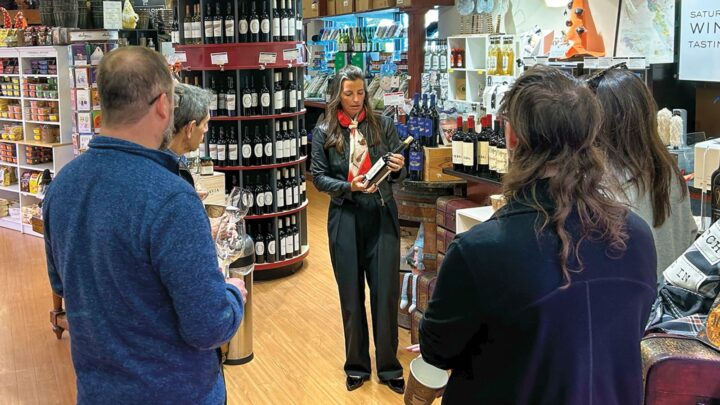
For many retailers, tastings have become a vital driving force to expand customers’ knowledge, palates, and business. A little taste can go a long way when it comes to customer engagement. “Tastings create brands,” says David Tabibian, owner of Royal Wines & Spirits in San Jose, California. “We have many new brands coming to market. If we didn’t have tastings for them, customers might never touch those bottles.”
Tabibian has exclusively held Royal’s tastings at a neighboring restaurant formerly known as Anejo Cantina & Kitchen (now Agua Salada). “The supplier sets up four or five different spirits,” he says. “It’s a tasting, socializing, and brainstorming event. Customers interact with each other, discuss the products, and express their opinions. They feed off each other.”
Goodbye Guess Work
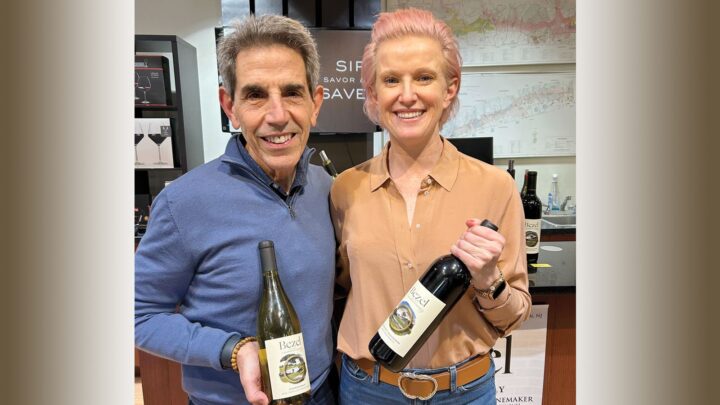
Tastings build consumer trust and loyalty. “When a customer asks me to recommend a bottle of wine or a whisk(e)y, there’s always the feeling of pressure on the customer’s side because they may feel I’m just selling to them,” Tabibian says. “Tastings wash away that element. The customer tastes a spirit or wine they haven’t had before, and they aren’t obligated to buy it. You take away the guess work.”
Tabibian usually holds two spirits tastings a month and participation from suppliers like Suntory Global Spirits, Pernod Ricard, and Luxco bring events to a higher level. “It’s important because they seem more knowledgeable than anybody else about the product,” he says. “Tastings are growing and getting more detail oriented and customers like that.”
At Julio’s Liquors in Westborough, Massachusetts, owner Ryan Maloney believes in liquid to lips as a valuable sales tool. While Maloney has owned Julio’s since 2000, he started ramping up tastings between 2005 and 2007. “It’s our philosophy,” he says. “Try before you buy. It plays into what we do.”
Maloney spends a significant amount of time planning tastings, seminars, and events. “It’s a part of getting people in the store,” he says. “You need to offer an educational process if you want people to understand why they’re spending more money on something.”
Julio’s has “Thirstdays,” a weekly wine tasting downstairs on Thursdays. In Julio’s liquor department, there is a Frisky Whiskey Wagon with tastings on Thursday and Friday nights, and Saturday afternoon. “If it’s open, you can try it, and we try to have a lot of stuff open,” Maloney says. “We are working on ways to take the guess work out of buying.”
Bigger Spectrum
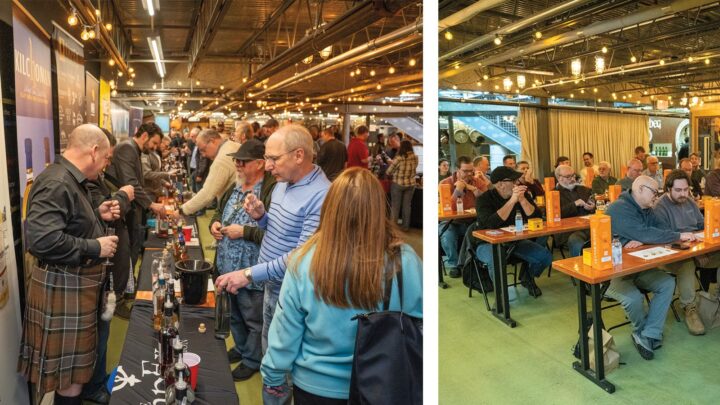
Maloney considers himself fortunate to have a 36,000-square-foot store, including a 16,000-square-foot basement. He created the 4,000-square-foot Metro Station in the basement to do tastings. “People thought we were crazy and asked us why we were doing this,” he says. “I told them, ‘because that is where the future is going to be.’”
The store usually does one major event a month and two structured tastings a week. “We do Whisk(e)y Road Show in October and November,” Maloney says. “There’s something going on all the time. It’s a full experience, not just shopping.”
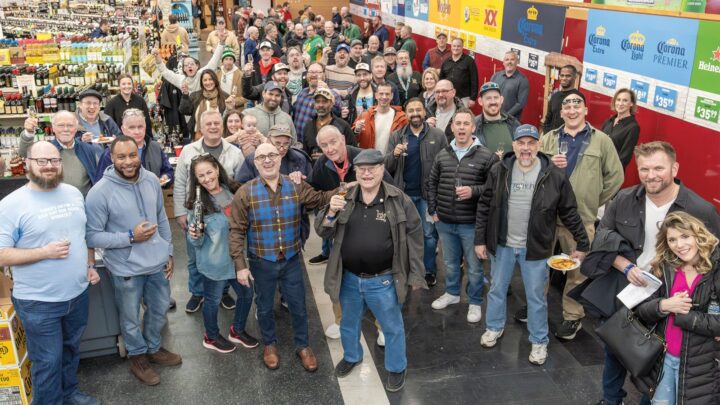
The store’s longest running and largest event is Go! Whiskey Week, which started as a one-day event called Whiskey A Go Go in 2007. Maloney claims it’s now the biggest whisk(e)y festival in New England. Go! Whiskey Week is a weeklong festival with daily events culminating with the Grand Dram, a whisk(e)y tasting featuring 68 tables and over 350 drams from around the world. This year’s Grand Dram, held on March 2, had about 550 attendees. The Grand Dram costs $50 a ticket and customers get $20 back in a store gift card and a commemorative glass. Maloney donates $5 from each ticket to charity.
After Go! Whiskey Week was complete this year, Julio’s took Monday and Tuesday off from tastings, but the store’s Whisk(e)y Wednesday featured the Magnificent Leftovers tasting. “For anything we have left over, we have an open tasting. We had 100 people attend,” Maloney says.
Maloney receives support for the tastings from both buyers and wholesalers, but he never puts all his eggs in one basket. “We try to keep control because we want our customer experience to be across a bigger spectrum of what’s available,” he says. “You must be willing to sit down and do all this stuff to put it together because that’s how you’re going to make a great experience.”
Julio’s promotes its tastings through social media on Instagram and Facebook, and about 25,000 people subscribe to its email newsletter. Julio’s holds five or six beer events a year, and last August the store hosted a Ready-To-Go Fest that showcased hard seltzers, cans, and Tetra Paks. “We did a non-alcoholic adult beverage tasting this year,” Maloney says. “We try to introduce some of that in all of our festivals, too.”
Differentiating Retailers
At the three-unit, New Jersey-based Gary’s Wine & Marketplace, tastings help create unique shopping experiences and engagement with customers. “Wine and spirits tastings are one of the best tools to encourage customers to visit us in-store. The tastings keep the in-store shopping experience unique and exploratory,” says store owner Gary Fisch. “We educate people on different categories and unique wines, resulting in more visits, larger basket sizes, and higher margins. Our guests get to have one-on-one conversations with one of our wine professionals, which is a key differentiator.”
Gary’s also conducts three to four wine seminars in each store per year. The seminars are free to attend and typically have a seasonal theme. Timing is important. “During weekdays, the most ideal time for a tasting is 4 p.m.-7 p.m., capturing customers after work but before dinner,” Fisch says. “On Saturdays and Sundays, our tastings typically run from 12 p.m.-3 p.m. We rely on suppliers and distributors to help schedule, coordinate, and staff tastings.”
Gary’s Saturday tastings feature Gary’s Direct products, which are sold at a discount to shoppers who have a Gary’s account, and they’re led by a Gary’s wine team member. “We also incorporate a gourmet item, typically a cheese, to pair along with the Gary’s Direct wines poured during a tasting,” Fisch says.
Wine tastings are integral to sales at Ferry Plaza Wine Merchant in San Francisco and sister store Oxbow Cheese & Wine Merchant in Napa, California. “For wine we stay with the general theme of sourcing from smaller producers and importers, offering heavily curated selections, and having interesting guests to talk about the wines,” says Peter Granoff, owner and partner of the two stores.
Each store, which also has a wine bar, typically has two to four wine tastings a month, depending on the time of the year and other competing events. Pricing for tastings at the stores fluctuates with the retail price of the wines being poured, ranging from roughly $18-$60 for five 2-ounce glasses. “Most of our tastings are seated, so adding food is common,” Granoff says.
While Granoff does not have space for larger wine seminars, he and his team are often asked to do them at off-site events, mostly corporate, and engage whenever possible. “We’re curating more of our own tastings, as that allows us to work with existing inventory and design them around customer trends,” he says. “Wine is sold everywhere in California, and the challenge is to differentiate and prove our value proposition as a filter on behalf of our customers.”
Balancing Act
At Exit 9 Wine & Liquor Warehouse in Clifton Park, New York, wine and spirits tastings are crucial. “We’re bringing in more products every week, and brands are constantly innovating with new flavors or new styles of wines,” says events and e-commerce manager Caitlin Duma. “It’s a great way for the customer to try something without committing to buying it. Tastings help open customers’ minds.”
The number of tastings at Exit 9 range from 20-30 per month, though that number jumps to 60-75 per month during the holiday season. “We host mostly on Fridays and Saturdays with up to seven tastings at the same time,” Duma says. “And each November, we host a huge New York State wine tasting showcasing 25-30 New York wineries throughout our store.”
When scheduling tastings, Duma strives for balance. “We have a 37,500-square-foot store, so we can accommodate multiple tables spread throughout the store without overwhelming customers,” she says. “I schedule a mix of wines from different regions and different types of spirits. The only exception is tastings before holidays. We encourage our tables to have no more than four products, so customers don’t become flooded. We have a bright and enthusiastic wine educator, Dominique DeVito, who brings these wine seminars to life for our customers.”
Distributors play an important role in Exit 9’s tastings. “They bridge the gap between us and the supplier,” Duma says. “Our distributors have a presence in our store nearly every day, whereas supply representatives typically don’t. Distributors bring these opportunities to us.”
Exit 9 has three to four wine and spirits seminars each month, usually around a centralized brand or theme. “Some of our wine seminar themes have included organic wines, wines from Southern Italy, wines for a dinner party, sparkling wines for summertime, Loire Valley wines, and wines that pair well with chocolate,” Duma says. “Our spirits seminars usually focus on a brand.”
While wine and spirits tastings at Exit 9 are free, including the New York State Wine Tasting every November, seminars are $20 per class, with attendees receiving a $10 coupon to use on any product tasted during the seminar. “We sell 40 tickets per seminar session,” Duma says. “Many sell out within hours of announcing it via email.”
The store also hosts Vault Seminars for $20 a ticket, with no coupon included. These highlight a specific range of allocated products. “Those seminars give customers a learning opportunity and a unique tasting experience with a brand that’s nearly impossible to obtain at regular retail value,” Duma adds, noting that Exit 9’s seminars set the store apart from competitors. “We will continue hosting growing brands and come up with unique ideas for wine seminars,” she says. “We’re also looking to grow our Vault Seminars as customers are very interested.”
Creating Experiences
Traditional retail is evolving and in-store tastings have become a key part of the new model. “The days of everybody trying to be the cheapest is not a winning strategy,” Julio’s Maloney says. “If alcohol sales are down and you don’t have enough people coming through the door, your volume is not high enough to support super low margins. It’s not so much luxury, but it’s service, selection, and experiences. The future is creating experiences for people that revolve around the responsible use of our products.”