
Relying on reputation can only go so far. Scotch whisky’s stellar reputation has held strong globally\ for decades, but that hasn’t translated into sales—at least not recently—in the U.S. Against a backdrop of declining sales, some say a shift in focus and approach is needed for blended Scotch.
Jason Hedges, corporate beverage director for New York’s LT Hospitality at the Eventi Kimpton Hotel, says his guests aren’t wowed by Scotch’s long-held superior positioning. Instead, “they’re looking for a reason to engage with it.”
“The biggest challenge isn’t that Scotch has lost its quality; it’s that it has lost some of its cultural relevance with younger consumers,” Hedges continues. “The industry has spent years asking people to admire Scotch instead of inviting them to enjoy it.”
Sanwar Mal Khokhar, bartender at Sanjh Restaurant & Bar in Irvine, Texas, also suggests a shift. “I don’t think consumer curiosity has disappeared—if anything, people are more open to learning than ever before,” he says. “The difference is that Scotch now has to earn its place on the table rather than relying on its reputation alone.”
Scotch marketers have faced a conundrum in recent years in how to navigate the category back to growth. Category fortunes ebb and flow in the U.S. market, but blended Scotch has been on a downward trajectory for decades. Volume is roughly half of what it was 30 years ago.
Last year was particularly daunting, with nine of the top ten brands posting declines, three of those at double digit rates in 2025, according to Impact Databank. The lone growth brand among the top ten was John Barr from Spirit of Gallo, which advanced 10% last year. Overall, the top ten brands combined for a 6.2% decline to 3.94 million cases. The blended Scotch sector overall declined 6% to 4.86 million cases in 2025, according to Impact Databank.
Zach Poelma, senior vice president, commercial intelligence for Southern Glazer’s Wine & Spirits, says this year isn’t shaping up much better. “We are continuing to see blended Scotch whisky struggle here in the U.S., while our single malt business is performing a bit better,” he says.
“Scotch whisky category growth has actually decelerated over the course of the year, even within some of the higher-price tiers, although this has been driven much more by blended items than single malts,” Poelma continues. “Overall, we’ve seen the category lag the improvement we have started to see in other spirits categories like tequila and American whiskey where the luxury segment has accelerated during the last few months.”

Category Reset
With the dismal numbers and few growth shoots happening this year, blended Scotch whisky may be due for a reset.
Acknowledging the headwinds that include inflationary pressures, changing drinking occasions, and consumers being more selective in how they spend, Brian Cox vice president of Scotch whisky at Bacardi, which owns the Dewar’s blended Scotch brand, says opportunities remain. 55“Consumers are more informed than ever and are looking to maximize both quality and value when making purchasing decisions,” he says. “This creates a real opportunity for blended Scotch, particularly at the premium end of the category. And it’s not ‘either or’ when it comes to standard versus premium expressions; we see any segment expanding as an opportunity.
“We’re also seeing opportunities in new drinking occasions,” he adds. “Blended Scotch’s versatility makes it well suited to contemporary serves, from highballs to neat serves to elevated cocktails, helping the category connect with a new generation of consumers. Pairing quality, versatility, and value remains central to our success.”
The recent lifting of tariffs on Scotch whisky “provides a more positive environment for the category,” Cox adds. United States President Donald Trump announced the removal of tariffs in April and the new policy came to fruition in July.
“The return of tariff-free trade for Scotch whisky in the US is welcome news for businesses on both sides of the Atlantic,” international director for the Scotch Whisky Association Ian Duddy said at the time. “As Scotch whisky’s most valuable global market, worth £933 million in 2025, the removal of tariffs provides greater confidence to invest, grow exports, and support jobs and communities across Scotland and the US.”
But Poelma has doubts about the impact. “While tariffs may have put some pressure on the Scotch category, we didn’t see a significant change in consumer behavior,” he says. “A shift out of the category that was taking place prior to any tariff activity continued and we don’t expect any significant change now that they are lifted.”

Retail Expectations
With tariffs in the rear view, at least for now, the Scotch sector is attempting to reignite consumer enthusiasm, and there are differing opinions on how that might happen. Jon Halper, owner and CEO of Top Ten Liquors in Minneapolis, suggests marketers and distillers take a back-to-basics approach. “Consumers today want trusted brands, consistent quality, and pricing that feels fair,” he says. “When brands deliver those things, they’re still finding success.”
Halper recommends tightening the reins on some of the innovation currently underway. “Over the past several years, many brands have introduced additional finishes and line extensions,” he says. “There’s certainly a place for innovation, but our data suggests consumers are rewarding the core expressions. I’d rather see producers invest behind the products that built their brands. I’d also continue emphasizing age statements. They’re performing well for us, and it’s one of the clearest ways Scotch differentiates itself from other whisk(e)y categories.”
Other retailers have had different experiences. Steve Hotchkiss, general manager of Liquor World in Springdale, Arkansas, says any vibrancy within Scotch is centered in creative cask finishes and limited releases. He adds that “blended Scotch sales have been consistent over the past few years but not growing much.”
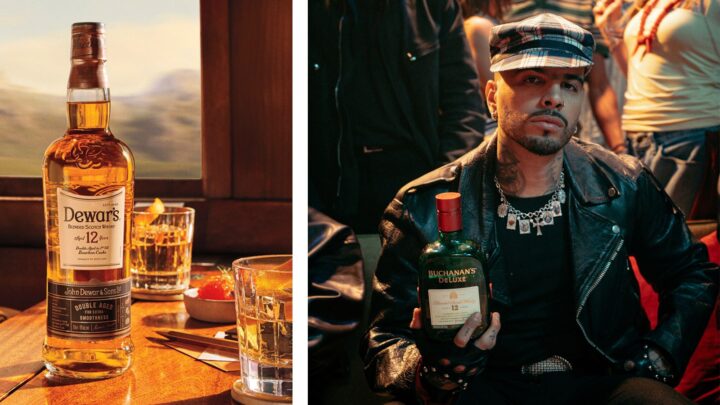
In West Texas, the Pinkie’s chain of beverage alcohol retail stores has seen strong growth from Buchanan’s Scotch in general, and Buchanan’s Pineapple in particular, signaling the impact flavors have in certain markets. Demographics play a role for Pinkie’s. “The new generation of Scotch drinkers are Hispanic,” says Austin Keith, who recently retired from his role as president of the chain. “That being said, it’s split: Buchanan’s is strong with our Mexican consumers, whereas our South American customers gravitate toward Johnnie Walker Black.”
Innovation Continues
As Scotch marketers seek to regain footing, innovation in various forms—unique finishes, extended age statements, flavors and others—is taking center stage. “Brand extensions, finishing programs, and abv volume levels continue to resonate strongly and are big drivers for discovery and trial,” Cox says. “The Dewar’s Double Double range is a perfect example, showcasing a proprietary four-stage aging process through finishes ranging from Oloroso Sherry and Palo Cortado to Madeira, Mizunara, and most recently the Magma Stone Toasted 21 Year Old expression.”
Cox adds that the annual Dewar’s 19-Year-Old Champions Edition, created in partnership with the United States Golf Association and the U.S. Open golf tournament, continues to generate excitement by drawing inspiration from each tournament host location. “These releases allow us to tell local stories while creating unique and memorable whiskies,” he says.
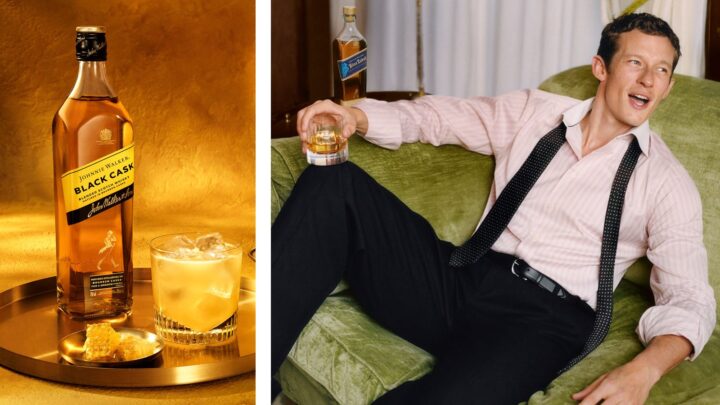
Diageo is also aggressive with various innovations for Johnnie Walker. The company recently introduced Johnnie Walker Black Cask, a 43% abv blend of Johnnie Walker whiskies aged in American white oak ex-bourbon barrels. Diageo says the new whisky is designed to be enjoyed neat, over ice, in classic whisky cocktails like the Old Fashioned, or modern whiskey cocktails like the Gold Rush.
And Scotch whisky’s challenging landscape hasn’t put off all newcomers. In September 2025, González Byass USA launched Wolfcraig, a luxury-focused blended Scotch with three expressions: Wolfcraig 14-Year-Old Deluxe Blend, 30-Year-Old Premium Blend, and 35-Year-Old Blended Grain. At the time of the launch, Andrew Sinclair, González Byass USA CEO, called the new entry “the very best of modern Scotch whisky making, blending heritage with innovation.”
As has become common in spirits marketing in the U.S., several brands have also tapped into sports and entertainment personalities to help drive brand awareness and growth. Pernod Ricard this year launched Chivas Regal 16 Limited-Edition, the first 16-year-old expression in the brand’s history, in partnership with global brand ambassador and Formula One driver Charles Leclerc.
Johnnie Walker recently launched a year-long partnership with English actor Callum Turner, who has signed on as the new global ambassador for Johnnie Walker Blue Label. The collaboration celebrates Callum as a leading man in a series of unguarded videos and intimate portraits as he raises a glass, “putting Johnnie Walker Blue Label at the heart of every celebration, big or small,” according to the company.
“For over 200 years, Johnnie Walker has championed progress in all its forms, and Johnnie Walker Blue Label stands as its ultimate expression,” says global brand director Neil Shah. “Callum embodies that same spirit: quietly persistent, endlessly dedicated to his craft, forging his own path while staying true to his roots.”
Buchanan’s Blended Scotch Whisky also recently turned to celebrity through its global partnership with singer Rauw Alejandro. Ahead of the FIFA World Cup 2026, of which Buchanan’s was an official supporter, the brand teamed up with Alejandro for the world premiere of his new song “Dando Vueltas.” Buchanan’s said the partnership was “the next chapter of its broader campaign celebrating the unmatched energy, rhythm and ‘sense of familia’ that Latinos bring to the beautiful game of fútbol.”
Educational Efforts
Those new releases and partnerships, and many similar efforts, are designed to attract new drinkers into the Scotch whisky fold. That’s been a challenge in the sector for several years, particularly as new drinkers have gravitated to bourbon and tequila and are, in general, drinking less than previous generations.
Poelma suggests a proactive approach. He says Scotch offers many of the attributes young consumers are seeking, including authenticity, age statements that drive quality perception, and limited releases that create demand and drive brand awareness.
“Overall, there’s an opportunity for Scotch whisky to recruit younger consumers by sharpening pricing on blended Scotch to recruit consumers into the category, then trading those consumers into single malts for more celebratory occasions and as income levels rise,” Poelma says. “We also think there’s a marketing opportunity to focus more on the sense of heritage and history to appeal more to younger consumers.”
From the on-premise perspective, Khokhar says the industry needs to work to dissolve some preconceived ideas about Scotch. “Many younger guests still associate Scotch with something smoky, intimidating, or reserved for special occasions, so they rarely order it without some guidance,” he says. “When we take the time to explain the different regional styles or recommend a lighter Speyside or Highland whisky, they’re often pleasantly surprised.”
Hedges agrees, noting that a proactive approach works. “Suppliers…need to support bartenders, cocktail programs, and educational experiences that remove the intimidation factor,” he says. “Once guests discover that Scotch is far more diverse and versatile than they expected, the category does a very good job of selling itself.”
At retail, Keith of Pinkie’s notes the need for education to inform new consumers of the differences between single malts and blends, between highlands and lowlands products, and other differentiators. He adds that “online is the best tool, other than having an actor or movie featuring Scotch.”
Compass Box Whisky has embraced the online approach. Late last year the company launched Pyxis, a first-of-its-kind AI-powered whisky guide designed to make exploration more personal, effortless and engaging. According to the company, the multi-language Pyxis is conversational and understands tone and intent, whether someone asks, “What should I try next?” or “What’s the difference between Sherry and Bourbon casks?” Pyxis has been trained by the brand’s whisky making team to act as a friendly, intelligent guide for anyone who wants to deepen their whisky knowledge.
Future Focus
Scotch whisky is clearly languishing in the U.S. market, but many in the industry are confident of an eventual turnaround for the category.
Cox notes the short-term challenges for the entire spirits industry but says “we believe consumers will emerge from this period with a greater appreciation for craftsmanship, age statements, authenticity, and quality.
“As we celebrate Dewar’s 180th anniversary, we’re excited about the opportunities ahead,” Cox says. “Our focus remains on continuing to elevate blended Scotch through innovation, exceptional whisky-making, and meaningful consumer experiences. Blended Scotch has delighted consumers for generations and we believe its best chapters are still to come.”