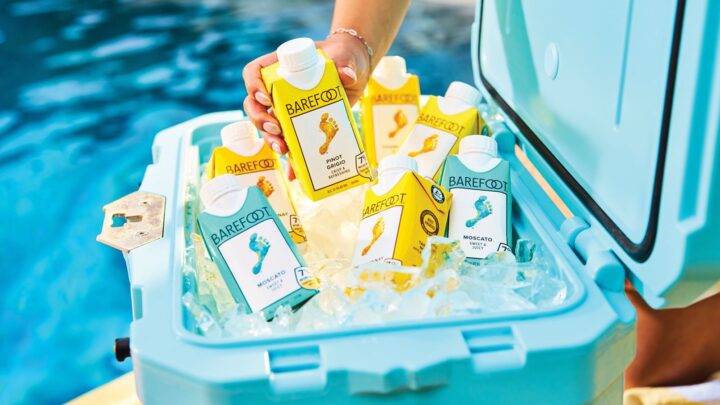
Amid a vast landscape of consumer products, a mini version of an established offering often sparks new brand interest and adoption. Increasingly, wine is no exception. Canned wine exploded onto the scene in the mid- to late-2010s, and that, along with smaller-format bottles, set the expectation for convenience among consumers. Now, in the latest evolution of wine packaging, single-serve boxed wines are making inroads. In 2025, Gallo became the first company to introduce a 200-ml. Tetra Pak for wine. Since that initial launch, the company has expanded its offerings, creating the Gallo Wine Mini Portfolio, with additional brands and varietals rolling out steadily in this small format platform.
Britt West, chief commercial officer at Gallo, says the new format is working because it makes wine more portable, affordable, and easier to try. “This single-serve format helps expand wine beyond traditional settings and into occasions where glass is not practical, from festivals and outdoor events to sporting venues, beaches, and casual gatherings,” he says. “It also makes wine more competitive on a trial basis, giving consumers a lower-risk, more approachable entry point that lines up more closely with beer, RTDs, and spirits.”
Gallo’s 200-ml. Tetra Pak format is used for Barefoot Pinot Grigio and White Zinfandel ($7 a 4-pack) and Gallo Family Vineyards Chardonnay ($6). Joining the minis lineup are La Marca Prosecco in 187-ml. bottles ($17 a 3-pack) and wine-based cocktails such as Beach Juice Strawberry Guava Lemonade ($4 a 500-ml.) and ViBE Pink Lemonade ($3).
“What I really love about this format is how it changes the economics of trial,” West says. “A roughly $2 single-serve takes the risk out of trying wine and gives retailers, especially convenience stores, a format that fits the way more consumers are shopping for meal solutions and immediate consumption occasions.”
Boxed Wine Variations
The emergence of minis in box format capitalizes on the continuing interest in wines in alternative packaging. In a highly competitive market where many standard bottled wines—and some boxed labels—are struggling, new options serve to spark interest. Smaller sizes are nothing new within the boxed wine sector, although single-serves like Gallo’s 200-ml. offerings remain rare. Canned wines, typically coming in at 355-ml., are the closest in size to the mini format offered by Gallo and a few others.
The Wine Group sells multiple formats to deliver a range of offerings to consumers. “In addition to boxed wine, we’re investing in alternative formats including cans and Tetra Paks, along with alternative sizes, ranging from 5-liter boxes and 1.5-liter bottles down to 375-ml. and 187-ml. single-serve 2026bottles,” says chief marketing officer Helen Kurtz. “Several of our new brands are leveraging alternative formats to deliver the convenience and high flavor wine-based cocktails that younger consumers are seeking, including FUEL by Franzia ($5 a 500-ml. Tetra Pak), Mad Dog by MD 20/20 ($3 a 200-ml. PET bottle), Dulce Sol Agua Frescas ($9 a 4-pack of 355-ml. cans), and more in the works.”
Such variations are crucial to ongoing success, she says. “As wine moves beyond the dinner table to a multitude of other occasions, convenience and portability are critical for the wine category to stay competitive, especially as consumers have more beverage choices than ever before. Wine needs to meet today’s consumers where they are, whether that’s at a restaurant, backyard barbecue, sporting event, picnic, [or other occasions].”
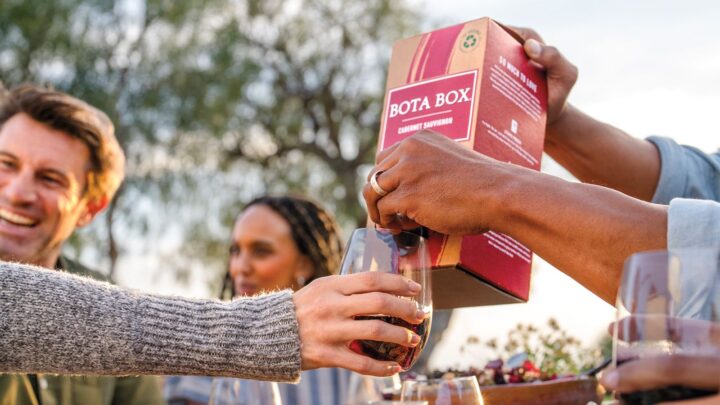
Among smaller format boxed wines, 500-ml. options are the standard, and marketers say this size is generally faring well. “Circana data shows that the 500-ml. segment is expanding, driven by demand for convenience, portability, and portion control, with premium offerings in this space gaining share,” says Kathy Pryce, vice president of marketing for Delicato Family Wines. She says Bota Box minis are “growing 7% in dollar sales over the last year and are steadily increasing their share of the 500-ml. category.”
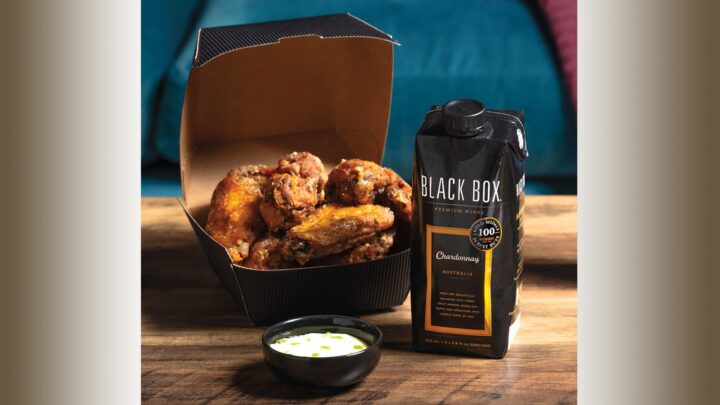
Gallo’s Beach Juice and ViBE Twisted Sips, while delving into the 200-ml. segment, are more commonly available in 500-ml. Tetra Paks, as is the company’s behemoth boxed wine brand Black Box. “Single-serve formats are performing well because they’re expanding wine’s reach in high-convenience occasions and helping the category compete more effectively in channels built around portability and immediate consumption,” West says.
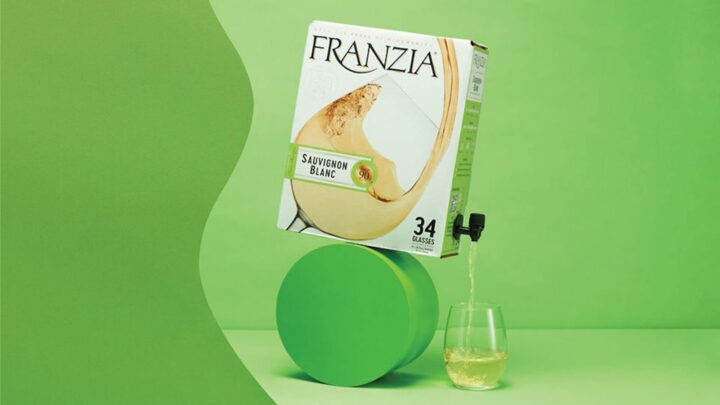
Of course, while smaller formats are the latest evolution within the boxed wine sector, that segment is still dominated by 3-liter boxes, though it also features 5-liter and 1.5-liter formats. As a group, boxed wines have registered volume declines for the past several years. The sector is generally ruled by three brands: Franzia from The Wine Group, Bota Box from Delicato Family Wines, and Black Box by Gallo.
Franzia is by far the largest at 17 million 9-liter cases in 2025, a 4.5% decline, according to Impact Databank. Bota Box registered 10.6 million cases, a 3.6% drop, while Black Box managed a 2% increase to 9.03 million cases. Together, volume from the three brands peaked in 2020 at more than 43 million cases but declined each subsequent year and came in at 36.6 million cases last year.

Premium Moves
Marketers, however, say the overall numbers don’t tell the full story. “Premium boxed wine continues to outperform the broader wine category, gaining share from glass packaging even amid overall category pressures,” says Delicato’s Pryce. “Retailer demand for high-quality boxed wines—including exclusive and private-label offerings—continues to grow, as these products drive both margin and shopper loyalty. We’ve certainly seen that in our portfolio. In 2024, Delicato Family Wines partnered with a major retailer to launch a premium wine brand in the 3-liter box format. The results have been phenomenal, with sales rocketing from 20,000 cases in late 2024 to 120,000 cases last year.”
Gratsi, an upscale bag-in-box label that retails for about $40 a 3-liter box, has significant momentum, earning Impact’s Hot Brand honors this year after doubling in size to 350,000 9-liter cases in 2025, according to Impact Databank. Gratsi, which features red, white, rosé, and sparkling offerings sourced from France and Italy, is in expansion mode this year, with new markets being added and a goal of reaching 2 million boxes—or about 670,000 9-liter cases—founder Stephen Vlahos recently told Market Watch sister publication Shanken News Daily.
While initially receiving pushback from retailers who were weary of the brand’s higher price point, Vlahos pushed forward and found success. “Our general inclination was to serve the wine consumer who doesn’t necessarily want a massive wine education—trying to figure out all the different regions and varieties—but is still perceptive about taste and wants something reliable that they can turn to on a regular basis,” he says. He notes that instead of being positioned as a premiumization move from more affordable boxed wine, Gratsi is taking on the $20 a bottle glass brands.
Amy Troutmiller, co-founder and CEO of Really Good Boxed Wine, has also found success at a higher price point. “At Really Good Boxed Wine we feel incredibly proud to have created the most approachable and affordable fine wine brand in box, and our sales have shown the demand is there for what we are making,” she says. The brand’s upcoming vintages of Russian River Valley Sauvignon Blanc and Napa Valley Cabernet Sauvignon will remain at $70 a 3-liter box online (shipping inclusive) and $55-$59 at retail.
With its launch of Lena by Maddalena in a 1.5-liter format last year, Paso Robles-based Riboli Family Wines signaled its confidence in alternative packages for premium wines. Owner Steve Riboli says the premium wine experience, coupled with modern, elevated packaging, helps reshape consumer perceptions. “Sampling and trial are also key,” Riboli says. “Once consumers taste the wine and understand the freshness and convenience benefits, skepticism tends to fade quickly.”
Barriers To Growth
Skepticism may be fading, but it remains a barrier to wider growth. No matter what the price point, boxed wines still account for just a sliver of overall wine volume in the United States.
To counter that consumer hesitancy, Franzia is in its second year of a campaign about the attributes of boxed wine. The “Smart Move” advertising campaign suggests that by choosing a “big box of delicious, award-winning wine for less,” consumers can make a “smart move,” Kurtz notes.
Pryce says sharing third-party validation and encouraging trial are effective in countering perceptions that boxed wine cannot deliver premium quality. In addition, “functional benefits further strengthen the case, including the ability to keep wine fresh for up to 30 days after opening, as well as portability and durability compared to glass,” Pryce says. “Sustainability messaging also plays an important role, as consumers become more aware that boxed wine generates significantly fewer carbon emissions and less landfill waste than bottled formats. Together, these strategies are designed to shift perceptions by demonstrating tangible advantages across quality, value, and usability.”
At Gallo, making wine more accessible, relevant, and occasion-driven is a top priority, and that in turn breaks down preconceived notions. “That includes innovating in formats that encourage trial, meeting consumers in cultural spaces, simplifying packaging and messaging, and showing up in the retail channels and occasions where today’s consumers actually shop and socialize,” West says. “The broader idea is that perception changes faster when consumers experience wine in convenient, modern formats that fit their lives, rather than through messaging alone.”
Other Packaging Alternatives
Cristian Ravai, marketing director at Italian company Famiglia Casadei, notes that “alternative packaging formats are responding to emerging consumer needs that the traditional bottle does not address as effectively.” Famiglia Casadei wines aren’t currently available in a box format, but Ravai says “we’re closely monitoring the evolution of this format.” Instead, its alternative package of choice is cans. “From our perspective, the can is not simply an alternative packaging format, but a tool capable of interpreting some of the most important transformations in contemporary consumption: sustainability, convenience, portability, moderation, and new consumption occasions,” he says.
“It’s especially suitable for dynamic and informal settings such as outdoor occasions, events, hospitality, and individual consumption, where wine traditionally had less presence,” Ravai continues. “In addition, cans offer concrete industrial and environmental advantages, including high recyclability, logistics optimization, reduced transportation impact, and ease of use for the final consumer.”
While small in volume, canned wine has certainly earned a place among alternative packaging options. Marketers say they’re open to others and are exploring and testing as new technologies come on stream. “Packaging is currently one of the most dynamic areas within the wine industry, and it involves a much broader ecosystem than carton packaging alone,” Ravai says. “We’re very interested in the evolution of bag-in-box technologies, especially in terms of product preservation and the development of materials with lower environmental impact. At the same time, we are closely observing innovations related to lightweight glass, alternative closures, logistics optimization, and systems capable of improving wine shelf life once opened.”
For Gallo’s West, making wine more accessible is top of mind with any packaging move. “What intrigues me most is any packaging innovation that makes wine overcome category barriers,” he says. “That means easier to buy, easier to try, and easier to bring into more occasions.”