In the spring, Milwaukee’s Lakefront Brewery introduced a new product. By early summer, customer response was so strong that New Grist Grapefruit Radler was the third-largest selling beer of the 18 offered in Lakefront’s beer hall. “At just 3% abv, Grapefruit Radler fits well with the trends of moderation and health and wellness,” says Lakefront president Russ Klisch. Moreover, radler is an “up-and-coming style,” he continues. “Five or ten years ago, people didn’t know what a radler was. Today, there’s increased awareness.”
Indeed, radlers—typically lagers mixed with equal parts citrus-flavored soda, such as grapefruit—are on the upswing. According to Marissa Noboa, brand director at Paulaner USA, which imports Paulaner Grapefruit Radler from Germany, volume sales of the style have jumped 24% in the last year. And thanks to the products’ sessionability and appealing fruit flavors, radlers are expected to continue to perform well. “I believe the potential for radlers to grow is quite strong,” says Noboa.
Radlers are believed to have originated in Germany about 100 years ago. Leading German beer imports, including Stiegl and Bitburger, have marketed their radlers in the U.S. for some time. Paulaner Grapefruit Radler, meanwhile, was created specifically for the U.S. market six years ago (a lemon version is available in Germany), and according to Noboa, the brand has enjoyed double-digit growth every year. Packaged in 4-packs of 16.9-ounce cans and as part of a Paulaner variety 10-pack, Paulaner Grapefruit Radler is available nationally. With an abv of just 2.5%, the brand provides consumers with “an alternative that is both sessionable and refreshing” to typical lagers at around 5% abv, the importer remarks. And as a “flavorful, fruit-forward” beer, Grapefruit Radler is also an option for consumers drawn to RTDs, Noboa adds.
Craft brewers have also been expanding into radlers in recent years. Response to Lakefront’s year-round offering—which is part of the brewery’s New Grist gluten-free line of beers—has been very good, according to Klisch. “While it’s a summery drink, we expect it to perform well in the fall,” he says. New Grist Grapefruit Radler is packaged in 6-packs of 12-ounce cans. While at press time, the radler wasn’t available in all of the 30 states where Lakefront brews are distributed, the brewer notes, “we’ve received a lot of interest.”
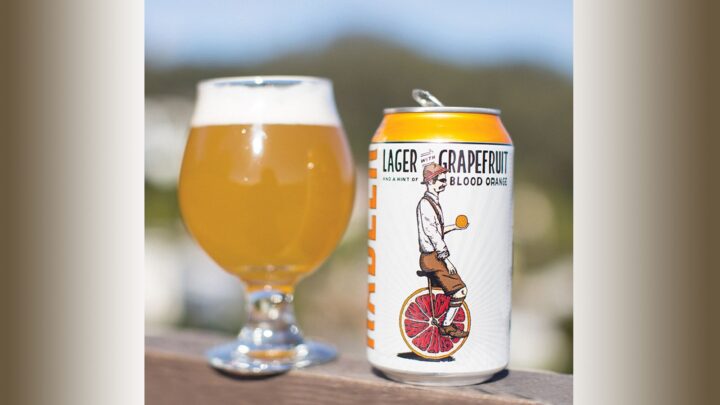
Oakland, California’s Two Pitchers Brewing Co., meanwhile, is unique among craft brewers in that it produces radlers exclusively. “We wanted to find a niche,” explains co-founder and COO Tommy Hester. While radlers were maligned by some craft beer aficionados upon the brewery’s establishment in 2013, Two Pitchers had the foresight to pursue flavor-forward brews and to move away from the hoppiness associated with crafts. “We sought to prove that craft brewers can make good quality radlers,” he said. Today, Two Pitchers produces about a half dozen year-round radlers—the grapefruit and blood orange expression is the top seller—and two to three limited-edition offerings. The brews are available in 6-packs of 12-ounce cans in 23 states. “Our goal has been to showcase this style,” Hester says. “It’s fun to see it going mainstream.”
At Beverage Warehouse in Burlington, Vermont, Marc Gelsomino, beer and wine manager, says that while overall radler sales have been consistent, lately “we’re seeing a little shine,” due to a slowdown in RTD growth. Like Noboa, the retailer says that growing demand for fruit-forward and reduced-alcohol beers bodes well for radlers. Among the handful of radlers available at Beverage Warehouse, Stiegl Radler ($13 a 4-pack of 16-ounce cans) is a top seller and is available year-round.
Hester says retailers should consider changing consumer preferences when making decisions on radler offerings. “Following the long fascination with IPAs, people are now looking for different things,” says the California brewer. Radlers are a way to expand your audience.”