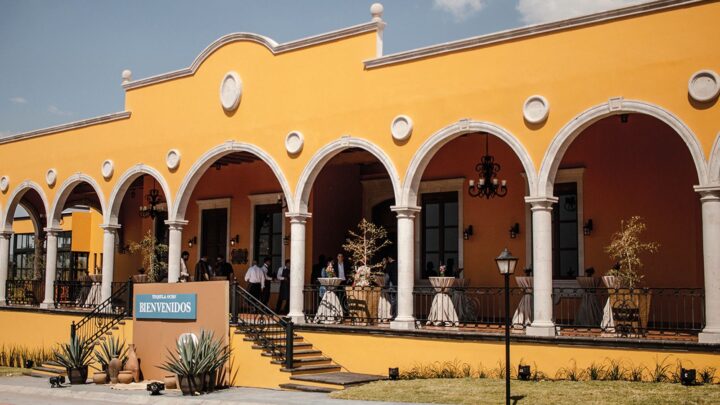
In an environment where spirits consumption is slumping, Tequila is one of the few categories that continues to gain traction in the U.S. It’s a category ripe for exploration and discovery, and both bar professionals and consumers are accelerating the versatility factor, creating new ways to enjoy Mexico’s native spirit. “Demand for Tequila has grown significantly, not just in volume but in creativity and expectation,” says Julia Barron, owner and beverage director for Spirit & Vessel Mobile Bar in McKinney, Texas. “In both traditional bar settings and through my work owning and operating a mobile bar, I’m seeing guests move beyond the classic Margarita and actively seek out more unique, personalized Tequila experiences. Many guests are requesting custom cocktails built around Tequila as their spirit of choice, which shows a deeper appreciation for its versatility across flavor profiles.”
Sal Navarro, agave specialist at Seattle retailer Downtown Spirits, also sees the enthusiasm. “Tequila continues to be one of our top-performing categories, and we’re still seeing consistent growth, particularly in blancos and reposados,” he says. “What’s changed over the past couple of years is how engaged the customer is. Among the 21–35 year old consumer, in particular, we’re seeing a much higher level of curiosity. Customers are asking about production methods, where the agave is sourced, and what differentiates one brand from another. The story behind the label carries more weight than it used to, and that’s influencing purchasing decisions.”
Across the country in Georgia, Dionna Vargas, bartender at both Tulum Kitchen & Bar and The James Room in Atlanta, sees the ongoing demand for Tequila first-hand. “It’s the most sought-after spirit at both of the bars I work at,” she says, noting that “Georgia is obsessed with reposado Tequila of every brand.”
Professionals in the third tier are clearly enthusiastic about Tequila, and their counterparts on the production side see many positive trends as well. “While the broader spirits market is under pressure, Tequila continues to outperform on a relative basis,” says Brie Wohld, vice president of marketing at Trinchero Family Wines & Spirits, which owns Tres Agaves Tequila. “Though growth has moderated from the highs of recent years, demand for Tequila remains strong relative to other spirits, owing to its versatility and the continued consumer appetite for agave-based products.”
Despite the positive energy surrounding Tequila, not all brands are thriving. Brittany Wenig, senior brand manager for Lunazul Tequila at Heaven Hill Brands, notes the category has begun to “normalize” after several years of rapid growth, but says that Tequila “continues to be one of the most resilient and culturally relevant spirits categories, even as the broader spirits industry faces softer demand.”
Chris Dunn, global director for Tequila Ocho, also notes a pull-back from the more dynamic growth trends of recent years, with rationalization being the result. “With the Tequila category experiencing enormous growth in recent years, more drinks have come into the category and as a natural result segmentation has occurred, and drinkers are considering a wider swath of brands,” Dunn says. “The ones that deliver on the quality of the spirit, because they are making intentional decisions on their liquid production processes—these brands have captured the hearts and minds of informed drinkers. Overall, it’s a mixed bag on performance. Some brands are declining while others are booming.”
While a smaller brand, Tequila Ocho was one of the most dynamic Tequila brands among the top 25 in the U.S. in 2025, with depletions jumping 65.7% to 174,000 cases, according to Impact Databank. Other double-digit advancers include Mi Campo, Lalo, and Gran Coramino, as well as No.-3 brand Lunazul. Don Julio, the second-ranked Tequila in the U.S., grew 9.5.% to 3.64 million cases, putting it about 1.16 million cases shy of long-time category leader Jose Cuervo, which declined 2.5% to 4.8 million cases.
At No. 3, Lunazul increased by 29.5% to 2.26 million cases, according to Impact Databank. With that growth, Lunazul jumped ahead of Patrón, 1800, and Casamigos, each of which declined last year. Overall, Tequila depletions in the United States advanced 0.5% to 31.9 million cases in 2025. Since 2020, the category has added nearly 10 million cases, according to Impact Databank.
Intentional Premiumization
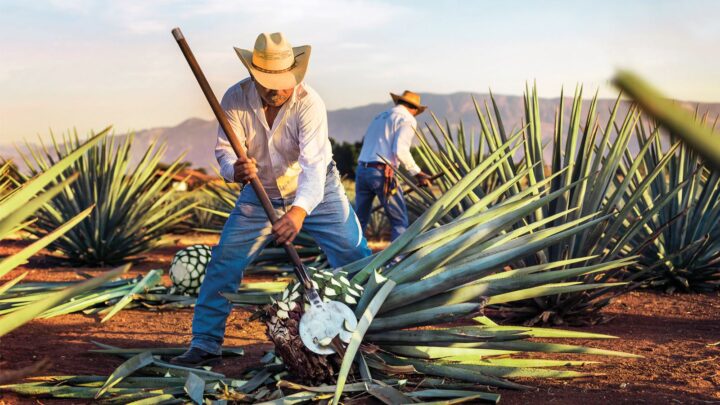
The advance of select brands and declines of others doesn’t appear to be based heavily on price point, according to Impact Databank’s analysis of leading brands by pricing tier. Sub-premium and premium-priced Tequilas fared better than super-premium and luxury brands, a sharp shift from 2024 when the latter two sectors thrived. Luxury Tequila demand was flat in 2025 despite double-digit gains from a few leading brands. Tequilas in the super-premium price range felt a similar trend in 2025 as they collectively declined by 0.5%, coming off a 5.5% increase in 2024.
Premium brands as a group grew 1.4% in 2025 (compared to a2% increase in 2024). In this price sector, however, just two of the top seven brands advanced—Lunazul and Mi Campo, and both at double digit rates. Sub-premium Tequila brands had a similar group performance last year, growing 1.5%. It’s notable, however, that just a year earlier brands in this sector were in decline despite a very vibrant performance for Tequila overall.
Lunazul is one beneficiary of consumers’ more restrained purchasing patterns. “At Lunazul, we’re seeing consumers become more intentional with their purchasing decisions rather than leaving the category altogether,” says Wenig. “Consumers still want a quality Tequila experience, but they’re looking for brands that feel approachable and dependable for both everyday occasions and social gatherings. That dynamic continues to work in Lunazul’s favor because the brand delivers handcrafted Tequila quality at an accessible price point.”
But others say premiumization is alive and well, just perhaps more selective than in the past. “What we’re seeing now is a shift toward intentional purchasing,” says Julian Garcia, vice president of Tequila Don Julio at Diageo North America. “While consumers haven’t lost their appetite for 35quality, craftsmanship, or elevated experiences, they’re becoming more discerning about where they spend their money across all shopping segments.”
Roberto Ramirez-Laverde, global senior vice president of Patrón and agaves for Bacardi, agrees, noting that “premiumization remains relevant, and it’s evolving rather than disappearing. We continue to see consumers trade up in Tequila, particularly in the ultra-premium segment, when there is a clear connection to quality, craftsmanship, and authenticity.”
Barron of Spirit & Vessel Mobile Bar sees the demand shifts firsthand. She says that “premiumization is still very much present in the Tequila category, but it’s become more intentional.” The story resonates, she adds, but economic reality often creeps in. “People are still interested in higher-end Tequilas, especially when there’s a story, craftsmanship, or a unique production method behind the bottle. However, the current economic climate has made consumers more selective about when and how they spend,” she says.
Trinchero’s Wohld also sees the impact. “Economic uncertainty hasn’t dampened consumer interest in quality, it’s just made choices more intentional,” she says. “We’re seeing some pullback from ultra-luxury or trophy bottles, but continued strength in brands that offer credibility, craftsmanship, and transparency at a price that feels justified. Rather than trading down, consumers are trading wisely: looking for Tequilas that deliver value, which is more about the relationship of quality to price than price alone.”
The economic realities may change new brand and variant activity within the sector, suggests José Valdez, master tequilero for Tequila Partida. “With ongoing economic pressure, new brand launches are increasingly anchored in a clear value proposition rather than purely aspirational positioning,” he says. “This creates a dual-speed market: established brands have more room to consolidate and trade up within the luxury tier, while newer entrants must compete on both quality and value to gain traction.”
Innovation Moves
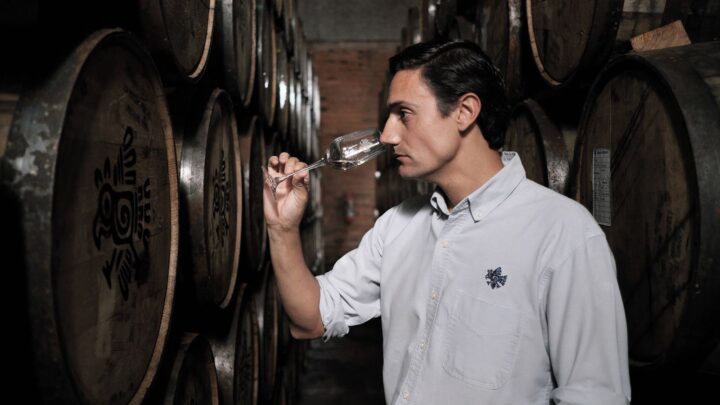
Tequila Partida is acknowledging the current economic pressures facing the industry, while at the same time introducing higher-end line extensions. “We’ve strategically adjusted pricing on Tequila Partida Blanco to deliver a compelling $1 per ounce cost, enabling more efficient and profitable beverage programs without compromising quality,” Valdez says. “Looking ahead in 2026, we’re introducing a limited-release high proof reposado single barrel program, designed to drive excitement with top accounts and offer a differentiated, premium experience for both bartenders and consumers.”
Tequila Ocho is tapping into consumers’ appetite for discovery. “We just recently introduced our range of Terroir Select expressions, which is a single-region harvest of agave from the highlands of Jalisco as well as the neighboring states of Michoacán and Guanajuato, allowing for an even more comprehensive understanding of agave, showing that where and how the agave grows matters, and impacts the final distillate,” Dunn says.
Others are also innovating. Patrón recently introduced Patrón 100, a distilled-to-proof Tequila that’s a small-batch expression handcrafted from 100% tahona stone production with no dilution. The tahona production involves a 2 ton volcanic stone wheel that slowly crushes the cooked agave. “For us tahona isn’t just a technique—it’s a key part of the Patrón process, contributing to the brand’s signature style and heritage,” Ramirez-Laverde says. “At Hacienda Patrón, we have 18 tahona wheels, which allows our distilling team to honor this centuries-old method at a scale that’s truly unique in the industry.”
Tahona production is also part of the formula for Tequila Bribón, which is seeking to expand its reach in the crowded Tequila field. Abelardo Orendain, CEO of Casa Don Roberto, which produces Tequila Bribón, says the brand is “continuing to strengthen its presence, sharing its story in new markets, and continuing to produce with the same passion and care that have defined so many generations before us.” The result has been “steady growth across our brands, supported by meaningful investments in agave fields, a new boutique tahona distillery, as well as quality and brand-building initiatives.”
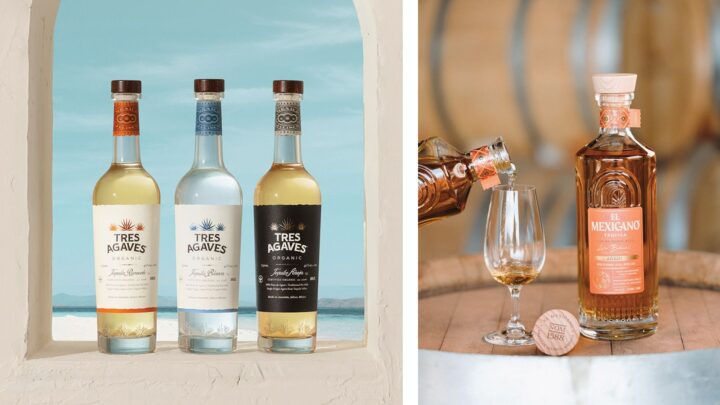
Like Tequila Bribón, El Mexicano Tequila is tapping into consumer curiosity about brand production methods and provenance. Foley Family Wine & Spirits began importing El Mexicano, by third-generation Tequila producers the Bañuelos family, last year. Shawn Schiffer, president of Foley Family Wine & Spirits, says consumers are eager to learn. “I think some of the popularity and interest is a result of consumers exploring more handcrafted options from Tequila makers with deep lineage like the Bañuelos family,” he says.
Innovation is also at the fore. “We just added the first añejo to the portfolio, which is unique in that it’s aged in new, charred American oak (70%) and new French oak (30%) casks versus used Bourbon barrels,” he says. The Tequila El Mexicano U.S. portfolio also includes a Blanco, Blanco 90, and Reposado. Schiffer also hints at more innovation. Noting the company is “still bullish for rested and aged expressions, as well as higher proof variants,” and acknowledging the relative strength of the category and moves into the RTD space, Schiffer says that “from Foley, you can expect exciting new agave-based innovation this year, including projects from our master distiller of innovation, Chip Tate.”
Additive-Free Debate
Some brands are also leaning into additive-free attributes, and they say a growing number of consumers care deeply about the make-up of their Tequilas. David Szydlik, president and CEO of Santo Spirits, which offers Santo Tequila, a brand founded by celebrities Sammy Hagar and Guy Fieri, says brands that carry quality credentials—including additive-free—are resonating with consumers. “We’ve always had these credentials, but this is the first time we are really explaining the meticulous care that goes into making each bottle of Santo,” he says. “We’ve seen solid double-digit depletion growth in many states” as a result.
“We believe the additive-free movement is what’s driving the super-premium category and the discerning Tequila consumer is very tied into the movement,” Szydlik continues. “This is one more calling card that a consumer brand can have, similar to ‘organic,’ and we know there is a wide swath of consumers who are very interested in that, particularly the Hispanic and 25-35-year-old segment.”
Julio González, founder of Leyenda 1925 Tequila, also notes the expanding interest in production methods. “The growth of additive-free Tequilas reflects something very positive for the industry: the consumer is increasingly informed,” he says. “A few years ago, most people chose Tequila only by brand or price. Today, several consumers research the production processes, ingredients, and traditional methods. In that context, the additive-free designation has become a reference for transparency.”
But not everyone embraces the additive-free movement. “We’ve always been extremely proud of our traditional processes and have held ourselves to the same standards that Don Julio Gonzalez first set forth when he created this brand,” says Garcia of Don Julio. “Our process has always been rooted in dedication, creativity, and versatility, and we believe the industry should be focused on educating consumers about the wonderful and diverse category of Tequila rather than alienating them. The misconception that there is only one process for making great Tequila has not been constructive for the Tequila industry and consumers. It’s our belief that there isn’t one singular recipe for making Tequila and we embrace the craftsmanship that has been at the heart of our brands.”
Lander Otegui, executive vice president of marketing and innovation at Proximo Spirits, also sees problems with the additive-free focus. “What started as a conversation about transparency has, in some corners, turned into a narrative that additives are harmful or that Tequilas using them are somehow inferior,” he says. “That is factually wrong, and it’s damaging to the broader category.” He also notes that “without a rigorous, independent, batch-by-batch testing regime sanctioned by the CRT, they are ultimately asking consumers to take their word for it.” The CRT (Consejo Regulador del Tequila) opposes use of the term “additive-free” and has filed legal actions against brands that label their products as such.
But many bar professionals and restaurateurs see the moniker as a brand benefit. “Additive-free has become one of the most important factors in the decision-making process,” says Downtown Spirits’ Navarro. “It’s often one of the first questions we get, especially when someone is considering a new brand. Customers are more educated than they used to be, and they’re actively looking for transparency in how the product is made. That shift has had a real impact on what’s selling.”
Diego Rodriguez, bar manager and head bartender at Tampa Palms Country Club in Tampa, Florida, agrees. “Reposados and añejos with transparent production, real barrel character, and no additives resonate most,” he says, noting that additive-free claims often compel consumers to purchase at higher prices. “Additive-free won’t sell every bottle, but it’s critical for premium tiers, sipping sales, and building credibility with staff and members.”