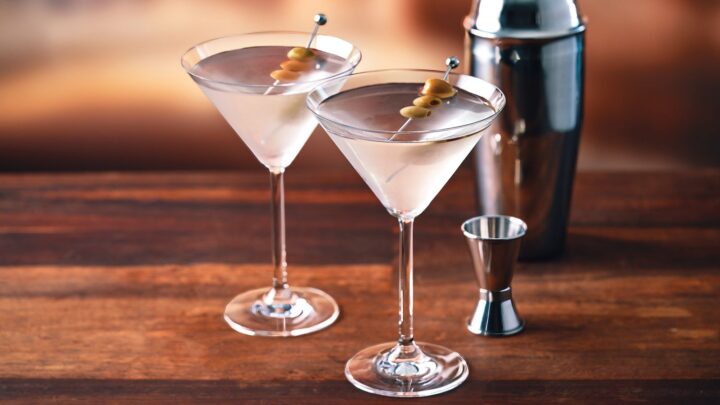
At Pacific Social in San Diego, a happy hour promotion features $7 “retro” Martinis every day until 5:30 p.m. Six of the seven featured martinis—Cosmopolitan, Apple, Lemon Drop, Dirty, Espresso, and Chocolate—feature Cutwater vodka as their core ingredient. For that promotion and in general at brand owner Cohn Restaurant Group restaurants, vodka—and specifically vodka Martinis—are still in demand. “This whole Martini thing has been coming back a little bit, so we’ve been (placing them in) different restaurants and we’re seeing people really engaging,” says Maurice DiMarino, wine and beverage manager for the group. “They’re almost going back to the ’90s flavored Martini trend.” Vodka is big throughout all the restaurants in the Cohn Restaurant Group portfolio, DiMarino says, rivaling Tequila as the largest-selling spirit type.
At Atlanta-based Castellucci Hospitality Group, which encompasses five concepts in Georgia and Tennessee, Tequila and whisk(e)y ratcheted up in popularity over the past several years but haven’t been able to topple vodka’s leading position. “There’s just still a huge demand for vodka,” says beverage director Nick Quinones. “The easiest drinks can be made with vodka, and it’s a very approachable spirit. Even though whisk(e)y and gin get all the headlines—and of course, most barkeeps really scoff at vodka—there’s still a huge demand for vodka.”
Dominant Role
It’s the sheer size of the vodka market, rather than any sort of surging demand, that keeps the category front and center. Vodka depletions fell in 2025, dropping by 3% to 71.7 million cases, according to Impact Databank, but the long-term growth has been remarkable. In 2005, depletions stood at just 48.4 million cases. Strong gains throughout most of the next two decades resulted in roughly 23 million cases being added over that time.
A good chunk of that volume can be attributed to Tito’s vodka, the Texas brand that rose from obscurity two decades ago to become the largest brand in the U.S. by a wide margin in 2025. Tito’s ended last year at 11.85 million cases, having registered a 1.3% decline, but remained more than 4 million cases larger than its nearest competitor, according to Impact Databank.
Retailers and bar managers almost uniformly say that Tito’s is their No.-1 vodka, and it’s often times their best-performing spirit as well. Mat Dinsmore, general manager at Wilbur’s Total Beverage in Fort Collins, Colorado, says the brand is flat or slightly up in his store, a huge achievement given the declines most other brands are seeing. “In vodka, everybody is crying unless their name is Tito Beveridge,” he says. “And even Tito’s isn’t on a rocket ship to the moon like they were a few years ago.”
Austin Keith, president of the Pinkie’s chain of retail stores in west Texas, says vodka demand continues to rise in his stores, but the long-dominant Tito’s is starting to face a bit of competition. Fellow Texas brand Townes vodka is capturing some of Tito’s audience, Keith says, as consumers in the oil drilling-dependent area face tightening budgets. Tito’s sells for $26 a 750-ml., while Townes comes in at a significantly lower $15.
Tito’s volume falter in 2025 wasn’t unusual among leading brands—in fact, it was a better performance than most other major players. The top ten vodka brands combined for a 2% decline, while the top 20 fell a collected 3% in 2025. Only four brands—Platinum 7X ($15 a 750-ml.) and Taaka ($9 a 1-liter) from Sazerac, along with Barton ($16 a 1.75-liter) and Deep Eddy ($26)—managed gains last year.
Today, many vodka marketers acknowledge that growth has been elusive for the category since it peaked at more than 80 million cases in 2021, but they still see significant promise. Aleco Azqueta, global vice president of marketing for Grey Goose at Bacardi Ltd., says that Grey Goose ($40 a 750-ml.) continues to perform very well as the world’s top super-premium vodka. “As a brand that promotes an elevated lifestyle and joyful living, we find that consumers resonate well with our campaign’s aim to inspire the French way of living by savoring moments of pleasure instead of obsessing over productivity,” he says, referencing the global Grey Goose Hôtel campaign featuring actress Zoe Saldaña.
Lander Otegui, vice president of marketing and innovation at Proximo Spirits, says the company’s Three Olives vodka ($17 a 750-ml.) brand grew in 2025, bucking the general downward trend for the category. He adds that the brand’s zero-sugar, low-calorie, and gluten-free credentials make it well positioned to meet the demand for better-for-you alcohol options from today’s consumers.
Brand owners also continue to invest heavily in the vodka sector. Sazerac purchased Svedka vodka ($21 a 1-liter) in late 2024 from Constellation Brands and signaled its confidence in the brand this year with the company’s first-ever Super Bowl commercial. In announcing the commitment, Sazerac said the commercial would be the first national “big game” spot dedicated solely to a vodka in over 30 years.
Newer Entries
Those big-name brands and others are constantly being challenged by new vodkas eager to make their marks in the behemoth category. Albany, New York-based ALB vodka ($20 a 750-ml.) is one such brand. “In just three years, ALB vodka has grown into a national brand, extending into four international markets, and multiple transport and duty free channels,” says co-founder John Curtin. “That expansion has driven exponential year-over-year growth. Riding high on an incredible 2025,where we finally broke the 100,000-case mark, we’re set to double our growth in 2026.”
Curtin sees continued strength in the vodka category overall, particularly in the current environment. “As consumers become more value-conscious, vodka remains a trusted, versatile category that performs well both on-premise and at home,” he says “The resurgence of the Espresso Martini has also played a meaningful role, reintroducing vodka to Gen Z through a modern, occasion-driven lens that feels relevant and social.”
Curtin says the company’s strategy is to “meet consumers outside of traditional avenues for spirits,” and cites efforts such as branded taxis and partnerships with JetBlue and PopUp Bagels, among others. “We operate like guerrilla marketers, repurposing time-tested tools in unexpected ways to embedthe brand into the city’s everyday flow,” he says. “As an emerging brand, we’re focused on being visible in the right places rather than everywhere at once.”
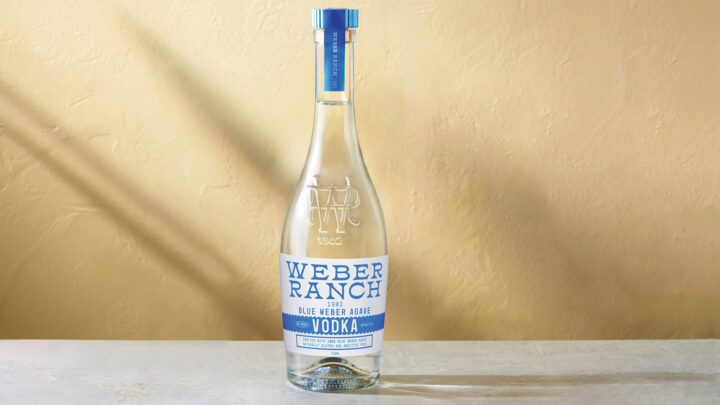
Also a relative newcomer, Weber Ranch vodka ($30 a 750-ml.) launched in June 2024 and is already in 48 states. COO Kevin Clark says 2025 was marked by significant growth from a depletion volume perspective, fueled by larger markets like Texas, California, and Florida. “A major strategic focus in 2025 was growing the brand on-premise in bars, restaurants, and other venues, and we achieved significant growth through quality on-premise relationships who have embraced Weber Ranch on cocktail menus,” he adds. “In 2025, on-premise accounted for more than half of our depletion volume, a strong signal that Weber Ranch is earning real traction with bartenders and consumers alike.”
Weber Ranch is unusual in that it is distilled from agave, rather than the more typical grains or potatoes. “We are transparent about how we make Weber Ranch, from harvesting the Blue Weber Agave in Jalisco, Mexico to our final distillation in our proprietary copper pot and column still, which has been key to avoid any confusion,” Clark says, noting that “the flavor is unmistakable and truly unlike anything else on the shelf. Consumers may have questions at first, but once they understand the process, the versatility of vodka, and the benefits of agave-based spirits, they become fans and wonder why this hasn’t been done before.” There are also other brands coming on-stream in recent years that aim for a slice of the massive vodka pie.
Flavor Churn
At the same time, established brands continue to churn out new flavor propositions. Opinions on flavored vodkas are mixed—many bar professionals spurn them and some retailers report flavor fatigue and waning interest, but consumer demand for select flavors can buoy a brand to growth. Finding the flavors that will spark consumer enthusiasm remains a constant challenge for marketers.
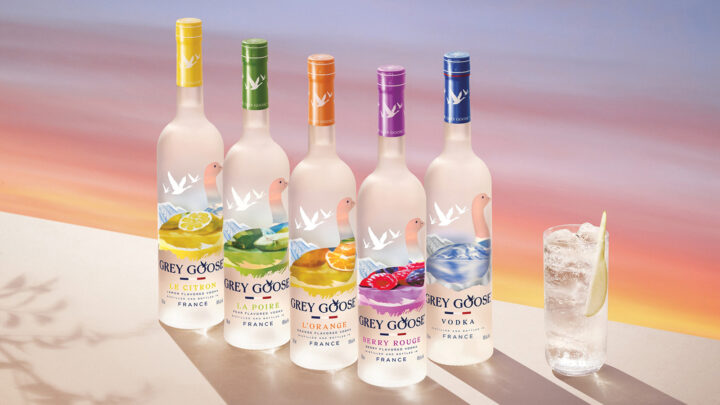
Grey Goose launched its latest flavor last year, Grey Goose Berry Rouge. “The decision to introduce a new flavor to our portfolio and invest further in this segment of the market is largely because of the exciting momentum we’ve seen in the flavored vodka category,” says Azqueta. “Research shows that roughly half of vodka drinkers regularly enjoy both unflavored and flavored expressions, reinforcing the role flavored vodka plays as a complementary, rather than an alternative choice.”
Many of the more prominent flavors and new flavor introductions are fruit-based. Deep Eddy, for example, added Pineapple ($24 a 750-ml.) to its portfolio last year. A handful of smaller brands came out with lemon or lemonade-based vodkas. While not new, Three Olives had success last year with its Berry, Cherry, and Grape vodkas, as well as with Vanilla, while its overall flavored portfolio faltered slightly, Otegui says.
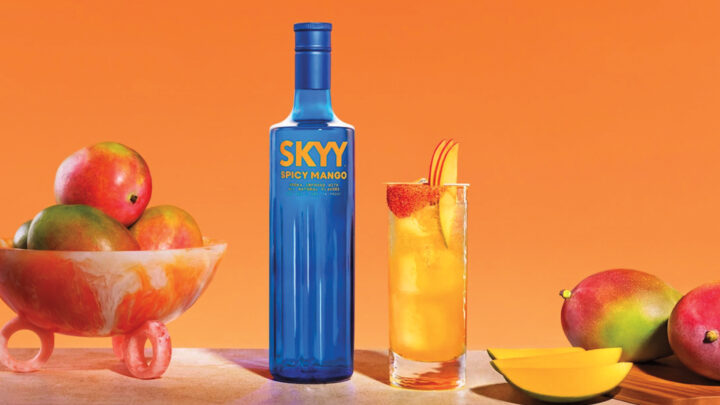
But increasingly, marketers are turning to spicy options in their search for a hit flavor. Campari-owned Skyy vodka launched Skyy Infusions Spicy Mango ($15 a 750-ml.) in early 2025, one of several spicy variants making its way to consumers. It joins brands like Smirnoff Spicy Tamarind ($13) and Absolut Tabasco ($28). Stoli is also getting in on the spicy action. Late last year, Stoli Group launched Stoli Halapeño Pepper ($39 a 1-liter), specially crafted for use in Bloody Mary cocktails. At the time of the launch, Stoli Group CMO Marina Troyanovskaya said: “With demand for spicy cocktails rising, and brunch culture, Stoli Halapeño Pepper was developed specifically to be the definitive spicy vodka for a next-level Bloody Mary. This is about giving people permission to get playful with flavor. The balanced heat profile makes it highly mixable for bartenders and at-home cocktail enthusiasts.”
But it could be an uphill climb for most flavored brand extensions. Retailer Dinsmore says that “flavors continue to be less relevant” in his store. And DiMarino of Cohn Restaurant Group says flavored vodkas “aren’t even a thing anymore” in his restaurants. But Keith of Pinkie’s has had a different experience, saying that “value brands like Burnett’s flavors do well off premise with consumers—and there are a lot of flavors with Burnett’s.” At the higher end, Beam Suntory’s Effen vodka flavors ($30 a 750-ml.) are popular choices. The hot flavor right now among all brands is cucumber, Keith adds.
Outlook Unclear
It’s clear that while vodka is still a huge volume proposition for any retailer or on-premise establishment, there are some significant warning signs for the category. While they still have considerable volume in vodka, both DiMarino and Castellucci’s Quinones say the category just isn’t generating excitement these days. Quinones is trying to turn that around among his bar team members. “Barkeeps are always reluctant to make vodka drinks,” he notes. “They want to make gin drinks and whisk(e)y drinks. But when you build a menu, the vodka drink is always the bestseller. And the best part about that as an operator is that the vodka drink is usually the most profitable as well. I’m trying to train my bartenders. [I ask them], ‘why are you scoffing at something that’s so useful?’” What resonates these days, Quinones adds, is “shaken drinks that are fresh and lively and bright,” often using local, seasonal ingredients.
In San Diego, Cohn Restaurant Group recently moved away from vodka-forward bars at its 333 Pacific and Vintana Wine + Dine restaurants. “We realized that vodka just isn’t as prominent anymore,” DiMarino says. “And the bartenders there really wanted to get away from just doing vodka Martinis and other vodka drinks. They wanted to do more cocktails. We changed those programs to be a little more craft cocktail driven.” DiMarino adds, however, that vodka long drinks remain highly prevalent and vodka Martinis in their various forms are still hugely popular, no matter the focus of the bar.
“The Martini is more popular than ever and vodka is the most important part,” agrees ALB’s Curtin. “Vodka isn’t going anywhere, it’s evolving. Your next-generation vodka will not be a brand from the past.”