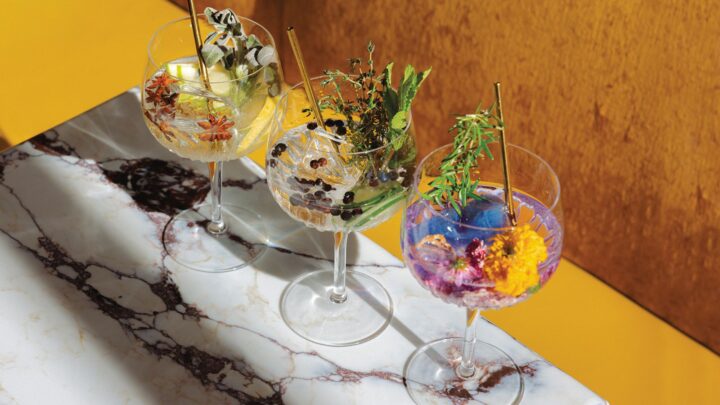
When taken at face value, the numbers for gin are discouraging: The category is suffering from its lowest depletions in at least a half-century, with all of the top ten brands showing declines in the United States last year. Gin posted just 7.85 million 9-liter case depletions in 2025, according to Impact Databank, down from 9.45 million cases in 2020. Impact Databank’s record-keeping starts in 1970, and gin was at 16.4 million case depletions that year. The category reached its peak in the U.S. in 1979 at 18.96 million cases, well more than double its current standing.
But it’s not all doom and gloom in the gin space. There are pockets of growth happening—especially at the high-end—and that’s where marketers are focusing their efforts to rejuvenate gin today. The category is benefiting from both new brands and new line extensions from established labels. These fresh takes on gin tout modern and interesting botanicals, creating unique flavor profiles that haven’t previously been seen in this staid category. Even some of the gin stalwarts who are doubling down on their London Dry heritage are embracing new campaigns and marketing pushes to attract consumer attention.
“Gin has a real opportunity to connect more deeply with a new generation of white spirits drinkers—there’s been a huge amount of innovation and experimentation over the past several years,” says Nora Torpey, global brand managing director for Hendrick’s gin at William Grant & Sons. Hendrick’s was the only top ten gin brand to post positive depletions growth in 2024, and while it suffered declines in 2025, its decrease was far less than many of its counterparts among top gin brands. Torpey points to exploration in the category, noting trends towards locally sourced ingredients to create new flavors as consumers shift beyond the classic London Dry style. She says this is helping to boost the gin category.
“The growth in gin is coming from the premium-plus segment,” Torpey adds, predicting that additional growth will come from gin expanding how it can be used and served. “Gin will unlock its full potential in the U.S. when it’s adopted within lighter, refreshing serves. Consumers are looking for lighter spirits and longer drinks that have character and flavor, and they crave experiences that spark new possibilities. Gin has all that and more.”
In that vein, in March Hendrick’s launched its first new permanent brand release in nine years: Another Hendrick’s ($35 a 750-ml.). The offshoot has Hendrick’s original juniper, 2026rose, and cucumber elements, enhanced with the addition of orange blossom and cacao beans. Master distiller Lesley Gracie describes it as “the complete opposite” of what the brand has been doing for the past 25 years, and Torpey expects it to bring new interest into gin. “Gin needs to deepen its emotional connection with consumers and challenge the status quo in an elevated way to reach its full potential,” Torpey says. “We’re optimistic and excited for 2026.”
Pushing Boundaries
Other gin brands are also leaning into new products and flavor extensions as they seek to reach new consumers. Palm Bay International’s Drumshanbo Gunpowder Irish gin added a Brazilian Pineapple offshoot in 2024 and complemented that with the debut of Italian Fig & Laurel in late 2025. The newest entrant ($38 a 750-ml.), which is expanding across the United States now, comprises Gunpowder’s original 12 botanicals plus Italian viola fig and laurel with Tuscan juniper, and Palm Bay describes it as a first for the gin category.
“Gunpowder is the first gin to harness this trendy Mediterranean taste profile,” explains Drumshanbo Gunpowder brand marketing director Terese Cirilli. “Innovation continues to be a key driver for Gunpowder Irish gin and we’re being very intentional about how we expand the range, guided by consumer insights and broader trends.” Cirilli adds that modern consumers seek distinct offerings with authentic stories to create a better cocktail experience.
Palm Bay maintains a positive outlook for gin. Cirilli cites Circana data that shows the gin category overall has been down an average of 6% in the last year, but the upper tier segment—retailing for $30 and above—has been more resilient. She adds that Gunpowder Irish gin has been outperforming the category, posting a 6.4% gain last year. Going forward, Cirilli says gin needs better consumer education efforts to raise awareness, as well as stronger positioning in cocktails and a better presence both on- and off-premise to fully thrive. “For Gunpowder, building the bar call is a major focus as we look ahead,” she says. “Gin holds a very unique space within the broader spirits landscape, and has many advantages—historic cachet, cocktail versatility, and strong craft and innovation energy.”
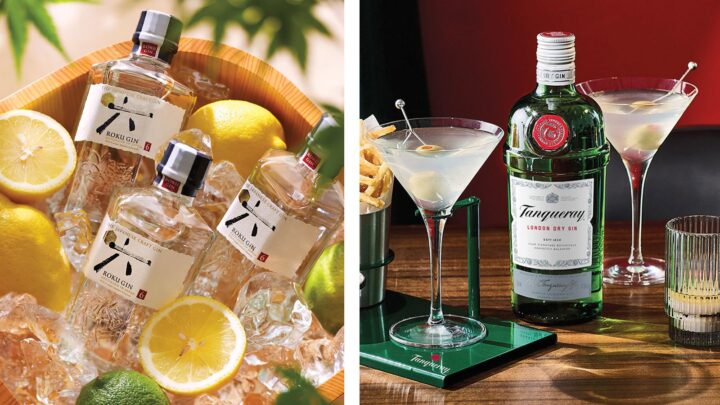
Japanese gin brand Roku from Suntory Global Spirits is leaning into flavor offshoots by releasing limited-time extensions through its Festival Collection, which highlights individual seasonal elements within the brand’s core botanicals. The first release, Sakura Bloom Edition, debuted in 2024 and the second release, Noryo Tea Edition, was added in Japan in 2025 and is set to expand globally this year. Noryo Tea Edition ($38 a 750-ml.) highlights Roku’s Sencha and Gyokura botanicals, both green teas that are harvested in summer.
“Gin remains a resilient opportunity for growth because it offers a canvas for storytelling,” says House of Suntory president Masaki “Mory” Morimoto. “Consumers are excited by experimentation and offerings that include unique ingredients and botanicals. The market has transitioned from a focus on high-volume, uniform flavor profiles to an appreciation for nuance and complexity.”
Morimoto describes Roku as a primary growth driver in Suntory’s global portfolio. “The industry must shift its focus toward lifestyle integration and deeper consumer education regarding botanicals and flavor profiles,” he adds. “Gin has historically been viewed through a narrow, seasonal lens. The most exciting movement in the category now is the evolution of flavor innovation and moves beyond simple fruit-forward spirits toward truly unique botanicals and complex, layered profiles.”
Smaller players are all-in on flavor offshoots too. Waterloo gin, which was created by Texas craft player Treaty Oak Distilling in 2009 and acquired by entrepreneur and Patrón Tequila founder John Paul DeJoria in 2024, added the new expression Prickly Pear & Rose in September 2025. Waterloo Gin Co. CEO Justin Meigs says the new label has taken off faster than expected, pointing to particular success in the gin’s home state of Texas, as well as in Florida, North Carolina, and Nevada. The brand is driving growth by highlighting its local botanicals and barrel aging, and by pushing tastings and in-person experiences to encourage consumer sampling.
“Gin has come a long way from being thought of as just London Dry,” Meigs says. “Over the past few years we’ve seen more American and New World gins that still respect juniper as the dominant flavor but also reflect where they’re made. People now understand that gin isn’t just one thing—it’s a wide range of styles, more like whisk(e)y or Tequila than most folks realized before.”
Meigs says the on-premise is key to gin’s future growth and longevity, noting that the spirit works best when it’s viewed as modern, creative, and driven by cocktails. “Gin doesn’t need to reinvent itself, it just needs to show off what already makes it special—flavor, balance, and creativity,” Meigs says. “Bartenders are leaning back into gin in a big way because it’s incredibly versatile and works beautifully in lighter, lower-proof drinks. Gin isn’t a category that grows by chasing trends or flooding shelves. It grows when people discover a great cocktail, trust a brand, and come back for it again. I expect gin to grow in a smart and measured way.”
Expanding Awareness
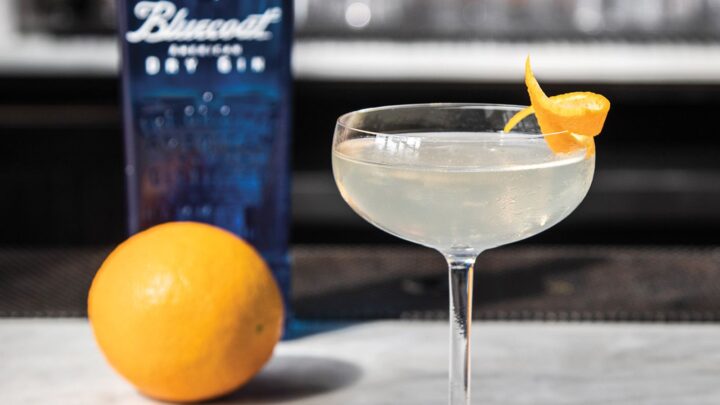
Placement in restaurants and bars is universally cited as critical to building a gin renaissance, as most marketers agree that consumer trial, and ultimately adoption for gin, starts with cocktails. Heaven Hill’s Bluecoat is seeing success on-premise, where bartenders are mixing it into creative drinks, especially in the brand’s home state of Pennsylvania. Bluecoat was an early pioneer of the American Dry gin style, having launched in 2006 with a flavor built around soft juniper and bright citrus. “Our focus is on expanding beyond the Northeast,” says Alexandra Adams, senior brand manager at Heaven Hill Brands. “From our perspective, there’s a lot to be optimistic about.”
Bluecoat is leaning into the Martini movement by emphasizing the original gin Martini, but it’s also pushing for experimentation in new and unexpected cocktails. To further support the brand, Heaven Hill is launching the new campaign Rebellion Distilled this year. The effort will celebrate the American Dry gin style and its citrus-forward flavor profile, as well as Bluecoat’s “courage to challenge the status quo and the rebellious spirit that has shaped both the U.S. and American gin from the beginning,” Adams explains. “Bluecoat shines through talented mixologists and high-quality cocktails.”
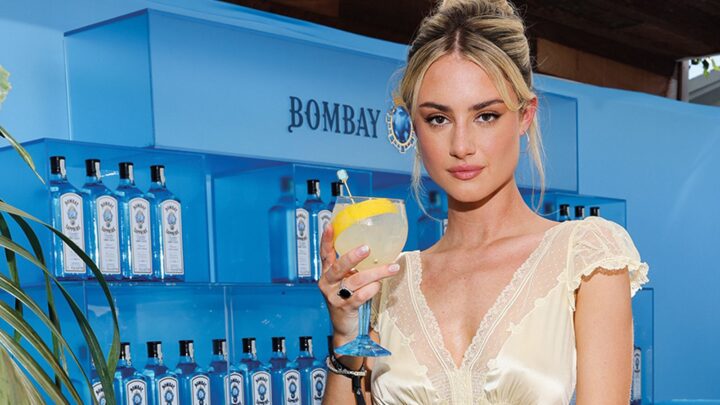
Bombay Sapphire, the No. 2 premium gin in the U.S. by case depletions, is also focusing on cocktail executions. Brand owner Bacardi has created a new easy-to-make cocktail for at-home consumption in an effort to reach consumers. Called the Bombay Sapphire Sparkling Lemon, the drink comprises just Bombay Sapphire gin, fresh lemonade, and club soda, and it was featured heavily at the UIM E1 World Championship, an all-electric powerboat racing series for which Bombay Sapphire was the official gin partner. The brand promoted actress Grace Van Patten as its ambassador at the Miami event this past November. “It’s our first-ever global sports partnership,” says Bombay Sapphire North American brand director Jaime Keller. “Joining during E1’s inaugural season, which was backed by world-class talent like Tom Brady and Will Smith, allowed us to build community.”
Further, Bombay Sapphire is building on its Step Into The Blue global campaign that debuted last year, with ads featured through paid media and promotions on-premise, as well as influencer collaborations and cultural partnerships in North America, Western Europe, and beyond. The campaign aims to enforce Bombay Sapphire’s message of inviting people to pause, appreciate beauty, and connect over a cocktail.
“We’ve focused on creating new moments to enjoy drinking gin, making the spirit more approachable by inserting it into lighter, brighter daytime occasions,” Keller says. “I expect to see continued growth across the gin category as brands expand into more culturally relevant moments and align gin with larger occasions that feel meaningful to consumers. Transparency around ingredients and production will continue to play a bigger role. A focus on clean, thoughtful, and sustainable production is sparking what many are calling a ‘gin-aissance’ as drinkers gravitate toward brands that deliver both great taste and a clear point of view.”
Tanqueray remains the No. 1 gin brand in the U.S. and No. 3 globally, and brand owner Diageo plans to maintain its footing by emphasizing its history and its definitive London Dry style. The brand’s Classic or Nothing campaign, which launched in late 2024 and will continue to be supported this year, focuses on Tanqueray’s nearly 200-year history and its status as an icon of drinks culture,
particularly with the resurgence of the Martini. To further that positioning, Tanqueray has celebrated Martini Month in June for a couple years, offering promotions to raise awareness. On the opposite end of the gin spectrum, Diageo also owns Aviation, a younger and more contemporary brand with a modern image and backing from actor Ryan Reynolds.
“As premium cocktail culture expands and consumers broaden their repertoires, gin has substantial and achievable potential to attract new consumers,” says Diageo director of gin Ricky Collett. “Cocktails are the primary engine of gin growth. Gin & Tonics remain popular, and classics like Martinis and Negronis continue to gain momentum, while contemporary serves like the Gin Fizz are emerging. Gin is stepping beyond the narrow ‘juniper only’ narrative and embracing a broader flavor spectrum.”
Bartender Boost
Bartenders who support gin on their cocktail menus confirm they’re seeing interest from consumers. Warren Street Bar & Restaurant in New York City lists a variety of gin cocktails and head bartender Anthony Baker says they’re well received. He says Martinis and Negronis lead gin cocktail sales, but he adds that the Bee’s Knees is also getting play. The venue offers a signature Olive Martini ($23), made with Tanqueray No. Ten and Four Pillars Olive Leaf gins that’s become a standout. Baker also notes that London Dry gin alternatives like Hendrick’s Flora Adora, Citadelle, and Barr Hill are doing well.
“Our gin sales have been increasing little by little each year,” Baker says. He adds that he wishes he had access to more low-abv gins and those that feature juniper as a supporting flavor instead of the dominant one. Warren Street is hosting a gin cocktail class for consumers this year that will provide information about gin cocktails they can make easily at home, including a Blueberry Gin Sour,
Southside Mule, and Clean Martini—all drinks that were previously featured and well-liked on the restaurant’s cocktail menu.
Spanish-themed restaurants and bars offer a place for gin to shine, especially with creative takes on the Gin & Tonic. This is the case at Beast & Butterflies Downtown in New York City, where food and beverage director George Seremitis says the Spanish tapas restaurant puts a heavy emphasis on gin, especially Spanish labels like Gin Mare and BCN. The venue lists four Gin & Tonic variations (each $20), each served in a large Copa glass with eye-catching garnishes, making them great for social media posts.
“For gin to reach its full potential, there has to be a biggercampaign to introduce consumers to different styles sothey can see the large scope of what gin truly is,” Seremitissays. “Highlighting differing aromas and botanicals canreally make gin more enticing. We firmly believe there’s a gin out there for every consumer.
On the retail side, gin is still fighting for attention. Dustin Mitzel, the CEO of Happy Harry’s Bottle Shops in North Dakota, says gin is his company’s smallest spirits category. Mitzel says gin showed some gains during and right after the Covid-19 pandemic, but that has slowed down over the last few years. Gin volume leaders at Happy Harry’s include New Amsterdam ($19 a 1.75-liter), Tanqueray ($40), and Bombay Sapphire ($37), though smaller brands like Hendrick’s ($40 a 750-ml.), Aviation ($27), and The Botanist ($39) have generated some buzz on a lesser scale. “There’s still a flavor stigma associated with gin,” Mitzel says, adding that he’s been waiting for gin to have its moment in the U.S. for at least 20 years.
The story is similar in Florida at the ABC Fine Wine & Spirits chain, where vice president of sales Alex Poreda says gin has been struggling for a while. At ABC stores, brands like Gray Whale ($30 a 750-ml.), Empress 1908 ($35), Drumshanbo Gunpowder ($38), and Roku ($32), are showing modest growth, and Poreda attributes that to guests who follow modern cocktail culture and social media trends. “We’ve been optimistic about gin’s growth potential,” Poreda says, noting that innovation within the category will be key. “Our advice to producers is keep the path, tell your stories, focus on the history, and promote as many tastings as you can. At some point we should catch up to the rest of the world on gin interest and consumption.”