
In April 2025, Vina Robles Winery launched its “Rookie Club” wine club tier, a program specifically designed to engage younger consumers and newcomers to wine. It’s part of a concerted effort by the Paso Robles-based winery to attract legal-drinking-age Gen Z consumers and younger Millennials. “We’re trying to figure out a way to attract that audience, to bring them into the tasting room and into the wine world in general,” says Courtney Benham, owner and president of CMB Family of Wines, which owns the Vina Robles brand. “We’ve created this club to make it really easy for the new consumers. It’s all through text messaging, and there’s really no obligation other than you sign up for one shipment, which is one bottle of wine, and if you like it, you can continue on. Or if you don’t, you can opt out.”
Each month the club features approachable, single bottle selections that sell for under $40 a 750-ml., selected specifically for this newer-to-wine audience. “[These consumers] are going toward lighter, fresher, easier to drink wines,” Benham says. The Vina Robles program is just one example of the efforts wineries are taking in hopes of turning around the downward slide in wine consumption in the U.S. Wineries are feeling the squeeze as younger consumers trade to other beverage alcohol or simply drink less or not at all.
“The preferences of new consumers have definitely been a wakeup call for the wine industry as a whole,” notes The Wine Group CEO John Sutton. WX Brands director of brand and digital marketing Caitlin Ward agrees. “The wine industry is facing undeniable challenges right now when it comes to consumption, as Boomers age out of wine and younger generations, including Millennials and Gen Z, are slow to age in,” she says.

Frank Assessment
The industry’s first step toward addressing the challenge is to identify the reasons why younger consumers are shying away from wine. There are, apparently, lots of reasons. “In many ways, wine’s challenges of appealing to younger legal drinking age demographics should not surprise anyone,” says Gallo Wine & Spirits chief commercial officer Britt West. “The wine industry focused predominantly on premiumization and missed the consumer recruitment opportunity.”
The industry needs to simplify wine, Ward suggests. A recent national survey from WX Brands shows that 65% of young wine drinkers believe wine feels complicated. “Wine has a reputation for being antiquated or even “snobby” to younger consumers with the swirling, sniffing, complicated jargon, and so on.”
Kobrand Fine Wine & Spirits CEO Marcelo Aguero agrees. “Wine remains intimidating to the neophyte because it can be complicated and expensive to try. It’s much easier and generally less expensive to order a beer or a cocktail, and now there is additional competition from hard seltzers and RTDs, which are more affordable and accessible for trial.”
Treasury Americas president of Bold Brands Sarah Bakx suggests the wine industry “collectively abandon some old wine norms that no longer serve a younger consumer and intentionally adapt together. Wine is a beautiful natural product that does not require exclusivity and intimidation to thrive,” she says. Economics is also a key factor. “The largest headwind we seem to be downplaying as a category is the broad impact of macroeconomics,” Bakx says. “The fact that Gen Z consumers are estimated to have 15% less disposable income than their Gen X parents did is by far the driving challenge.”
Ste. Michelle Wine Estates co-CEO David Bowman points to “heavy student debt burdens, rising costs of living, a shaky economy, and a tough job market” as factors contributing to the apparent reticence about wine. “Of course, the rise of other alcoholic and non-alcoholic beverages has certainly distracted younger consumers from embracing wine,” he adds. “But none of them are as impactful as these simple kitchen table economics.”
Bowman suggests delays in typical “adulting” milestones—getting married later, having children later or not at all, and buying homes later or not at all—are also playing a role, as are declines in business travel and related travel expensing. Finally, the reality that many in the target audience work from home is also a factor. “They’re not enjoying drinks after work regularly and not spending the same percentages of their income dining out,” Bakx notes.
Those are just some of the reasons that wine is having trouble gaining traction with younger consumers. It’s a problem that all marketers can identify with, notes Precept Wines CMO Alex Evans, who says there is an industry-wide effort to expand wine’s appeal. “The industry is on the same page about engaging new drinkers, recognizing that we need to bring people into the category rather than fight each other for a shrinking pool of traditional consumers,” Evans says. “There’s a unified front emerging where we’re sharing insights, collaborating on education, and collectively working to make wine less intimidating and more integrated into modern lifestyles. We’re making real strides in approachability—less sommelier speak, more authentic conversation—that focuses on experiences, moments, and the connections we facilitate rather than just the liquid in the bottle. Alignment with customer values like sustainability, authenticity, and transparency are table stakes now for earning trust with younger consumers. Ultimately, we’re rediscovering how to inspire a new generation the way wine originally inspired Americans: returning to the feeling, the call to gather, the spark of joy, and that emotional attachment to the land, the story, and the people behind it.”
In-Person Connections
The industry may be moving in concert to broaden wine’s reach, but each company and brand has a unique viewpoint and approach to achieving the goal. Many are leaning in on human connections—either at the winery or through the bar and retail professionals who sell wines—to ensure new consumers are engaged. “We are doubling down on in-person experiences and events at our Browne Family tasting rooms in urban settings, not just through tastings or visits to our traditional wineries,” says Evans. “From our wine club to recurring events—bingo, trivia, silent books clubs, and more—we’re building community through physical locations in high population bases.”
Vina Robles also sees opportunity in experiences. The winery’s Rookie Club isn’t just about a bottle of wine delivered to the door. “We’re trying to do some fun things to attract these new wine drinkers,” Benham says. “We have activities to make it fun and interesting” such as trivia game nights, wine tasting 101 classes, meet the winemaker events, and other ways members can socialize.”
Kobrand is also offering in-person events, with Aguero noting that one attribute of younger consumers is that “they enjoy discovering products through experiences.” In addition to a digital-first communication focus, the company recently hosted sold-out events for Louis Jadot: “Meet Cute Masterclass” and “How to Read a Wine Label,” he says.
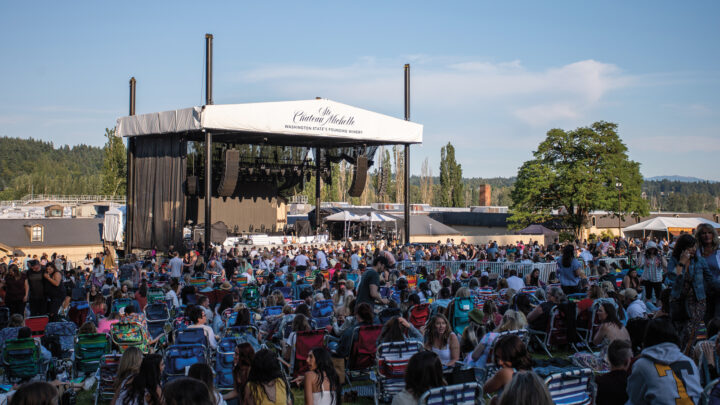
Chateau Ste. Michelle has a long history in forging direct connections with its consumers through music, hosting 30-plus concerts each summer at its iconic winery estate outside of Seattle. The winery also sponsors Live Nation music venues. “Our venue sponsorships serve as a crucial early touchpoint—in many cases introducing younger consumers to Chateau Ste. Michelle for the first time,” Bowman says. “Once exposed in an environment where they already have fun, we are seeing increased positive impressions and purchase intent.”
Treasury Americas and The Wine Group are also pushing forward on personal connections. For Treasury, Bakx says consumers “are discovering our brands in countless unconventional ways,” such as at the Palm Tree Music Festival series, where influencer-led programming and memorable pop-up experiences, merchandise, and standout branding keep Matua top of mind. The Wine Group, meanwhile, has in-person consumer activations planned for Meiomi wine this winter, including the “Meiomi Club Noir” in Vail, Colorado. Those types of events intertwine with sponsorships and social media, a merging of physical and digital connections.
“An omnichannel marketing approach makes sense because that’s how consumers show up, they might see us on Instagram through their favorite influencer, in store, on retailer media networks, or on traditional platforms,” says Sutton. “We’re also finding success with strategic collaborations. For example, our new product Mad Dog by MD 20/20 is a proud partner of WWE, serving as the exclusive wine-based RTD sponsor of the WWE through September. This collaboration will create global brand exposure with millions of fans, including Gen Z. “Innovative products paired with the right brand experiences can be a powerful way to reach consumers,” he adds.
Sponsorships and events are also a big focus for Gallo, West says, along with a range of other efforts. “We’re taking a different approach to capture legal-drinking-age Gen Z by building authentic partnerships with brands, artists, and events that reflect their values; creating targeted, relatable content that removes intimidation; and expanding our portfolio with formats like low calorie, low alcohol, and single-serve options that fit seamlessly into their lifestyles,” he says.
In addition, “We’re focused on showing up in the cultural moments they already inhabit—whether that’s music festivals, creator-driven content, or social spaces—so wine becomes a natural, convenient choice,” West continues. “This includes high-profile partnerships, such as Barefoot serving as the official wine sponsor of the NFL and La Marca Prosecco’s collaboration with the hit series ‘Emily in Paris.’ These partnerships bring our brands directly into the experiences and conversations Gen Z cares about, helping us actively reshape the category to meet them where they are. We know the future of wine depends on this approach, and we’re committed to making it happen.”

Messaging And Positioning
Most wine brands today make ample use of social media, and it’s there that many make their biggest strides with younger consumers. Evans of Precept Wines says House Wine has a strong tranche of Gen Z and young millennial followers. “Since this demographic often discovers new products online, we have dedicated time to building excitement around our new packaging directly on our social pages,” she says.
The company’s “Do Epic Sh*t” campaign for Browne Family has also made a splash. “Content creators have been a focus of this effort, as we’ve partnered with individuals whose life moments align authentically with the mantra,” Evans says.
Personal connections—whether physical or digital—are only part of the solution. It’s crucial to get the offering right, winery executives say, whether that means on price, on quality, on packaging, or on other elements of introducing a brand or category to consumers. According to Chateau Ste. Michelle’s Bowman, the industry may be missing the mark. “The two biggest barriers I see to younger consumers adopting wine are prices of our primary means of trial and quality relative to other alternatives,” he says.
Noting fewer wine by-the-glass options being offered at restaurants in general, Bowman also maintains that pricing for those wines has gotten out of hand. “Most restaurants used to buy a bottle of wine for $10 from their distributor and then charge $10 by-the-glass,” he explains. “I now frequently see restaurants charging $14 or $16 by-the-glass for the same bottle that they paid $10 for. Food and labor inflation has pressured restaurants into seeking higher margins out of their wine programs. [That reality is] really hurting the wine industry’s ability to demonstrate our value for money and its discouraging consumers from buying wine at restaurants and bars.”
Bowman also maintains that the quality of wine retailing for under $40 has slipped. “While wine dumbed everything down—in both marketing and in the bottle—spirits enjoyed almost two decades of growth and premiumization by investing in quality and in communicating real, grounded, product-focused stories,” he says. “Wine needs to show up as it’s authentic self and reclaim ground lost to spirits.”
Sutton also points to price as a factor, and says the industry “must de-stigmatize value wine” to find favor with newer, younger consumers. “We believe that value and quality must go hand in hand,” he says. “A sole focus on premiumization, across the industry, and the resulting stigmatization of wines under $20 TKhas made wine an unaffordable luxury for the few. New wine consumers are not inclined to spend $15 for a glass of wine or $30-plus for a bottle if they’re unsure they will like the taste. He adds that “wine won’t thrive again until it becomes affordable for all again.”
In terms of position, several marketers say wine is viewed as too complicated. Ward says WX Brands is taking on those perceptions in new advertising for its Bread & Butter Wine, with the tagline: “Bread & Butter is easy. Don’t overthink it.” The campaign is anchored by a cinematic spot in which the main character escapes a cult-like wine society, complete with matching robes and eerie chants, before stumbling into the freedom and joy of drinking wine on her own terms. “It’s a notable departure from traditional wine advertising, which centers on the wine and not the consumer,” Ward says. “We believe our campaign is an anthem for the wine industry, not just our brand, as it makes the consumer the hero and Bread & Butter an easy choice for them. We’re going all in with this campaign across paid and organic social, TV, digital, and out-of-home, to ensure it impactfully reaches younger consumers and makes them feel heard and included.”
Marketers say new products and alternative packages are also key ways to connect with younger consumers. Sutton, for example, points to a broad range of new offerings from The Wine Group, “including flavored wine products, wine and spirits-based cocktails, high-alcohol or zero-proof offerings, and products that leverage alternative packaging formats, offering more convenience or sustainability,” he says. “We’re innovating in all these areas.”
It’s all about adaptation, Gallo’s West adds. “That means adapting wine to how younger legal drinking age Gen Z consumers actually live,” he says. “They seek adventure making low calorie, low alcohol, single-serve formats and portable, resealable packaging a priority. They want authenticity. Brands must be transparent with their purpose while keeping cultural partnerships relevant to this audience. Gen Z wants approachability. Leaning into community events, peer recommendations, and social media helps lose the stigma that wine requires a glass and procedure to enjoy. By meeting Gen Z in the moments they already enjoy, wine can earn its place as a trusted choice rather than an intimidating ritual.”